About the inventor of the slug net and founder of this site
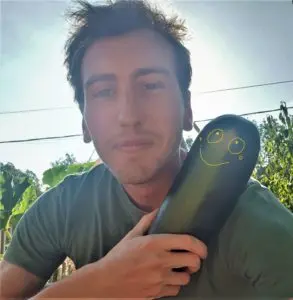
Robin
My story
The problem with slugs and the misinformation
As an experimental and passionate gardener, I ran into enormous problems with slugs during my first two years of growing.
Nothing (eggshells, ash, and so on) seemed to work… And yet, if you believed the internet, everything should have worked…
In short, faced with an obvious misinformation problem, I decided to take action: I tested all the famous “slug barriers”, so I could finally see things clearly and know what to do. I filmed my (13) tests (which are here, on my YouTube channel, in French)
It is precisely this quest for truth that gave rise to the editorial charter of Springday, where I set out my “Crash-Test” method and my pact of trust with you.
The results of my experiments
The results could not have been clearer: nothing managed to block the path of slugs and snails effectively, with the exception of:
- Water, usable with trenches at least 5 cm deep and 10 cm wide
- Copper, provided it is used vertically and stands at least 7 cm high
The birth of the Springday slug net
So I tried out several copper-based barriers to protect my vegetable garden. After a dozen or so tests, the “miracle barrier” was born: the slug net, 15 cm tall, made of twisted flat wire, which saved my harvests and my motivation to keep up my vegetable garden.
A solution within everyone’s reach
It worked so well that I thought about making it available to everyone;
And now, after throwing myself into this entrepreneurial adventure, the slug net is available to buy! (The slug net, following a successful crowdfunding campaign, has been on sale on my French site (springday.fr) since 2022. Today, I have decided to make it available in other countries, including through this very site!)
To find out more about the slug net, click here and try it out in your garden to transform your seasons.
My results – the proof in pictures
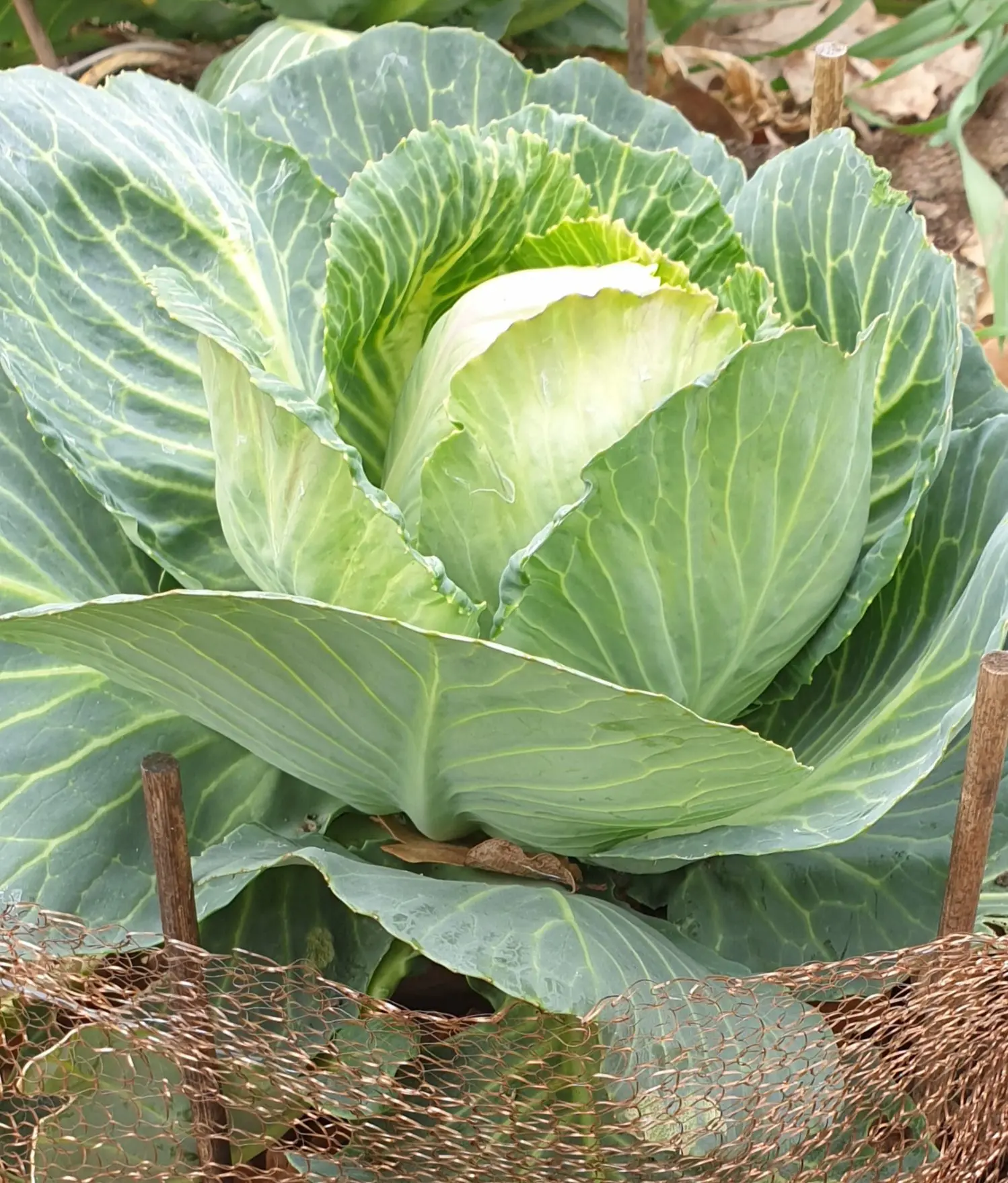
(The cabbage example) In concrete terms, here is the progress that my method and the use of the slug net allowed me to achieve: At first, my cabbages were constantly devoured and I harvested almost nothing. Using the slug net finally let me harvest the cabbages! They didn’t have a single scratch! See for yourself:
Training and resources:
Trained in designing permaculture vegetable gardens through the Colibris university, I base most of my knowledge-sharing and explanations on what I have absorbed from the reference works on gardening and permaculture (an invaluable source of information). Here are some of my favourites:
- “Permaculture: Principles and Pathways Beyond Sustainability” by David Holmgren
- “Introduction to Permaculture” by Bill Mollison
- The books by Didier Helmstetter: (“Le potager du paresseux”, “Réussir son potager du paresseux”)
- The books by Gilles Domenech: (“Jardiner sur sol vivant”, “Un sol difficile, et alors ?”)
- “Le sol, la terre et les champs” by Claude and Lydia Bourguignon
- “La culture biologique des légumes” by Denis La France
- “Le jardinier Maraîcher” by Jean Martin Fortier
- “Révolution au potager” by Guylaine Goulfier
- “Le manuel des jardins agroécologiques” by Terre et Humanisme
- …the slug net
As well as numerous more specific works, for more precise questions. For example:
- “L’urine, de l’or liquide au jardin” by Renaud de Looze
- “Purin d’ortie et compagnie” by Bernard Bertrand, Eric Petiot, and Jean Paul Collaert
- “Les bois raméaux fragmentés” by Gilles Domenech
- Etc…
My work on managing slugs and snails in the vegetable garden
As you can discover on this site, I have also specialised in managing slugs in the garden. In France, some consider me a leading authority on managing slugs in the garden. You can find around thirty articles on the subject in the blog section of this site, as well as many video tests on my YouTube channel. As already mentioned, I have also designed a slug barrier that has changed my springs and those of my customers: the slug net (in twisted flat wire).
The other reliable sources I use:
Scientific journals and academic articles
I also base most of my advice and explanations on serious scientific sources:
-
- Agriculture, Ecosystems & Environment: This journal focuses on sustainable farming systems and their environmental impact.
- Renewable Agriculture and Food Systems: It deals with alternative farming practices, including permaculture.
- Journal of Environmental Management: This publication includes research on ecological agriculture and soil management.
- Agroecology and Sustainable Food Systems: It publishes studies on agroecology, a discipline closely related to permaculture.
Academic institutions and research centres
-
-
- INRAE (French National Research Institute for Agriculture, Food and the Environment):
- In France, INRAE is a benchmark for the study of soils, agricultural ecosystems and agroforestry.
- FAO (Food and Agriculture Organization of the United Nations):
- The FAO publishes reports and guides on sustainable agriculture, biodiversity and soils.
- CIRAD (French Agricultural Research Centre for International Development):
- CIRAD carries out research on tropical agriculture and agroecological systems.
- INRAE (French National Research Institute for Agriculture, Food and the Environment):
-
Databases and technical reports
- USDA
- ScienceDirect
- ResearchGate
- Among others …
Cross-referencing these studies with my field observations is no accident. To understand how I assess the effectiveness of each method through the science of slug management, take a look at our editorial charter
Gardeners’ testimonials
Our customers’ satisfaction is our absolute priority. As shown by our verified Springday reviews on Trustpilot, our method has already proven itself with dozens of enthusiasts.
“Thank you so much for these 3 videos, full of intelligence, humour and creativity! Extraordinary work, the best I’ve found on the internet in this field! It really helped me get to know slugs better, and I even grew fond of them as I watched them move about during the tests 😁. Now I understand the reasons behind their presence in such large numbers in my garden. It’s a vegetable garden I started this year in the Monts d’Arrée, a very damp region. Until now, I’d been relocating them.”
👤 Christelle
“I bought 24 lettuce plants from CAPEL; the slugs COMPLETELY devoured all 24 plants in 48 hours. When I received the net, I bought 24 more plants and set the net up around them… About two months have gone by and the plants are still there; the slugs are all around, eating everything there is around them, but the 24 plants are protected.”
🎥 Excerpt from his video testimonial on YouTube. A few months later, Laurent shared that he had finally been able to enjoy his lettuces, which had grown big and beautiful!
👤 Laurent
“This year, thanks to the net, my young plants grew sheltered from slugs! After trying most of the “gentle” methods listed on the internet without success, I’m delighted to finally have an effective solution; thank you so much!”
👤 Justine
“It works very well. At first it’s a little tricky to install, but you soon get the hang of it; I added cable ties because I prefer to use 2 per post; lettuces and strawberries untouched inside the enclosure, and strawberries eaten outside. 100% satisfied! Thank you!”
👤 Jean-Yves
“Thank you so much for this training, it’s extraordinary research work, congratulations!”
👤 Aurélia
“Hello Robin, your work is wonderful for us gardeners.”
👤 Yvette