Copper as a slug barrier: tests and comparison

Is copper really effective at blocking the path of gastropods? And if so, why?
How do you use copper to create a genuinely effective barrier? And how should you not use it?
What are the different copper barrier devices available on the market? What are their pros and cons?
How durable is copper? What do you do when it oxidises?
Can copper barriers be toxic to the soil?
In this article, I answer all of these questions, as objectively as I possibly can.
I hope you find it useful! 😊
What this guide covers:
• The science of copper: Why it isn’t a poison but a “natural electric fence” (an electrochemical reaction).
• The 3 non-negotiable conditions: Why do most people fail with copper?
(Hint: there’s a critical height below which grey field slugs get across anyway).
• The big comparison (crash test):
– Wires and rings: Gimmicks or genuine solutions?
– Adhesive tapes: The width mistake you mustn’t make.
– 2 cm netting: Why it’s often useless.
– The 10–12 cm vs 15 cm duel: Round wire or flat wire? Find out why the shape of the wire (and not just the height) multiplies effectiveness fivefold.
• The beginner’s fatal mistake: What you absolutely must do during the 3 to 5 days after installation (or you’ll end up locking the wolf in with the flock!).
• Maintenance & durability: What to do when the copper turns green? The simple trick to revive it in 5 minutes.
• Toxicity to the soil: Is copper dangerous for your soil?
Scientific verdict: we’ll go through the precise figures for release into the soil (spoiler: it’s very reassuring).
If you're discovering my blog, chances are slugs and snails are giving you grief.
You'd probably be very interested in the copper slug barrier I designed .
It changed everything for me. I can finally grow lettuce, cabbages, strawberries and squashes without tearing my hair out.
Don't hesitate — it's an investment (copper is expensive), but you'll likely save yourself a huge amount of time!
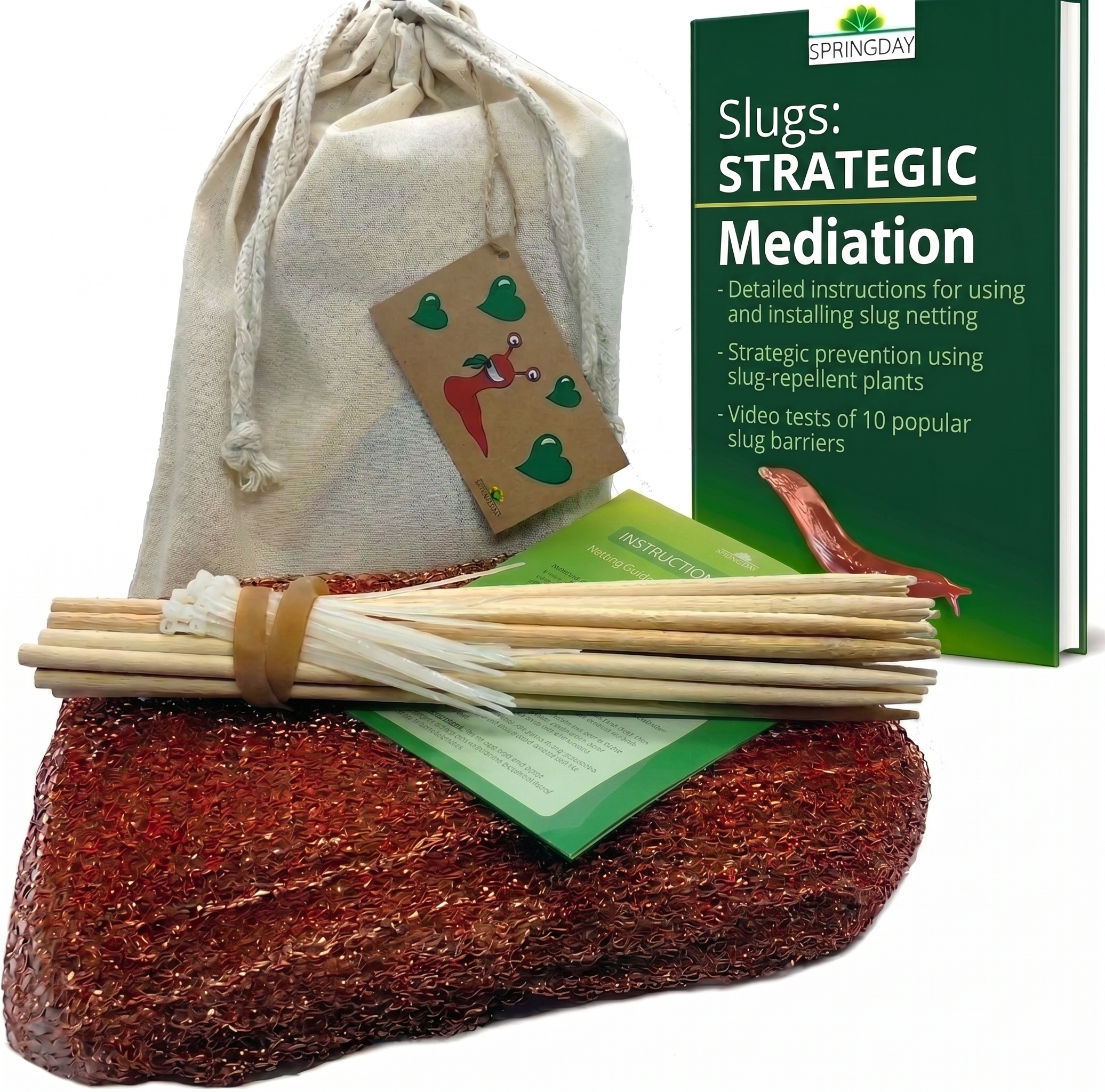
I. Copper as a slug barrier: how effective is it?
For this part, I barely need anything more than this first video:
Did you see that!?
I find it very telling: you can clearly see that copper is unpleasant for the snail, but if the copper barrier is too narrow, the chap still manages to get across by toughing it out.
Here now is my own test, in which you can watch a slug also attempt the copper crossing (you’ll also see the copper mesh for slugs that I designed).
We really do see a very interesting effectiveness from copper.
But what is the essential condition for that effectiveness?
1. Copper as a slug barrier: effective and ineffective uses

Well, if you watched the first video, you probably already know!
Copper only blocks the path of slugs and snails if it is wide enough!
In the first video of the article, this sufficient width appears to be 5 cm.
In practice, that’s true for most of the snails I’ve tested it with.
But for slugs (and especially grey field slugs, the toughest of the lot), 5 cm isn’t enough to stop them. Sometimes it takes 7 to 10 cm to discourage them and make them turn back.
One more thing: the copper barrier has to be vertical!
“Vertical?”
Yes! For example, a strip of copper stuck around a flowerpot (on the outer wall, that is) can only be tackled by gastropods on the vertical plane, and that’s exactly what you want!
By contrast, if you put a slug in the middle of a table and surround it with a strip of copper (stuck down flat, that is), the slug will find it easier to cross.
We can assume that “the adhesion effort required” isn’t the same, and that the contact force with the copper is therefore greater on the vertical plane.
(This observation comes from my own tests and my experience of the subject.)
So, to sum up, and to give a clear answer to the heading of this section:
The effective use of a copper barrier means:
- A barrier at least 7 cm wide
AND
- That barrier positioned vertically.
2. Why slugs don’t like copper
Good news: we now understand the “why” better.
Copper doesn’t repel slugs by magic, but through an electrochemical phenomenon.
The mucus, slightly salty and acidic, acts as an electrolyte.
On contact with a sufficiently conductive copper surface, a
galvanic micro-reaction is created.
The result: a weak electric current and an unpleasant sensation for the slug, which prefers to turn back.
The galvanic cell: a slug and copper
Want more detail?
Here it is:
When the slug touches a metallic copper surface:
-
Copper, being a conductive metal, can release electrons under certain conditions.
-
The mucus, an ionic conductor, brings the copper into electrical contact with the slug’s moist, ionised skin.
This contact creates a small galvanic cell (or electrochemical cell) between:
-
the copper (metal electrode);
-
the slug’s body (electrolyte solution).
The electrochemical reaction:
So, at the point of contact:
-
The copper oxidises slightly, releasing Cu²⁺ ions:
Cu→Cu2++2e−
-
These electrons travel through the mucus towards areas of different potential, generating a micro electric current.
Effect perceived by the slug
The slug has skin that is rich in sensitive nerve receptors.
The electric current, although very weak (on the order of a millivolt to a few microamps), irritates the nerve cells of the mollusc.
The sensation is unpleasant, comparable to a tiny shock.
The slug instinctively withdraws, hence the impression that the copper “repels” it.
Key points to remember: the effect depends on the purity of the copper (> 90%),
on humidity (the damper it is, the better it conducts), on the cleanliness of the surface
(biofilm and oxidation reduce the effect), and, to a lesser extent, on temperature.
Copper does not kill slugs.
It acts as a sensory barrier.
Very small juveniles can sometimes cross poorly sized devices.
In short: think “natural electric fence”, at very low voltage, but enough to deter most gastropods…
provided the surface is clean, continuous and wide enough.
Now, how do you use copper to protect your vegetable patch from slugs?
That’s what I’ll show you here, with a review of the copper devices available on the market.
II. The different copper devices on the market for protecting the vegetable patch from slugs
1. Copper wires as a slug barrier
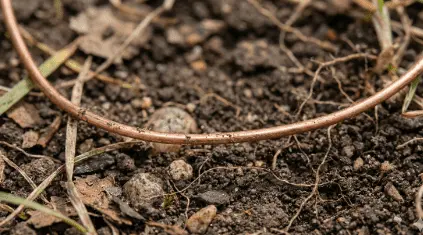
Here, simple copper wires are used. These can either be stripped electrical wires (which you therefore don’t need to buy), or another solution I’ve already seen at the garden centre: string combined with a copper wire.
Their use then serves two purposes:
-
Either wrapping wooden planters with this wire: making several turns around them (to increase the size of the barrier), and securing the copper wire using copper nails.
-
Or wrapping the stem of the plants to be protected directly with this copper wire (again making several passes here): so the slugs can’t climb up the plant in question to eat its leaves.
-
Pure copper (> 90%) conducts better and keeps its repellent effect.
The wires must be cleaned regularly, because soil and oxidation can limit the reaction that generates the electric current.
Verdict:
Positives:
- Inexpensive
- A solution that holds up rather well over time
Negatives:
- Major drawback: it is very difficult (if not impossible) to manage to create a barrier of sufficient size (> 7 cm) with this copper wire: and if you don’t, the slugs will get through.
- For the copper-clad string, its usefulness is close to zero: there’s far too little copper present, and it’s also hard to use as a barrier more than 7 cm wide.
To maintain the effectiveness of the copper wire, clean the wires with a damp cloth or a little diluted vinegar. If the copper turns green (signs of oxidation), it conducts less well and loses part of its repellent effect.
A link if you’re looking for copper wire: here
2. Copper rings as a slug barrier
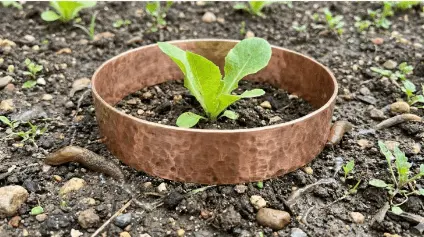
You can also use copper rings placed directly on the soil of the vegetable patch, around the plants to be protected.
These copper rings can be found at garden centres or online. They’re useful for the individual protection of small vegetable plants (strawberry plants, for example, or young plants in general), or of tall, upright plants.
Verdict:
Positives:
- This barrier holds up very well over time
- The height of the copper ring can be 5 to 7 cm, and so genuinely protect the plants
Negatives:
- Placed directly on the ground, rainfall can partly cover the copper barrier with soil (run-off), which then makes it easier for slugs to get through. This direct contact with the soil also speeds up the oxidation of the copper, as already mentioned.
- The great difficulty is avoiding “plant bridges” (the leaves of the plants that flop over outside the ring and create a passage for slugs): the wider (diameter) and taller the ring, the more easily these plant bridges can be avoided. But, equally, the wider and taller the copper ring, the more it will cost and the harder it will be to find. In practical terms, it will be very difficult to manage to protect a cabbage or a lettuce (once mature) with this kind of barrier, for example. For strawberry plants or tall, upright plants, on the other hand, as already said, it could work well.
- Requires a very flat, even and compacted laying surface.
- Fairly expensive
Contact with damp soil speeds up oxidation. Clean your rings each season and (ideally) store them somewhere dry over winter.
A link to find these rings: here
3. Self-adhesive copper tapes as a slug barrier

Self-adhesive copper tapes are a very good way to protect any raised growing surface.
For example, to protect a raised vegetable bed, you can stick the copper tape all the way around the container in question, so that the slugs are forced to cross this tape to reach your plants. This copper tape can also be used around flowerpots or planters.
You will, however, need to make sure the copper tape to be crossed is at least 7 cm wide (the minimum effective width is 7 cm according to the tests, as you may already have gathered from the previous videos). If you have a narrower adhesive tape, you’ll then need to stick several strips side by side to reach this required minimum width.
To fix the tape in place, there are two options:
- Either use the tape’s original adhesive
- Or, for a far more durable fixing (the adhesive dissolves fairly quickly with the rain and doesn’t hold up well on wood for long), use copper nails (or staples) to keep the strips fixed to the wood. In that case you mustn’t skimp on the number of nails, because once the adhesive no longer holds, the edges of the copper strips will peel away from the wood, which is neither attractive nor effective.
Verdict:
Positives:
- Very practical and easy to use, for raised growing surfaces.
- Very good effectiveness if the total width of the tape is at least 7 cm, and the tape is firmly pressed against the wood of the vegetable beds, or against the flowerpots.
- Inexpensive
Negatives:
- Not suited to “classic” open-ground vegetable patches
- The original adhesive of the copper tapes holds poorly on wood, in the long run, and stands up poorly to the weather.
- You need an impressive number of nails or staples for ideal long-term hold (so that all the copper strips are completely pressed against the surface), and you have to be meticulous during this installation
A link to find this copper tape: here
4. Copper slug netting
The aim here is to create genuine little vegetable-patch fences that are impervious to gastropods. This is, in my view, the most interesting category, but not all netting is equal. Far from it.
4.1. The “budget” netting at 2 cm tall (the “stop slugs” netting)
The first of these fences is a small piece of netting 2 cm tall, woven from nylon and copper wire, sold under a white label. The copper wire is mainly present in the top and bottom of the netting. This netting is used to surround very flat sections of vegetable patch and protect them from slugs.
The measured effectiveness of this netting is very low because its height is far too small, and it’s almost impossible to achieve a sufficient seal at ground level (so the slugs don’t go underneath) (again, see the test videos at the start of the article)
Verdict:
Positives:
- Inexpensive
- Usable for “open-ground” vegetable patches
- Fairly easy to set up, if the surface is perfectly flat
- Durable over time
Negatives:
- Very poor effectiveness: the height of the netting is 2 cm, and you’ll surely remember that you need a copper height of at least 5 to 7 cm for genuine effectiveness. Sealing at ground level is also too difficult, as described in what follows.
- Almost impossible to set up effectively if the ground surface isn’t perfectly flat: the netting is too short to allow a “flat start on the soil”, or to bury it partially (to make it “impervious” to slugs getting in, that is). Nor can the netting follow the irregularities of the ground (because of a certain rigidity and its low height).
- The netting isn’t made entirely of copper, which makes it easier to climb.
- Almost impossible to use with mulch (because of its overly low height)
- Some small grey field slugs (with a diameter smaller than the mesh of the netting, i.e. around 5 mm) can slip between the meshes without needing to climb the netting: one solution to this: stick copper adhesive tape onto the netting (attach it using staples, for a durable hold))the stop-slugs netting
4.2. Generic round-wire netting at 10 to 12 cm (the mid-range)
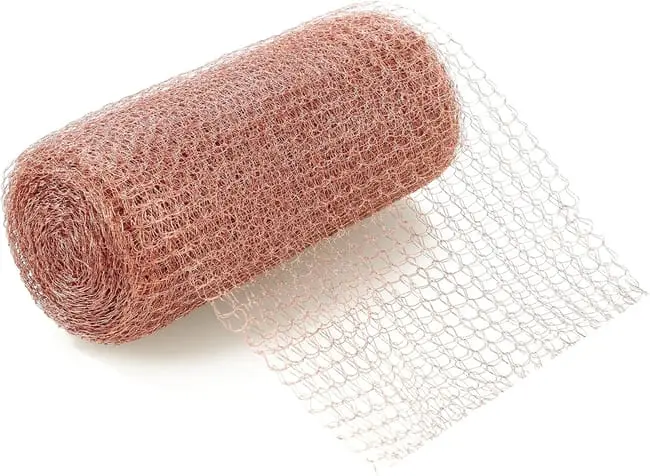
We’ve recently seen intermediate netting with round-wire mesh springing up on the big platforms. It represents a step up from the 2 cm netting, but it has significant structural flaws you should know about before buying.
Technical analysis: This netting offers a height of 10 to 12 cm, which is starting to be interesting, but often remains “borderline” for very big slugs (or small, very tough grey field slugs, as is also sometimes the case) or for Roman snails, which can stretch out and potentially clear the obstacle. Its major fault lies in the design of the mesh: it’s based on a standard, ineffective round wire (often too rigid, permeable, smooth, and with a very small contact area with the slugs).
What’s more, the purity of the copper isn’t always guaranteed (often brass/zinc alloys – of the same copper colour – with a very weak electrochemical reaction).
Verdict:
-
Positives: Attractive price, better height than the bottom of the range.
-
Negatives:
-
Round and slippery wire: The contact area with the slug is minuscule (a single point of contact – tangential), which reduces the electric shock (strictly proportional to the contact area between the copper and the slug). What’s more, the round wire offers no mechanical resistance: the slug slides over it with ease.
-
Critical height: 10 cm can in practice turn out to be insufficient for a round-wire-based mesh (with a weaker galvanic reaction) on damp nights when the slugs are very active and voracious (also because, for a good seal at ground level – to avoid passages under the netting – you have to either bury it partially or weight it down with small stones or similar, which reduces the total height and turns 10 cm into 7 cm).
-
Risk with the material: Watch out for “copper” netting that is only alloys and therefore terribly less effective.
-
4. 3. The Springday 2.0 slug netting (with twisted flat-wire mesh): the high-security solution.
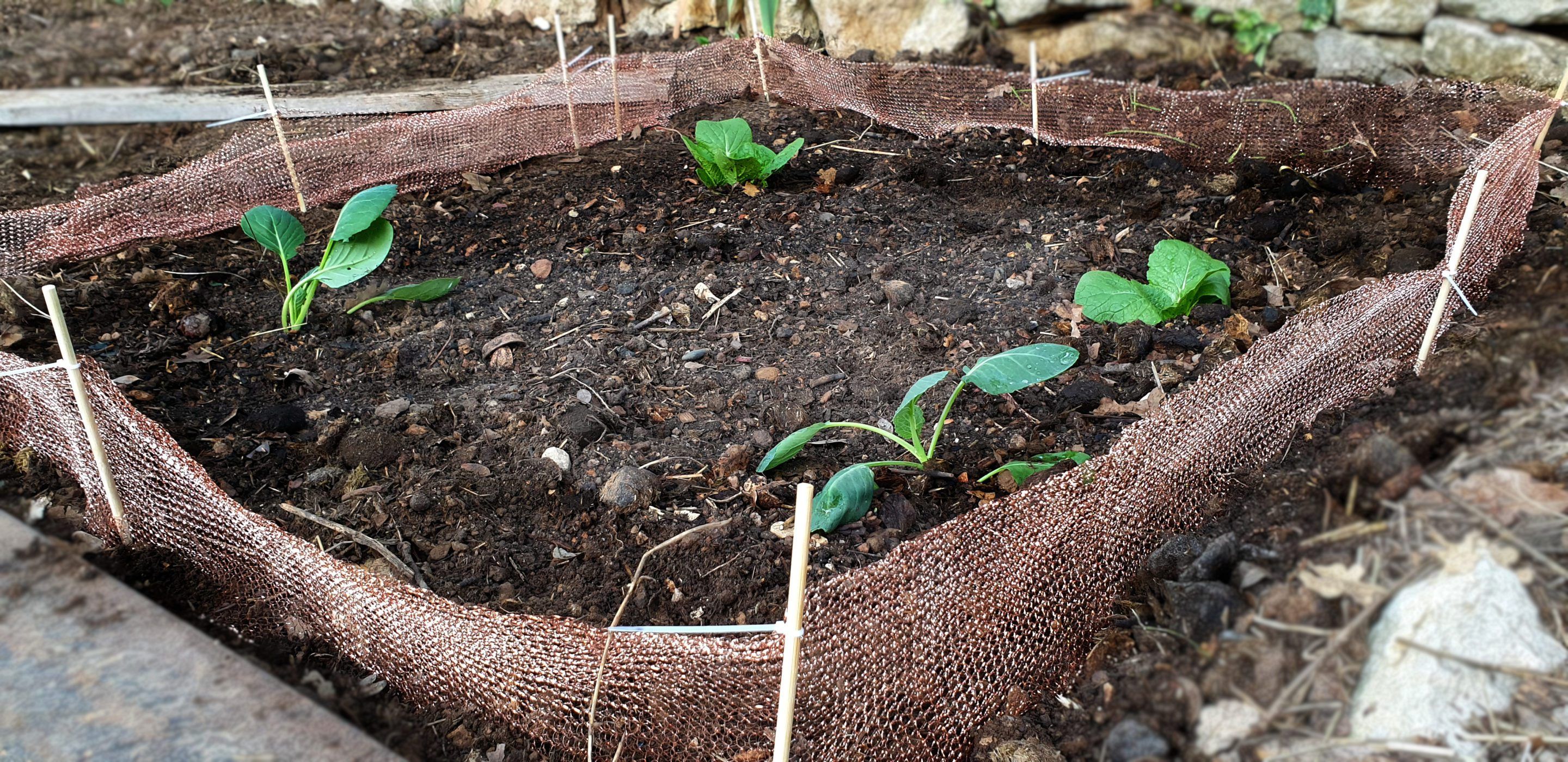
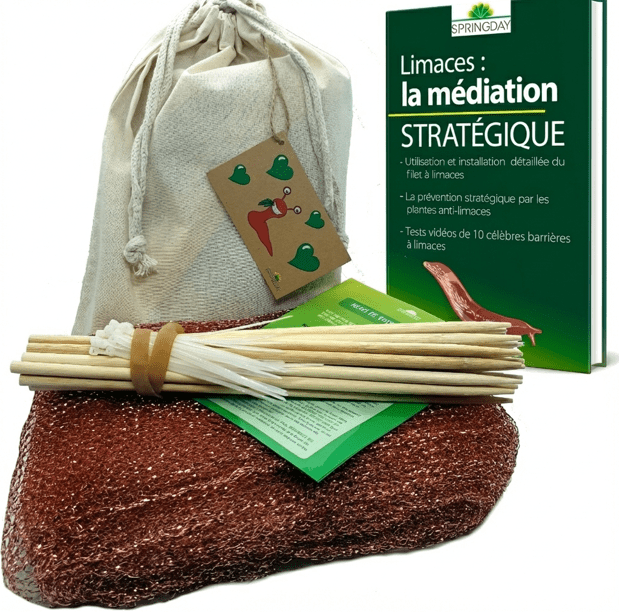
“But Robin, you’re talking your own book!” Yes, and I own that completely, for a simple reason: I designed this netting because the others (the 2 cm and the generics, whose round-wire mesh I tested during my prototyping) weren’t enough to protect my own harvests. If I created this product, it was to fill the physical shortcomings of the competitors mentioned above.
This device is 15 cm tall (extendable to 20 cm), but its real strength lies in a breakthrough innovation: the “twisted flat-wire” mesh.
Unlike the competing round-wire netting, this one uses a ribbon of pure copper (>99%) that’s flat and twisted. That changes everything:
1. The “double whammy” effect: The flat wire offers a contact area 3 to 5 times greater than the round wire (so an electrical reaction 5× higher).
2. Sharp edges: The twisting creates thousands of tiny abrasive edges. Which makes climbing all the harder for slugs and snails.
Verdict:
-
Positives:
-
“Twisted flat wire” innovation (the double-whammy effect): This is the major difference from the competing round-wire netting (which is smooth and slippery). Here, the copper is a flat, twisted ribbon. This multiplies effectiveness:
-
1. Electric shock multiplied (×3 to ×5): The contact area with the slug is much wider than with a round wire, which maximises the repellent electrochemical reaction (because it’s directly proportional to it).
-
2. Mechanical barrier (sharp edges): The twisting creates thousands of protruding micro-edges. The slug runs up against an abrasive, hostile texture that it can’t climb comfortably.
-
-
Critical height and purity: With 15 cm of height (extendable to 20 cm) and a certified pure copper (>99%) composition, the netting forces a detour of 30 to 40 cm (up and back down) over a highly reactive surface, where the 10 cm alloy competitors quickly show their limits against big slugs.
-
Ground-level seal (the slug isn’t a mole): Unlike the often overly rigid round-wire netting that “bridges” over pebbles, this mesh behaves like a heavy fabric. It hugs the micro-relief of the terrain. Once pressed down or lightly buried, it leaves no gap: since slugs don’t dig bypass tunnels, the seal is total.
-
100% compatible with mulch: This is a crucial point for permaculture. The netting installs perfectly in the presence of mulch (by clearing a simple strip of bare soil so the base of the netting touches the ground), making it possible to secure the mulched areas that are often slug refuges.
-
Versatility and protection of isolated plants: Its suppleness means it can be installed on any support (soil, stone with a dab of glue, wood, pots). For an isolated plant, the “copper heart” technique (crumpling the netting around the base) creates a bushy, opaque, impassable barrier.
-
Technical solution for “micro-slugs”: For fences, the tubular design makes it possible to create a “double curtain” (the labyrinth technique explained in the tutorials) that blocks even the juveniles under 5 mm that would slip through the standard meshes.
-
Durability: Pure, rot-proof copper that lasts for years (it just needs an annual descaling with vinegar).
-
-
Negatives:
-
The price: Higher than the generic copies (reckon on around £40 for 10 m), justified by the quantity of material (pure copper) and delivery as a ready-to-install kit, paired with genuine support to put an end to the garden slug problem for good.
-
Maintenance: Like all real copper, it oxidises. A quick soak in diluted white vinegar once a year is enough to restore its electrical “oomph”.
-
4.4 Visual comparison between the mesh of the generic round-wire slug netting and the mesh of the Springday netting in twisted flat wire
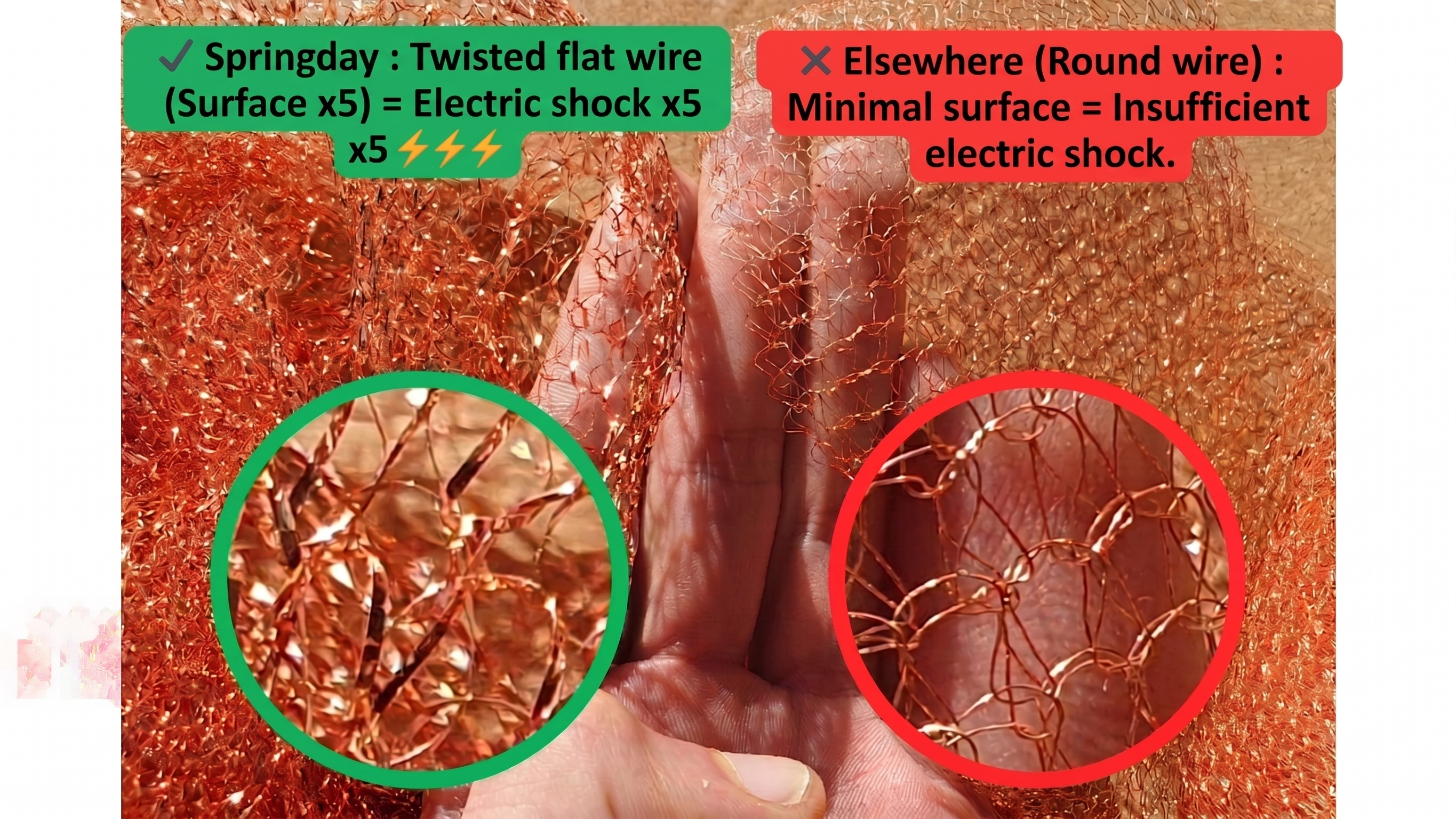
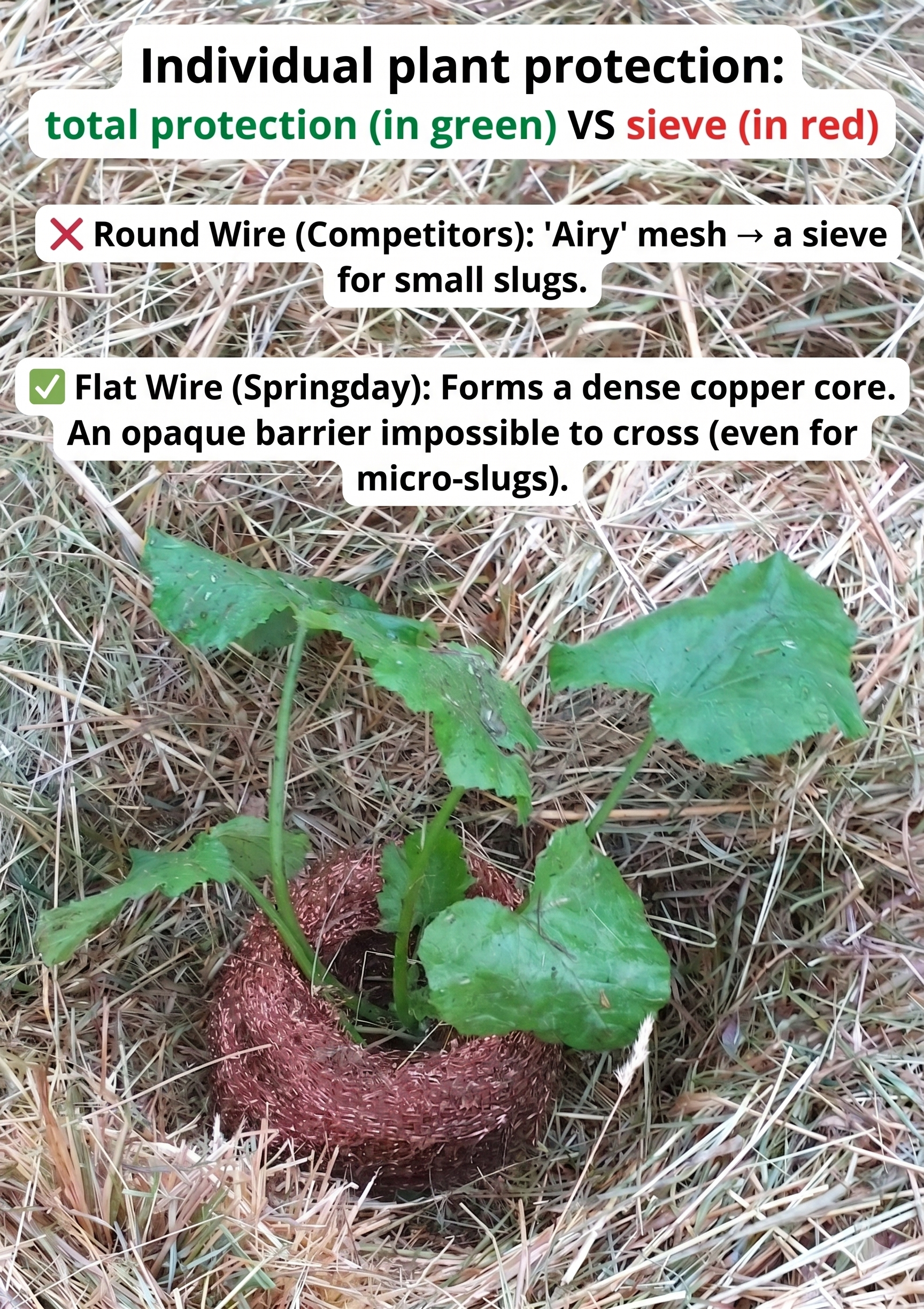
Macroscopic analysis of the structures. Top: comparison of the density of material between the standard round wire (right) and the twisted flat ribbon (left). You can visually see the difference in the metallic contact area offered to the slug. Bottom: highlighting the opacity of the mesh when protecting individual plants. The suppleness of the knit and the total quantity of copper offered by the flat wire make it possible to remove the gaps (interstices) visible on the classic rigid meshes.
4.5. What are the user reviews of the copper slug netting?
The feedback highlights:
-
a very strong reduction in damage,
-
durability over several seasons,
-
good effectiveness even on uneven or mulched ground.
The mixed reviews mainly concern:
-
the price,
-
imperfect installations (a gap at ground level, mesh too close to a plant, etc.).
Overall, users find very high effectiveness when the netting is well installed and sealed at the base.
For more details, you can read all the user reviews of the woven flat-wire slug netting on this page.
Or here for 👉 the reviews and a detailed comparison of the various copper slug nettings on the market
III. An essential precaution to take before installing a copper slug barrier: the internal harvest of slugs
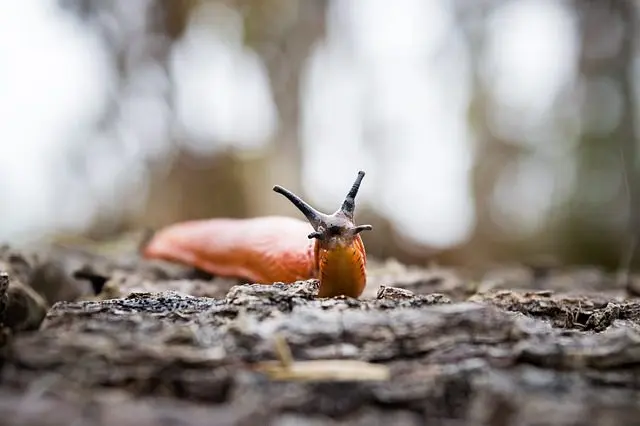
The first thing to do, once you’ve installed a copper barrier around your vegetable patch or your growing beds, is to go slug-picking!
Yes, you absolutely must flush out every slug inside the zone you’ve barricaded: to do this, you can try to gather them under boards or tiles, beneath which you’ll have placed bait: lettuce leaves, slices of cucumber, potato peelings…
Note that the board or tile refuges are more effective if they’re kept slightly damp. Turn them over each morning to find the slugs underneath.
The thermal trapping method is also very interesting: lay down a black sheet or a dark plastic film after rain; the slugs gather there thanks to the residual heat.
Slugs can stay dormant in the soil down to 10 cm deep, so you have to repeat the collection for 3 to 5 evenings in a row after the rain, or water beforehand to bring them up.
It’s absolutely vital that no slug remains in the enclosure you’ve thus created.
Let’s take Laurent’s metaphor (one of the first customers and testers of the slug netting): the slugs are the wolves, and the cabbages are the sheep.
The aim is to pen your sheep in a high-security enclosure that no wolf can cross. So, above all, don’t shut a wolf in with the sheep!!
Be warned: it’s often reckoned that for every slug visible at night, four more are hidden in the soil at that same moment! So you’ll need to carry out the slug (wolf!) collection for 3–4 days, to be quite sure none remains underground.
IV. How durable is it? Does oxidised copper lose effectiveness?
I tested a piece of netting that was starting to oxidise, and it worked.
But as soon as a real layer of verdigris (the oxidation of copper) sets in, effectiveness drops.
The oxidation of copper first forms a thin reddish layer of cuprite (Cu₂O), then, with the humidity and the CO₂ of the air, a green layer of verdigris (CuCO₃·Cu(OH)₂).
These layers aren’t harmful, but they electrically insulate the surface and prevent the galvanic micro-reaction responsible for the repellent effect.
In other words, the barrier becomes less conductive and generates less current for the slugs.
To restore good effectiveness, all you need to do is clean the oxidised surface.
A damp cloth soaked in a mixture of white vinegar diluted to 5% (or soaked overnight in a tub of that same mixture if the corrosion is significant), or a bicarbonate-of-soda + lemon paste, is enough to remove the verdigris. Rinse with clean water, dry, and the netting is good for another season or two before the next clean.
Ideally, bring it in over winter (few slugs, and conditions favourable to oxidation)
V. Can copper be toxic to the soil?
Here is the result of my research on the subject:
You sometimes hear it said that copper could “poison” the soil. In reality, it all depends on the quantities.
Copper, when it oxidises, forms a thin layer of verdigris (copper(II) carbonate, CuCO₃·Cu(OH)₂).
This layer is poorly soluble (https://fr.wikipedia.org/wiki/Carbonate_de_cuivre(II) and https://pubchem.ncbi.nlm.nih.gov/compound/Copper-carbonate), especially in neutral or slightly basic soils: it therefore releases only a tiny amount of copper into the soil.
The reference studies (INRAE, 2020; RHS, 2022) show that copper toxicity to soil life only appears:
-
above 100 to 200 mg/kg for a living, neutral soil rich in organic matter;
-
above 20 to 50 mg/kg for an acidic, sandy soil poor in organic matter;
-
and between the two, a caution threshold of around 50 to 100 mg/kg.
These values correspond to soils that have received several decades of massive inputs of soluble copper, such as Bordeaux mixture.
By contrast, an above-ground copper barrier (netting, tape or mesh) releases less than 0.05 mg/kg/year into the soil, even in damp conditions.
At that rate, it would take more than 2,000 years of continuous use, without ever removing or cleaning the copper, to reach the first risk thresholds (acidic, sandy soil).
In other words: the copper of a slug-netting-type barrier is absolutely not a soil pollutant.
This micro-release isn’t useless, by the way:
Copper is an essential trace element for plants and micro-organisms.
It plays a part in photosynthesis, respiration, the synthesis of lignin (which strengthens tissues) and protection against oxidative stress.
That said, the quantity released by a copper barrier is too small to visibly stimulate growth.
It doesn’t “fertilise” the soil, but it can help maintain a balanced mineral baseline, particularly in soils that are very poor in copper.
In summary:
-
This input is harmless, even in the long term.
-
It has no measurable effect on your crops, but it slightly supports the natural balance of the soil.
In short: the copper of copper barriers is inert, stable and safe for your soil, while constituting an effective and durable barrier against slugs.
Conclusion
We’ve already seen it in several articles, but the use of a slug barrier is the only way to deal both with slug problems in the short term (right now), while gently moving towards a long-term, holistic regulation of the problem (in 2 to 5 years), which involves allowing predators to find their food (–> the slugs, hence the importance of not killing them) and so to settle in gradually in the garden to regulate the problem there (I’ve also written an ebook on the subject, based on around twenty scientific studies carried out in collaboration with market gardeners working in living soil: you can order it at the same time as the slug netting, on the order page).
Among all the slug barriers I’ve tested, the most effective are water moats (see this video), the use of freshly sliced garlic (see this video), “gift barriers” (distraction methods, such as surface composting), and copper (as a barrier > 5/7 cm). For a summary article covering all the slug barriers, but above all a comparison of every existing means of managing slugs in the garden, I’d recommend this article: review and test of slug controls in permaculture. To understand the negative impact of beer traps and slug pellets, here’s an article on the methods to avoid for managing slugs.
For its ease of installation, its adaptability (to the various contexts of use), and the quick visibility of results, copper is a slug barrier that’s gaining in reputation: used well, this material is a genuine protective solution.
The information in this article has been selected and verified according to the criteria defined in our editorial charter.
Done with slugs. For good. Starting this season.
Bibliography:
The study examines several different substances for their ability to repel slugs and snails. Among other things, the results revealed that copper had repellent effects.
Frequently asked questions: copper against slugs, in the garden and the vegetable patch
Does copper really keep slugs away?
Yes. Copper triggers an electrochemical micro-reaction when a slug’s mucus touches the metal. This reaction generates an unpleasant sensation, comparable to a tiny shock, which drives them to turn back. Copper acts as a sensory barrier, not as a poison.
What happens if a slug touches copper?
The mucus acts as an electrolyte. The copper releases electrons, creating a micro-current perceptible by the slug. It reacts immediately by retracting or by trying to get around the coppered surface.
Does copper kill slugs?
No. Copper doesn’t kill, it repels. Slugs are neither injured nor poisoned: they simply avoid crossing the barrier.
Which metal repels slugs best?
Copper is the most effective metal, because it’s the only one that triggers a galvanic reaction on contact with the mucus. Other metals can be slippery, but they don’t produce that repellent signal.
Where and how should I use copper in my garden?
Copper can be placed around pots, raised vegetable beds, planters, or as a fence around a growing bed.
To be effective, the barrier must be:
-
vertical,
-
continuous,
-
clean,
-
and at least 7 to 10 cm tall.
Why put copper at the base of tomatoes?
To stop slugs from climbing up and attacking the young shoots.
Be warned: copper laid on the ground does not protect against blight. Copper metal has no fungicidal action on its own.
Piercing a tomato plant with copper wire is pointless and increases the risk of disease.
Why put copper around flowerpots?
Because it’s an ideal support for getting a continuous, vertical barrier. A strip of copper at least 7 cm wide effectively stops slugs from climbing up to the pot.
How do you make a copper slug barrier?
Several options:
-
self-adhesive copper tapes (≥ 7 cm),
-
copper rings for isolated plants,
-
coppered netting of 10–15 cm to surround a zone,
-
copper wire in several turns (limited effectiveness).
Whatever the method: the base must be perfectly pressed against the ground or lightly buried.
Is copper dangerous for the soil or for soil life?
In the form of a barrier (tape, ring, netting), no.
It releases very few copper ions, well below the thresholds at which earthworms, fungi, bacteria or mycorrhizae would be affected.
Is copper a pollutant?
The metallic copper used as a barrier is not a pollutant.
Copper pollution comes mainly from Bordeaux-mixture treatments (soluble copper), not from copper tapes or netting.
What are the effects of copper on plants?
Copper is an essential trace element, involved in photosynthesis, respiration, the synthesis of lignin and protection against oxidative stress.
Copper barriers release too few ions to influence plants: a neutral to slightly positive effect.
What are the drawbacks of copper as a slug control?
-
higher cost than other solutions,
-
the need for an impeccable installation (height, continuity, no plant bridges),
-
gradual oxidation to be cleaned once a year (5% vinegar).
Well installed, it remains one of the most durable and effective solutions.
What is the most effective slug control?
In terms of physical barriers:
-
copper (height + clean surface),
-
coppered netting of 10–15 cm,
-
water moats,
-
freshly sliced garlic (short-term effect),
-
distraction methods (gift zones).
For a functional vegetable patch, these combined strategies give the best results.
What are the reviews of copper slug tapes?
Very good when the tape measures at least 7 cm, is clean, continuous and well pressed down.
The negative reviews almost always come from tapes that are too narrow, insufficient sticking, or plant bridges.