Copper mesh for slugs: why and how to use grids and netting?
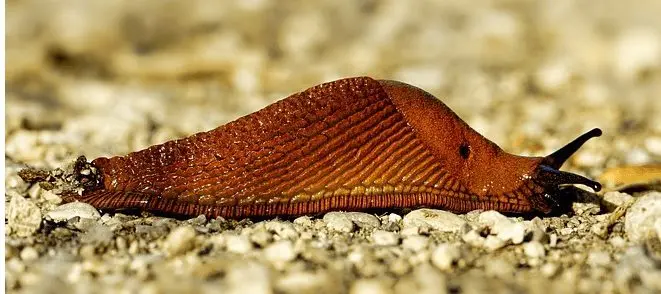
If you're discovering my blog, chances are slugs and snails are giving you grief.
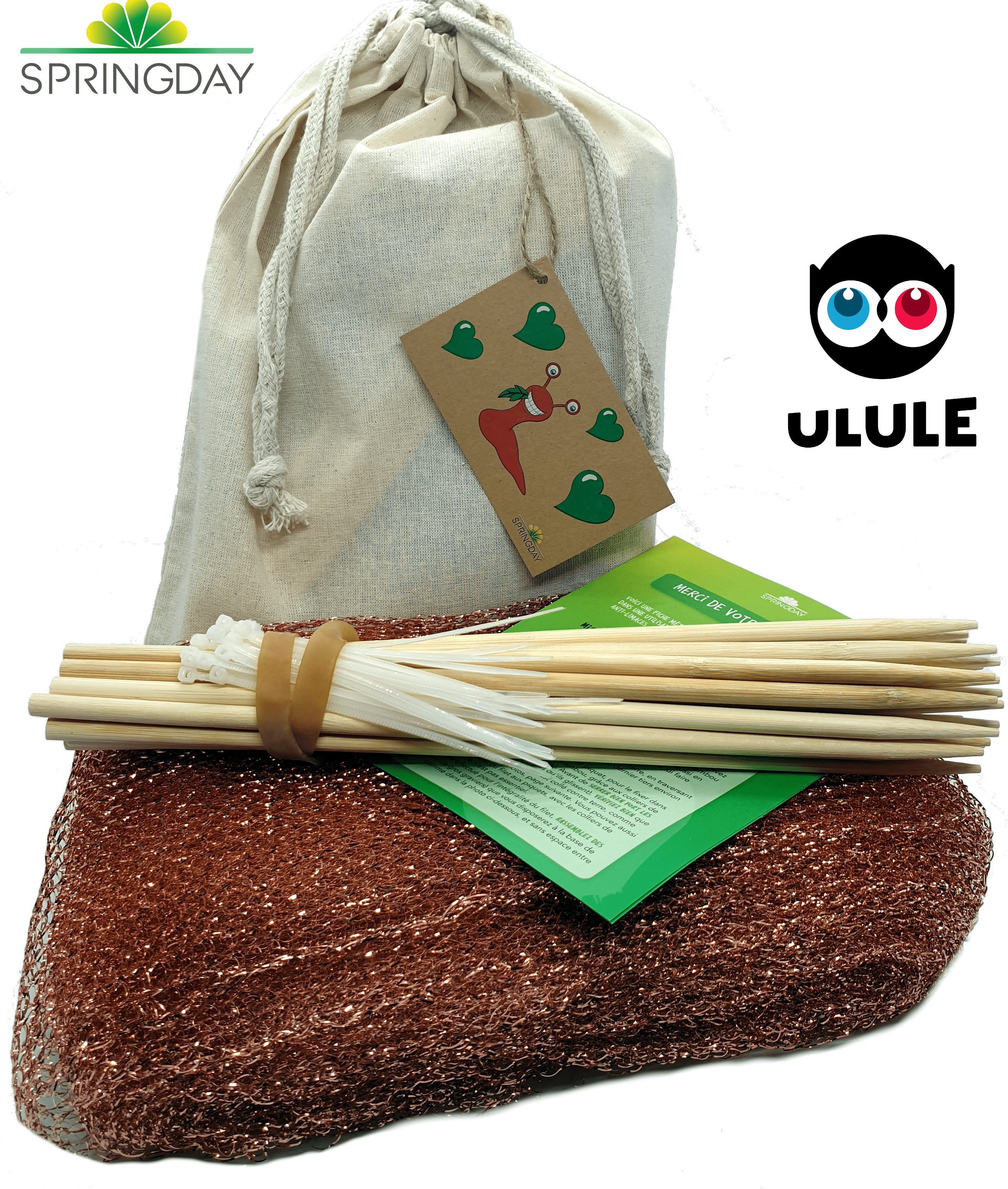
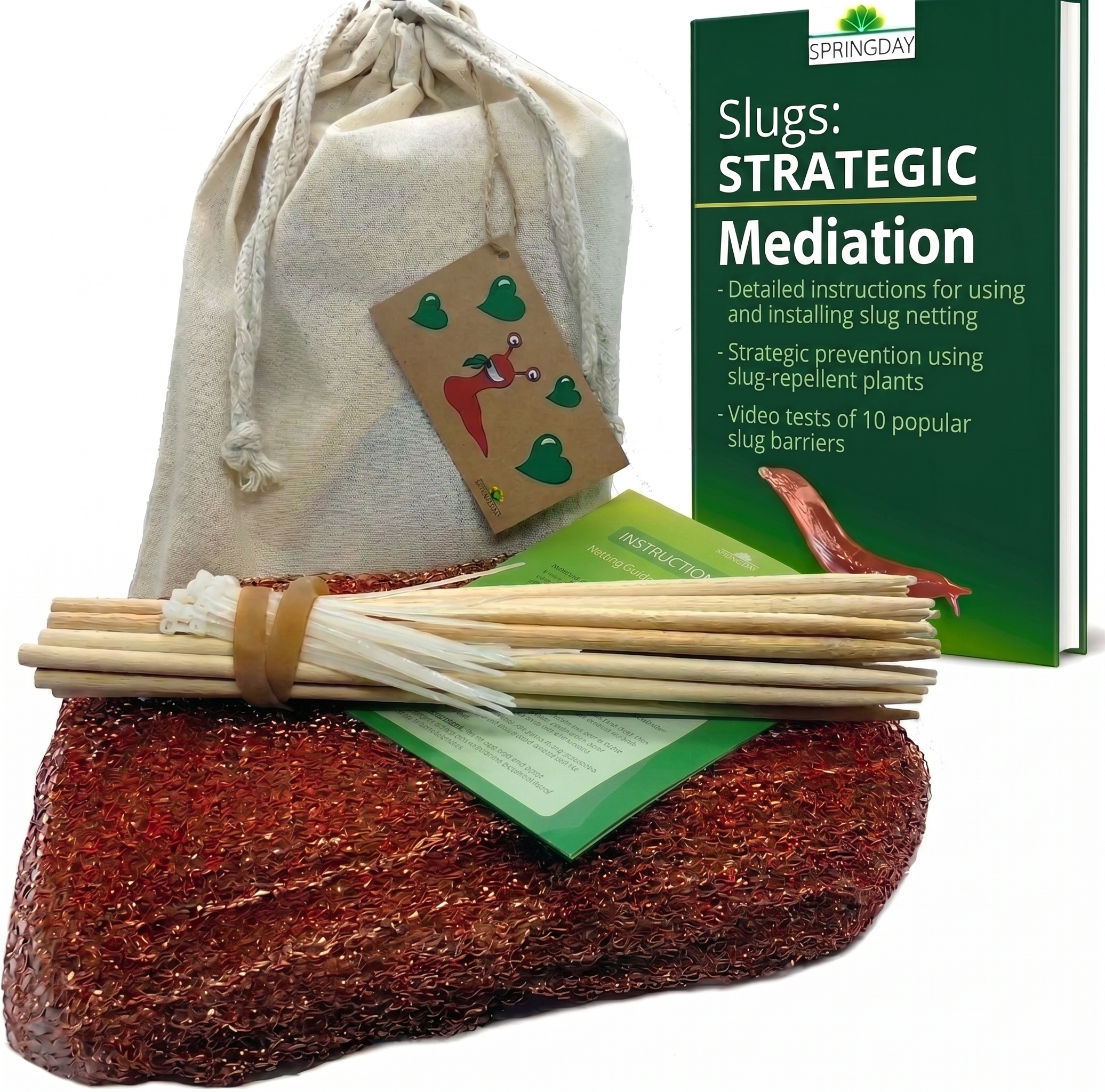
You'd probably be very interested in the copper slug barrier I designed .
It changed everything for me. I can finally grow lettuce, cabbages, strawberries and squashes without tearing my hair out.
Don't hesitate — it's an investment (copper is expensive), but you'll likely save yourself a huge amount of time!
Why is a copper grid an effective slug barrier?
When I ran into my first slug problems in the vegetable garden, I tried the “old wives’ tales” shared by all those content aggregators that recycle this kind of unverified, unsourced advice: slug barriers made from eggshells, ash, hair, and so on.
Only to reach a rather grim conclusion fairly quickly: nothing really works in the long term.
So I set about methodically testing all of these barriers, with video to back it up.
What came out of it: only 2 barriers are genuinely effective at blocking slugs in their tracks:
-
Water-filled moats at least 5 cm deep and 10 cm wide (which can easily be made from half-buried guttering blocked off at each end)
-
Copper used as a vertical barrier, over a height greater than 5/7 cm
Copper has long been used by some gardeners, its effectiveness has been verified, and it is absolutely harmless to plants and health (it might even be good for your health – some people take copper as a dietary supplement) (we’re not talking here about the copper sulphate found in Bordeaux mixture, which is something else entirely!).
Today, various copper barriers are sold (you’ll find here a full test and comparison of all these copper barriers), but they often share the same flaw: the total height of the copper barrier on sale is frequently below the minimum dimension needed for genuine effectiveness, which is around 5 to 7 cm (proven experimentally, in the videos cited above).
The main reason: copper is an expensive material.
But there is an affordable solution that allows for a sufficient height: a copper grid or copper mesh.
This grid, woven in specialist factories, is made from a weave of copper wire (pure, or combined with nylon thread), in varying diameters and shapes (between 0.16 mm and 5 mm, round or flat wire, a dense or looser weave, and varying heights).
While an unsuitable choice of grid can render the whole device completely useless (the slugs slip through, the grid isn’t flexible enough, isn’t tall enough, etc.), a well-thought-out set-up guarantees almost total protection (> 90%, in my garden).
So I ordered different types of weave from my weaver, in order to then test them in my vegetable garden, keeping only the most effective weave (secret recipe 🤫).
To this was added the ideal number – based on my stability tests – of bamboo stakes, designed to a suitable height (25 cm) so that the copper mesh holds well once pushed far enough into the soil, rounded off with an attachment system.
This device, conceived and designed through experimentation, was given the name “slug netting”, and was able to go on sale thanks to a successful crowdfunding campaign in February 2021.
You can find it via this link: Springday slug netting.
But for now, let’s carry on exploring how to use slug netting.
Why don’t slugs like copper?
Experimentally, we can see it clearly: slugs don’t like copper, and more than 90% turn back when faced with a vertical copper barrier over 5 to 7 cm tall.
You can see this in this video:
But why don’t they like copper?
It is thought to be a chemical reaction between the slug’s mucus and the copper, which generates a sensation of electric current that is very unpleasant for slugs.
So, while some slugs manage to endure this and get across copper sections that are too narrow, it becomes too difficult for them across wide sections, and they end up turning back, as we see in the previous video.
A study has even been carried out on the effect of copper on slugs:
“Effect of copper on garden slugs (Arionidae): a study of toxicology and repellency” by J.C. Barriault, C.J. Bortolotti and C.J. Ritland. Published in the journal “Environmental Toxicology and Chemistry” in 1991.
In this study, the authors tested the effects of various concentrations of copper ions on garden slugs (Arionidae) and found that the slugs did indeed display a repulsion to copper surfaces. They even suffered significant physical damage when exposed to high concentrations of copper (in liquid form, presumably).
The authors concluded that copper is an effective repellent for garden slugs.
(Reference and gist of the summary found with the help of ChatGPT)
How do you use slug mesh to protect your plants?
There are three ways to go about protecting your plants with a copper slug grid:
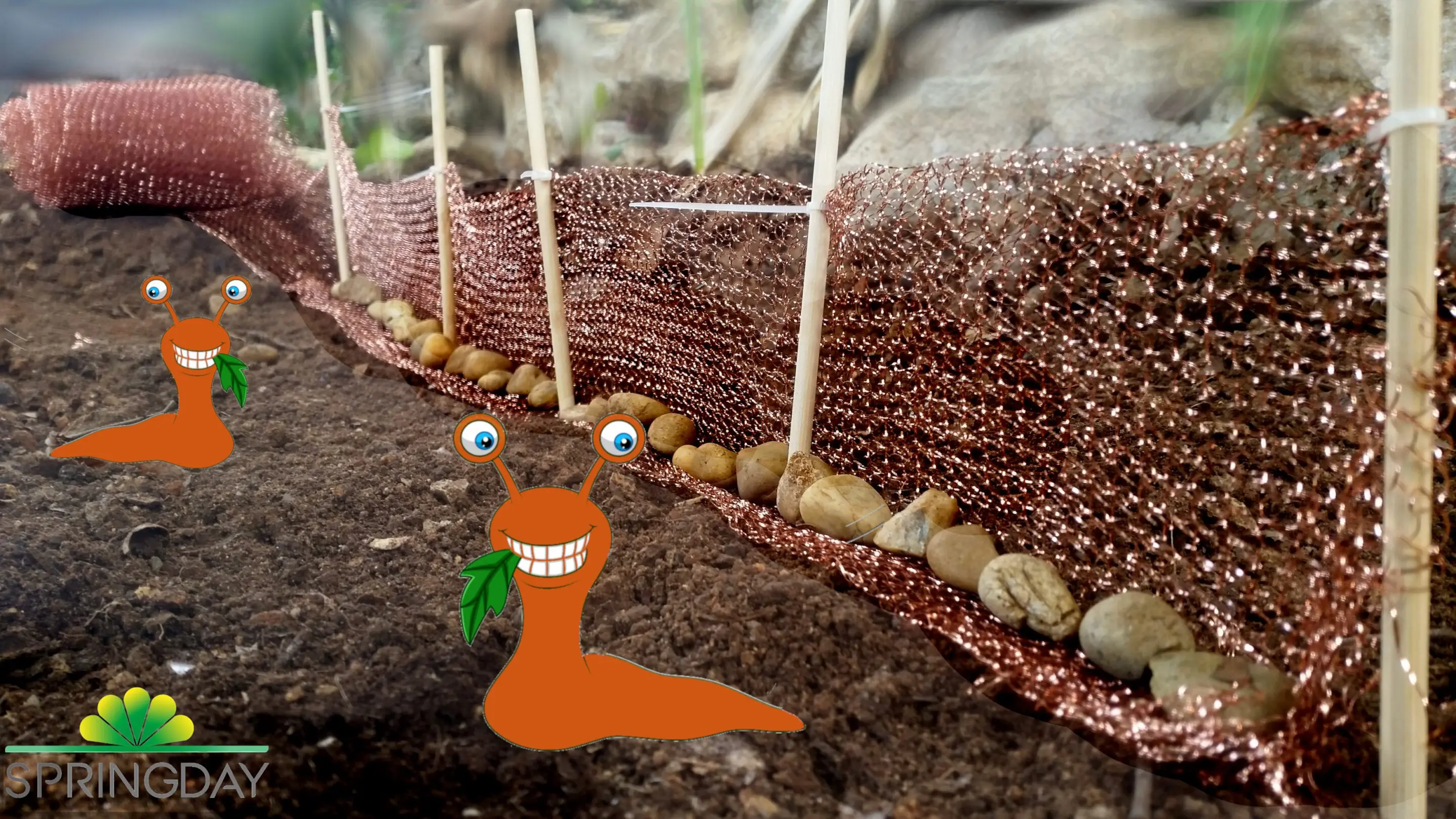
- The first is to fence off the entire area to be protected using the slug netting, held up by stakes thanks to the attachment system provided.
Once the netting is in place, you’ll need to gather up by hand the slugs trapped inside the area to be protected, and remove them from it.
That way, you’ve created a protected zone for your lettuces!
Below, a full video of the process of installing the slug netting:
-
The second is to use the copper mesh to protect individual plants: simply surround the plant you want to protect with the copper mesh, at its base.
-
The third is to use the copper mesh to protect planters in raised beds: for this, you’ll need to staple the mesh directly onto the outer wooden sides of the planters, so that the slugs have to cross it to reach your plants, which will prompt them to turn back.
Conclusion
Copper is one of the best methods for clever protection of the vegetable garden against gastropods. That said, you need to make sure this copper is used vertically, over a height greater than 5-7 cm, to see genuine effectiveness.
A copper grid is an ideal solution for putting these observations into concrete practice.
To discover the copper grid I had woven and completed with essential, one-of-a-kind additions, I invite you, if you fancy it, to head over to the slug netting page!
The information in this article has been selected and verified according to the criteria defined in our editorial charter.
Done with slugs. For good. Starting this season.
Related articles