Coffee grounds against slugs: facts and myths
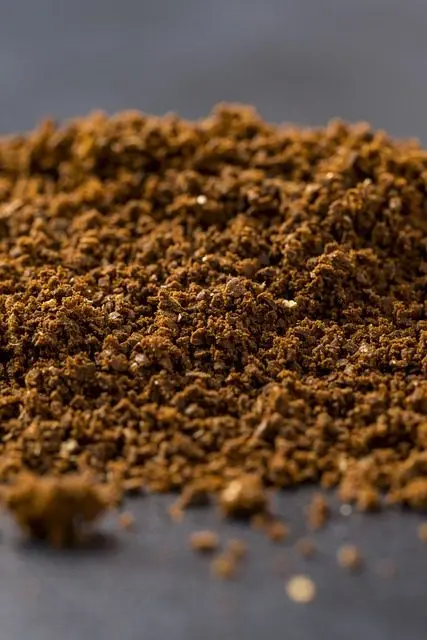
Last time, we saw that using coffee grounds as a fertiliser is harmful to plants when applied fresh.
But that’s no reason to give up, because coffee grounds aren’t so easily beaten — they have more than one string to their bow!
It also seems they can serve as an effective barrier against slugs and snails, protecting the vegetable garden, as a last resort, from the assaults of these gastropods (provided they’re used far enough from the plants, that is, so as not to inhibit their growth).
So, country legend or honest truth?
That’s exactly what we’re going to find out here!
If you're discovering my blog, chances are slugs and snails are giving you grief.
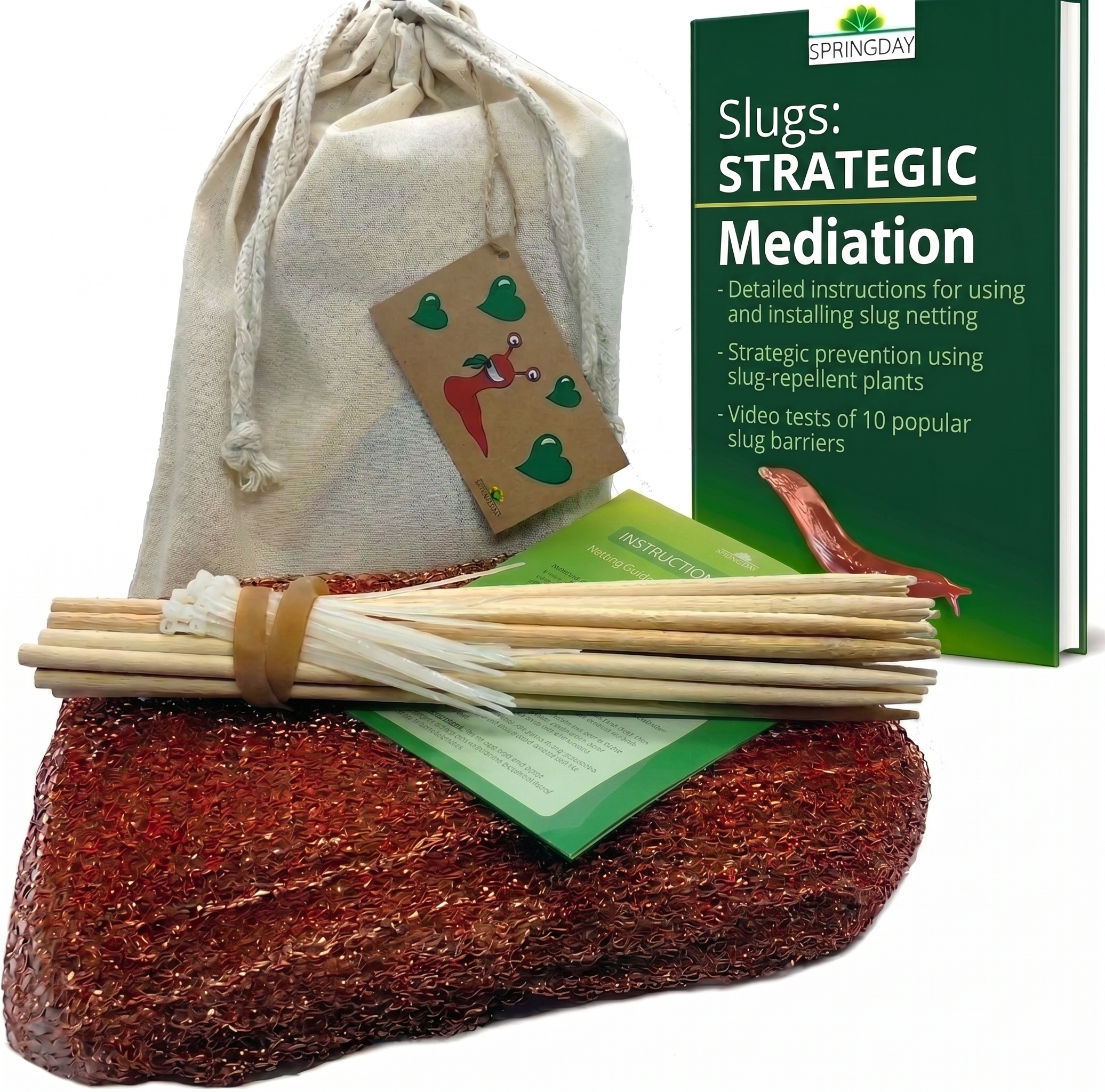
You'd probably be very interested in the copper slug barrier I designed .
It changed everything for me. I can finally grow lettuce, cabbages, strawberries and squashes without tearing my hair out.
Don't hesitate — it's an investment (copper is expensive), but you'll likely save yourself a huge amount of time!
Key points
• The theory: Coffee grounds repel slugs thanks to two factors: their dry, powdery texture (which hinders their movement) and caffeine (a natural neurotoxin for them).
• The (disappointing) reality: The effectiveness is very short-lived. As soon as it rains or there’s dew, the grounds become damp and lose all barrier effect.
• The perverse effect: As they age, damp grounds go mouldy. The fungi that develop in them… attract slugs! Your barrier then turns into a buffet.
• Danger to animals: Beware! Caffeine is toxic to dogs and cats. Ingesting a large quantity of grounds can be dangerous for them.
• What about plants? A reminder: fresh coffee grounds are a growth inhibitor. Avoid putting them too close to your crops, especially young seedlings.
• In short: A stopgap solution in very dry weather, but unreliable for seriously protecting a vegetable garden in the rain (which is precisely when slugs really attack).
I. Coffee grounds as a barrier against slugs and snails: does it work?
To answer this question, nothing beats a little video test:
In this first video, which is my own creation, I pit my two combat gastropods against a wall of fresh, barely brewed coffee grounds (a very pronounced coffee smell), still damp (don’t forget to turn the sound on! (Especially for the appearance of Enzo the snail)):
Below, a 2nd test, with a snail faced with dry coffee grounds.
And, to finish, another test video (which I think is rather good), to watch from 1 minute 30 (it’s in English, but it’s all visual).
So, are coffee grounds effective or not?
Yes, they’re effective, but not 100%.
Let’s say they’re a deterrent. You can clearly see it (it seriously complicates the slugs’ journey, on top of putting them off coming near), but it won’t stop the gastropods from getting through if they really want to.
And what is it that makes coffee grounds a deterrent for slugs? How does it stop those that haven’t yet got through from doing so?
II. How do coffee grounds deter slugs?
In my video test (the 1st of the three videos), you can clearly see that our companions Olivia and Enzo are bothered by the coffee smell the grounds give off. At first, they simply avoid coming into contact with it, and so go round in circles.
Then, when our stunt-slug tries to climb the wall of coffee grounds, the task is anything but easy for her. Still, given her small size relative to the quantity of coffee grounds (and because the “wall” was consequently steep), we can’t really conclude much from it.
The next two videos teach us more on the subject of how the texture of coffee grounds works to deter slugs.
You can clearly see, every time, that the gastropods struggle to cross this completely dry powder.
It’s something I’ve found very often during my various tests.
Any powdery, dry material will be very difficult for slugs to cross: dry ash, fine dry sand, dry coffee grounds, etc.
The powder actually clumps onto the slugs’ mucous membranes, like when you dip a damp finger into flour.
So the slug first has to moisten this dry, highly absorbent material before it can hope to get through. Which makes the task much harder for it.
(To get dry coffee grounds, simply leave them to dry by spreading them out in the sun, for example, on a surface where you can later collect them again.)
The scientific explanation (the real secret) Beyond the texture, there’s an invisible chemical reason: caffeine. A famous study published in the scientific journal Nature (by Hollingsworth et al. in 2002) proved that caffeine is a potent neurotoxin for gastropods.
-
At high concentration (1 to 2%), it causes erratic heart movements and kills slugs.
-
At low concentration (as in used coffee grounds), it acts as an olfactory repellent that slugs detect as a danger. That’s why they turn back: their survival instinct alerts them to the presence of a poison.
III. Coffee grounds as a slug barrier, in practice and in the vegetable garden: still effective?
Beware of shortcuts in reasoning!
Just because coffee grounds show certain deterrent effects in the “lab” (well, not really a lab, but under controlled conditions), doesn’t mean they keep those same effects in practice, in the vegetable garden!
For example, we’ve just seen that the barrier effect of coffee grounds probably comes from their coffee fragrance and their dry, powdery texture.
But:
- Over time, and with leaching by the rain, the coffee grounds will gradually lose their coffee smell.
- And, in damp or rainy weather, the powdery, dry structure (now turned damp) of the coffee grounds can no longer work in their favour. And, little by little, it takes on a “crusty” appearance.
So, to sum up, while coffee grounds do have a deterrent effect, that’s only the case when they’re fresh and dry. Which therefore requires frequent topping up.
Ideal if you’re a descendant of Balzac, or sponsored by Malongo.
But don’t ruin your health producing grounds — you know, there are plenty of other, more effective solutions. You’ll find them in my many dedicated articles in the “slug control” section, visible in the menu.
The “boomerang” effect: when the cure attracts the curse!
There’s even a perverse effect that few gardeners suspect. Coffee grounds are a rich organic material. Once damp, they begin to break down and go mouldy (the development of microscopic fungi).
Now, guess who loves to eat fungi and decomposing matter? Slugs!
An “old” barrier of coffee grounds, which has lost its caffeine smell and is starting to go mouldy, becomes a genuine all-you-can-eat buffet for slugs.
Instead of repelling them, you risk drawing them to the foot of your lettuces. That really takes the biscuit!
Note: it could, however, also play a distracting role in this way, much like the plants that slugs love to eat. Worth a try…
IV. The “hardcore” alternative: the caffeine spray (recipe and dangers)
Since the solid barrier is ineffective as soon as it rains, many try to use caffeine in liquid form. This is, in fact, what the scientific study cited above suggests: caffeine is more effective through direct contact or on the leaves.
The repellent spray recipe: The idea is to make a “super-strong” coffee (a decoction).
-
Collect fresh grounds or ground coffee.
-
Boil a strong dose in water (far stronger than for drinking).
-
Leave to cool, filter carefully, and pour into a spray bottle.
STOP! Before you do it, read the (very real) risks: This method is effective, but I advise against it for two major safety reasons:
1. The danger to your plants (phytotoxicity):
On plants, coffee and coffee grounds inhibit growth, particularly that of young seedlings and nightshades.
Spraying pure caffeine onto the foliage of your young seedlings risks stopping their development dead in its tracks (as it runs off into the soil at their base).
2. The danger of toxicity to your dog and your cat:
This is the most important point. Caffeine is toxic to dogs and cats. If you scatter coffee grounds in large quantities or spray strong coffee around the garden, the smell can attract certain curious dogs.
Ingesting a significant dose of caffeine can cause serious heart problems, vomiting and convulsions in our pets.
If you have a dog, forget coffee grounds in heaps or as a spray in the garden for good. Rover’s safety comes before your lettuces. For more details, read this article on pet-safe slug control.
FAQ: Frequently asked questions about grounds and pests
Do coffee grounds also repel ants?
Yes, and it’s often more effective than against slugs! Ants communicate via scent trails (pheromones). The strong, damp smell of coffee grounds disrupts their chemical “GPS”.
If you pour some onto an anthill or across their path, they’ll change route. Or move the grounds! But unlike slugs, ants aren’t at risk of being “attracted” by grounds going mouldy.
Does decaffeinated coffee work against slugs?
No, or very poorly. As we’ve seen, the repellent effect comes largely from caffeine (which acts as a neurotoxin for them). Decaffeinated grounds therefore lose their main chemical weapon and keep only the “powdery barrier” effect (which vanishes at the first dew). Keep the decaf for yourself!
How wide does the barrier need to be to be effective?
Don’t be stingy! A simple thin line won’t do. To stand any chance of deterring a motivated slug (before it rains), the barrier must be at least 10 to 15 cm wide and thick enough that none of the soil shows through. The idea is that the slug has to “commit” for a long stretch through the uncomfortable zone in order to get across.
Coffee grounds or wood ash: which is better?
It’s the clash of the classics! Both work on the same principle (drying out the mucous membranes), and both share the same major flaw: ineffectiveness in the rain. However, ash should be banned from soil that’s alkaline (it raises the pH, which is terrible), whereas coffee grounds are more neutral and add organic matter. A slight advantage to grounds for soil health (except if you have acidic soil, and except if you place the grounds near young seedlings or nightshades, which absolutely must be avoided (because coffee grounds inhibit their growth)), but a draw on effectiveness (mediocre in both cases in damp weather).
Conclusion:
So coffee grounds do indeed have deterrent effects, in the YouTuber’s lab.
In the “real” life of the vegetable garden, unfortunately, the persistence of these effects is rather illusory.
And indeed, because the deterrent effect of a coffee-grounds barrier comes from its smell (which fades over time), from the caffeine it contains, and from its dry, powdery structure (which disappears in damp and rainy weather, and over time).
In short… the effect fades… unless you continually feed this barrier with fresh new coffee grounds.
But beware of this habit, even well out on the edge of the vegetable garden, because fresh coffee grounds, as I’ve already explained, have strong inhibitory effects on plants, particularly in the early stages of growth for nightshades. Piled up in heaps, they also tend to suffocate the soil, and its life.
The information in this article has been selected and verified according to the criteria defined in our editorial charter.
Done with slugs. For good. Starting this season.
Scientific references: - Caffeine as a repellent for slugs and snails (Nature, 2002)