Diatomaceous earth: an effective slug deterrent?
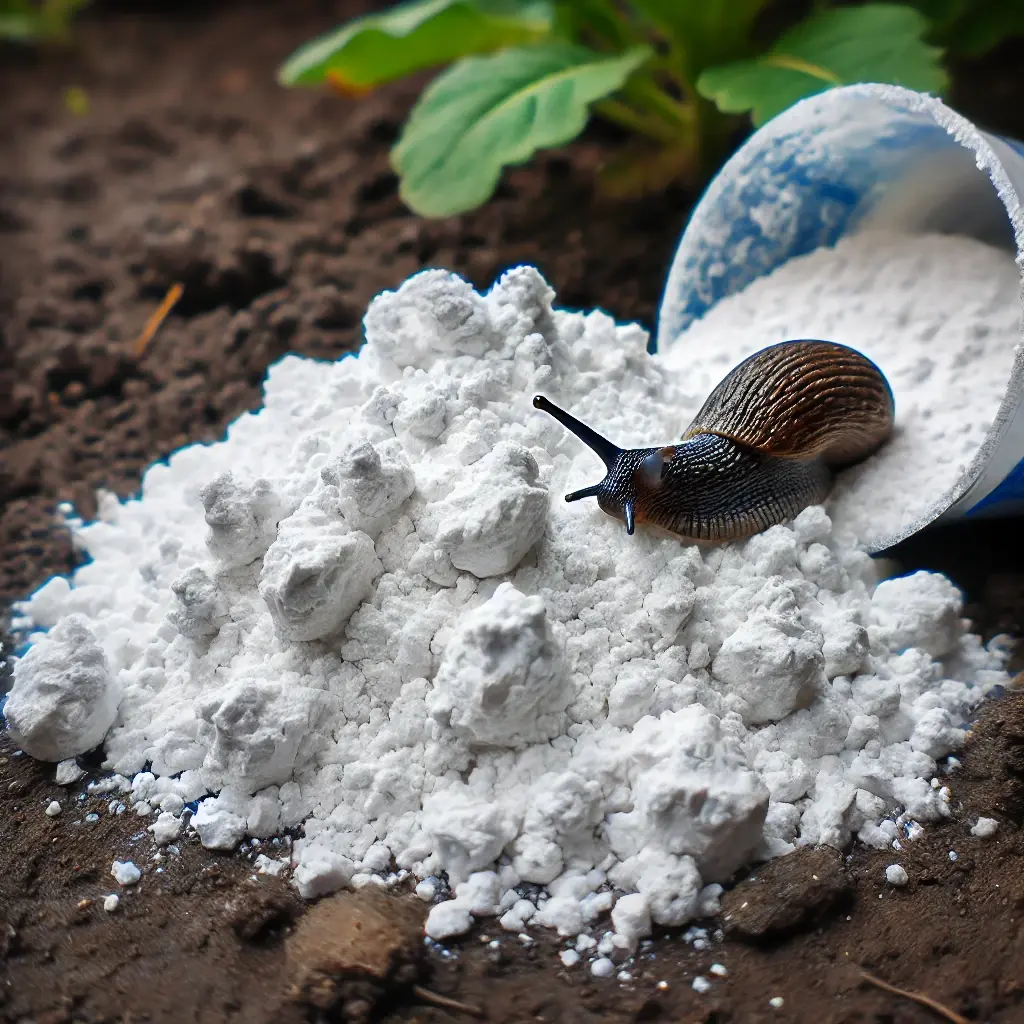
Diatomaceous earth is a naturally occurring repellent used against many insects. But is it effective against slugs? Does it really stop them in their tracks?
And if so, how do you use diatomaceous earth correctly to protect your plants from slugs without harming the soil of your vegetable garden?
That is exactly what we are about to find out.
So, if the programme appeals to you… let’s get started!
If you're discovering my blog, chances are slugs and snails are giving you grief.
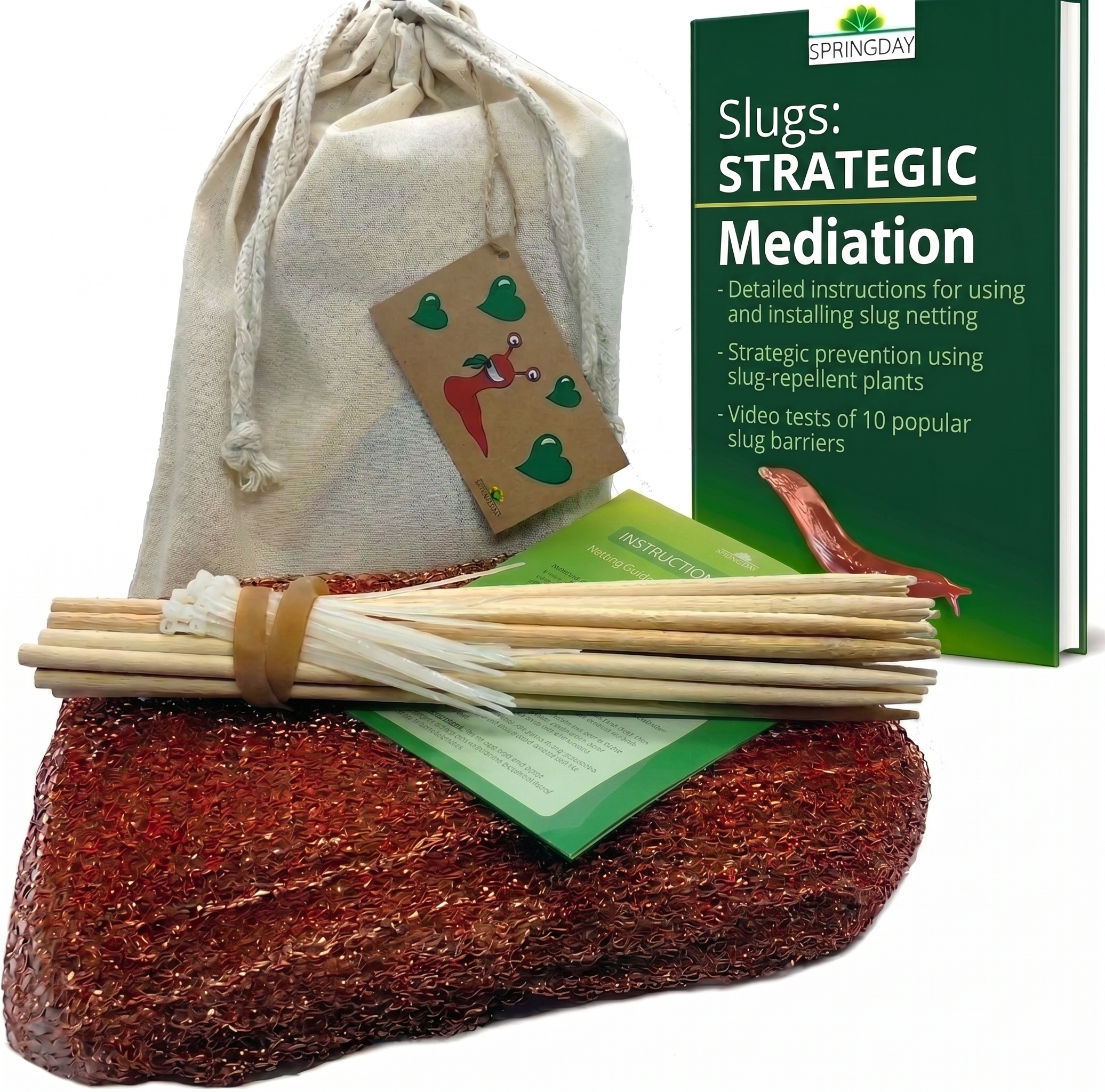
You'd probably be very interested in the copper slug barrier I designed .
It changed everything for me. I can finally grow lettuce, cabbages, strawberries and squashes without tearing my hair out.
Don't hesitate — it's an investment (copper is expensive), but you'll likely save yourself a huge amount of time!
What is diatomaceous earth?
Definition
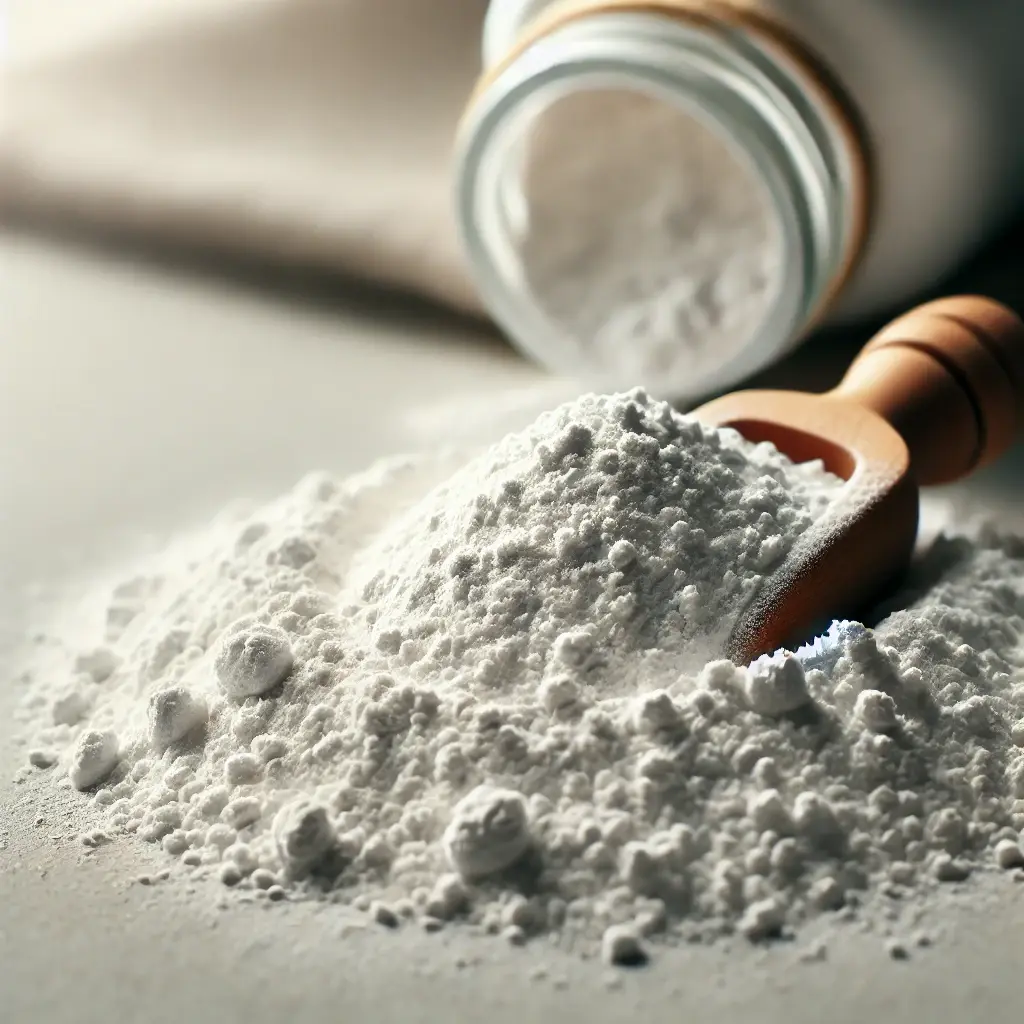
Diatomaceous earth is a fine powder obtained from the fossils of diatoms, single-celled micro-algae. This powder is used in various fields for its abrasive, absorbent and filtering properties.
Origin and composition of diatomaceous earth
Diatomaceous earth is formed from the fossilised remains of diatoms, microscopic algae that lived in the oceans, lakes and rivers millions of years ago.
These algae have a cell structure made of silica, which gives diatomaceous earth its unique properties.
The main component of diatomaceous earth is amorphous silica (SiO2), but it also contains other minerals in smaller quantities, such as aluminium and iron.
Types of diatomaceous earth available
Food-grade diatomaceous earth
This form is purified and used in the food and health industries.
It is often employed as a dietary supplement for animals, and sometimes for humans, thanks to its detoxifying and digestive-support properties.
Non-food-grade diatomaceous earth
This type is mainly used in industrial applications, such as swimming-pool filters, abrasives, natural pesticides, and as an additive in building materials.
It may contain higher levels of contaminants and is not intended for consumption.
Properties
Physical characteristics
Fine powder
Diatomaceous earth comes in the form of a very fine powder, similar to flour but slightly more abrasive to the touch.
Abrasiveness
Owing to the structure of its particles, diatomaceous earth is slightly abrasive, which makes it useful for cleaning and polishing.
Ecological benefits
Non-toxic
Food-grade diatomaceous earth is considered non-toxic for humans and animals, which makes it ideal for household applications, such as pest control.
Biodegradable
Being of natural origin, diatomaceous earth is biodegradable and does not contribute to environmental pollution.
It breaks down without leaving any toxic residue.
Uses and applications
Diatomaceous earth is used in many fields thanks to its particular properties.
In industry, it is used for filtration, abrasion, and as an insulating material.
In households, it is popular for insect control and as a cleaning product.
In gardening, it is mainly used as a natural insecticide.
Let’s now see whether this famous powder can effectively protect plants from slugs.
How do you use diatomaceous earth against slugs?
To manage slugs in the garden, diatomaceous earth is used as a slug barrier: you sprinkle it around the areas you want to protect from slugs — vulnerable plants, growing areas, and so on.
The aim is for the slugs to be unable to cross the barrier of diatomaceous earth, and therefore unable to come and nibble at your plants.
Ultimately, diatomaceous earth is used in the same way as ash — a material that is, incidentally, fairly similar in terms of structure, mode of action and limitations.
So, is diatomaceous earth really effective at stopping slugs in their tracks?
Let’s take a look right away.
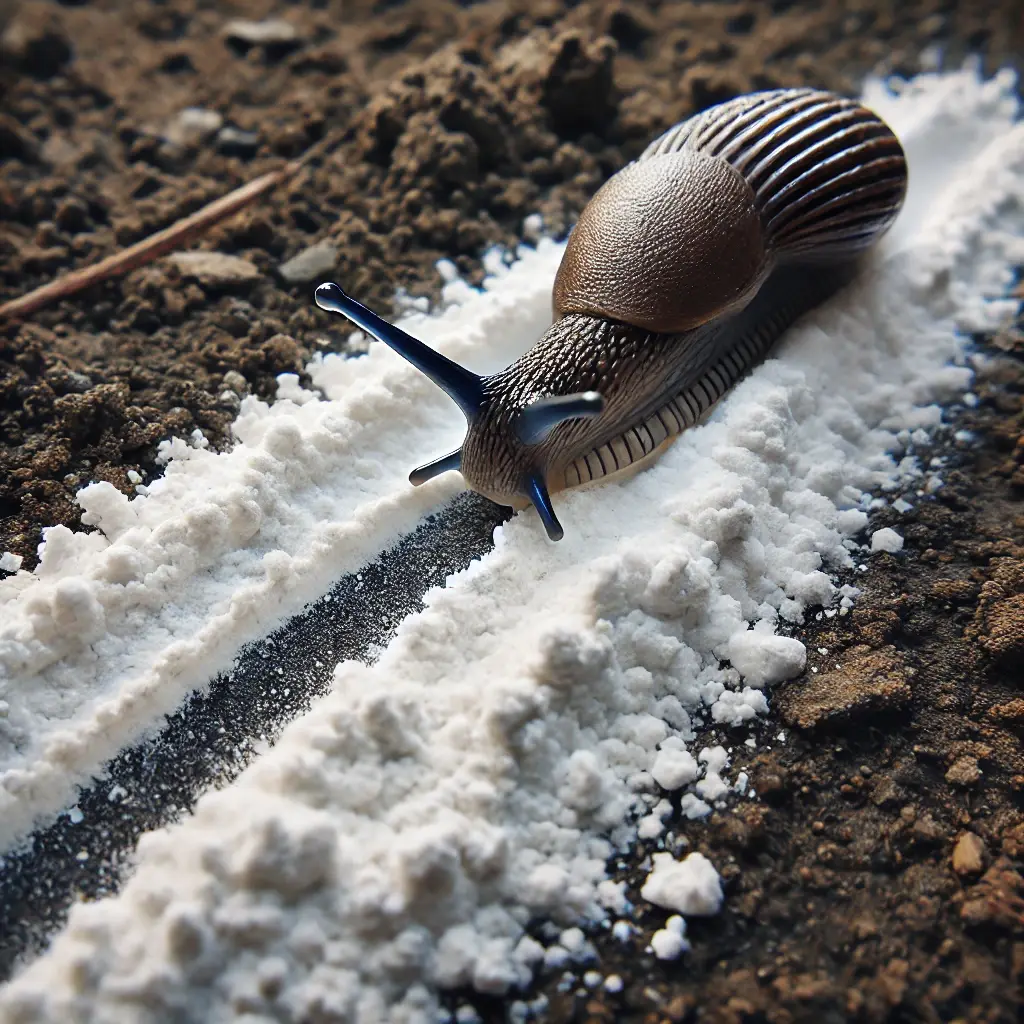
Is diatomaceous earth effective against slugs?
As mentioned above, diatomaceous earth is often used as a natural insecticide and can be effective against certain insects and arthropods thanks to its abrasive and desiccating properties. However, its effectiveness against slugs is more limited and a matter of debate.
Advantages of diatomaceous earth against slugs:
An effective physical barrier when dry: Diatomaceous earth forms a powdery, desiccating physical barrier that, when dry, is very difficult for slugs to cross. In this respect, diatomaceous earth works in the same way as ash.
You will see this for yourself if you put it to the test: diatomaceous earth, like ash, is very effective when used dry to stop slugs in their tracks and protect plants.
Important limitations:
- Effectiveness wiped out by moisture: Diatomaceous earth, like ash, loses its effectiveness when it gets wet, which limits its use in damp environments, such as gardens after rain or watering. This is, moreover, particularly problematic when it comes to managing slugs, which run riot in wet weather.
- Frequent application required: It must therefore be reapplied regularly, especially after rain or watering, to maintain its effectiveness.
- Impact on other garden insects: As mentioned earlier, one of the issues with diatomaceous earth, especially when you garden using permaculture methods, is that it will kill any insect that tries to cross it. As a result, this could have a significant impact on the beneficial insects in your garden (ladybirds, ants, lacewings, etc.), and reduce its overall biodiversity, particularly if you intend to use it in large quantities.
Verdict on the effectiveness of diatomaceous earth as a slug deterrent
Yes, diatomaceous earth is effective against slugs. But only when it is dry!
And that is the main drawback of this natural slug barrier, which ultimately proves of little use in real conditions. The same goes for ash, fine sand, or other slug barriers of this kind (effective when dry, useless once wet).
Alternative methods
So, how do you protect your plants from the slugs invading your garden?
If you are looking for barriers that are effective in the long term (and usable in real conditions), water held in small moats, or copper used as a vertical barrier, are the best options.
In fact, I designed a slug barrier based on my own tests, using copper. And it proved so effective that I now sell it, here: the copper mesh for slugs.
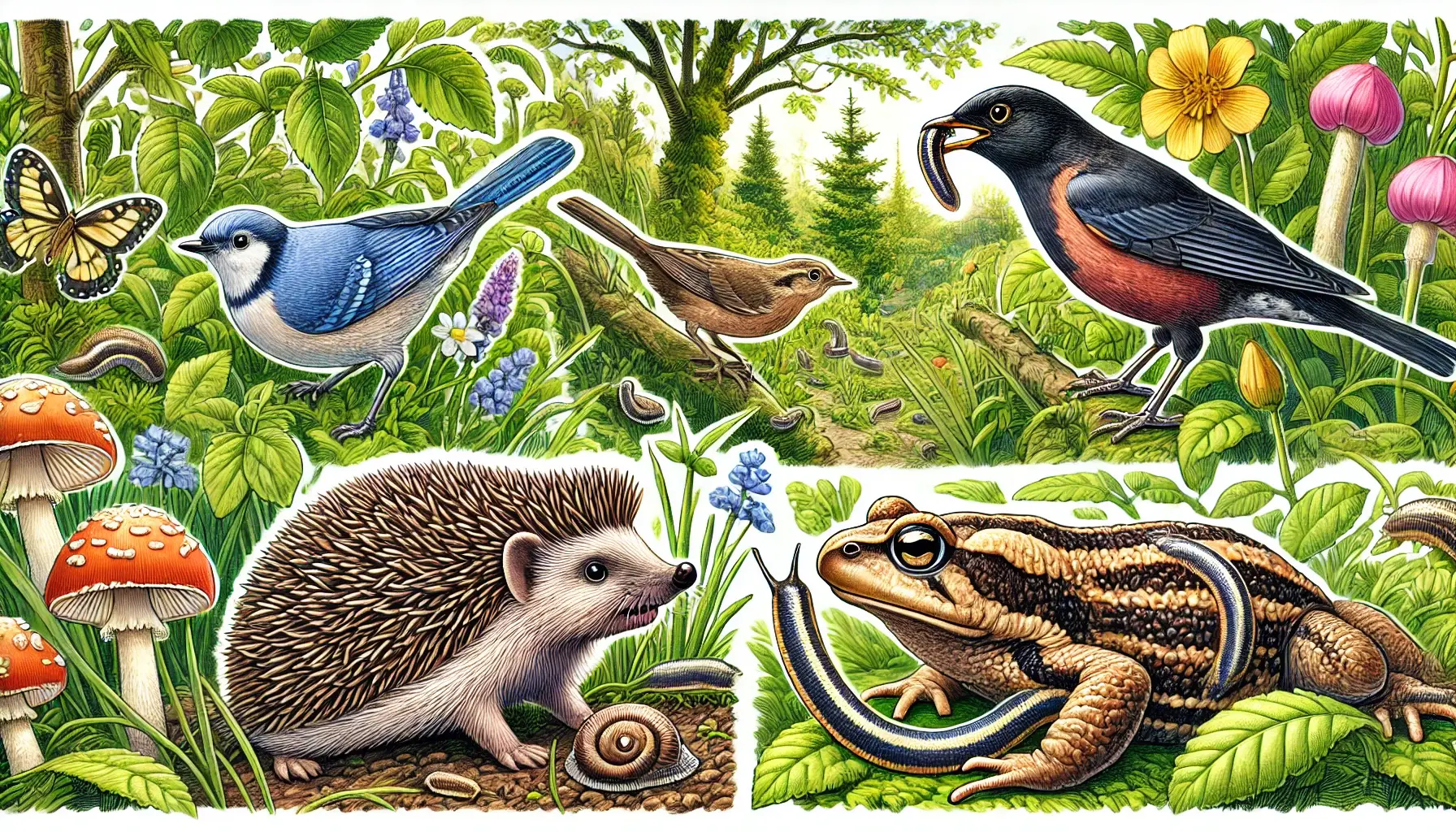
Don’t forget either to attract the natural predators of slugs by laying out your garden with that in mind, and to harness the hidden power of slug-repelling plants.
To put an end, for good, to your slug problem.
The information in this article has been selected and verified according to the criteria defined in our editorial charter.
Done with slugs. For good. Starting this season.
Scientific references
- Effectiveness of diatomaceous earth against slugs and insects:
- Study on diatomaceous earth and pest insects: “Efficacy of Diatomaceous Earth as a Structural Insecticide in Urban Environments” by Arthur et al., published in the Journal of Economic Entomology. This study shows that diatomaceous earth is effective against various insects thanks to its abrasive and desiccating properties.
- Arthur, F. H., & Throne, J. E. (2003). Efficacy of diatomaceous earth as a structural insecticide in urban environments. Journal of Economic Entomology, 96(3), 689-698.
- Study on diatomaceous earth and pest insects: “Efficacy of Diatomaceous Earth as a Structural Insecticide in Urban Environments” by Arthur et al., published in the Journal of Economic Entomology. This study shows that diatomaceous earth is effective against various insects thanks to its abrasive and desiccating properties.
- Limits of using diatomaceous earth in damp environments:
- Study on the stability of diatomaceous earth in damp environments: “Effect of Relative Humidity on the Efficacy of Diatomaceous Earth Against Stored-Product Beetles” by Fields et al., published in Environmental Entomology. This study discusses the decline in the effectiveness of diatomaceous earth in the presence of moisture.
- Fields, P. G., Korunic, Z., & Dowdy, A. K. (2003). The effect of relative humidity on the efficacy of diatomaceous earth. Environmental Entomology, 32(6), 1246-1252.
- Study on the stability of diatomaceous earth in damp environments: “Effect of Relative Humidity on the Efficacy of Diatomaceous Earth Against Stored-Product Beetles” by Fields et al., published in Environmental Entomology. This study discusses the decline in the effectiveness of diatomaceous earth in the presence of moisture.
- Ecological effects of diatomaceous earth on non-target insects:
- Impact on beneficial insects: “Non-target Effects of Diatomaceous Earth” by Subramanyam and Roesli, published in the Journal of Stored Products Research. This study examines the impacts of diatomaceous earth on non-target insects, such as natural predators and pollinating insects.
- Subramanyam, B., & Roesli, R. (2000). Non-target effects of diatomaceous earth. Journal of Stored Products Research, 36(3), 339-345.
- Impact on beneficial insects: “Non-target Effects of Diatomaceous Earth” by Subramanyam and Roesli, published in the Journal of Stored Products Research. This study examines the impacts of diatomaceous earth on non-target insects, such as natural predators and pollinating insects.
- Alternatives to diatomaceous earth for slug management:
- Effectiveness of physical barriers such as copper: “Copper as an Effective Barrier for Slugs and Snails” by Henderson and Triebskorn, published in the Journal of Pest Science. This study shows that copper barriers are effective at preventing slugs and snails from reaching plants.
- Henderson, I., & Triebskorn, R. (2002). Copper as an effective barrier for slugs and snails. Journal of Pest Science, 75(1), 23-27.
- Effectiveness of physical barriers such as copper: “Copper as an Effective Barrier for Slugs and Snails” by Henderson and Triebskorn, published in the Journal of Pest Science. This study shows that copper barriers are effective at preventing slugs and snails from reaching plants.
- Use of natural predators in slug management:
- Study on the natural predators of slugs: “Biological Control of Slugs in Horticultural Crops Using Predatory Beetles” by Symondson, published in Biological Control. This study explores the use of predatory beetles to control slug populations in horticultural crops.
- Symondson, W. O. C. (1993). The potential of carabid beetles to control slugs in grass clover swards. Biological Control, 3(1), 60-67.
- Study on the natural predators of slugs: “Biological Control of Slugs in Horticultural Crops Using Predatory Beetles” by Symondson, published in Biological Control. This study explores the use of predatory beetles to control slug populations in horticultural crops.
Related articles
Testing and review of 30 natural slug deterrents (do they work?)
Read
Slug-repellent plants, or prevention through planting
Read
Surface composting: protect your vegetable patch from slugs, with love
Read
Slugs: their usefulness in the garden, what they indicate, and holistic management through reshaping the habitat
Read
Slug predators: which are they? How to attract them to the garden?
Read
Slug control: the (harmful) methods to avoid – why and how?
Read