A slug repellent made from baking soda?
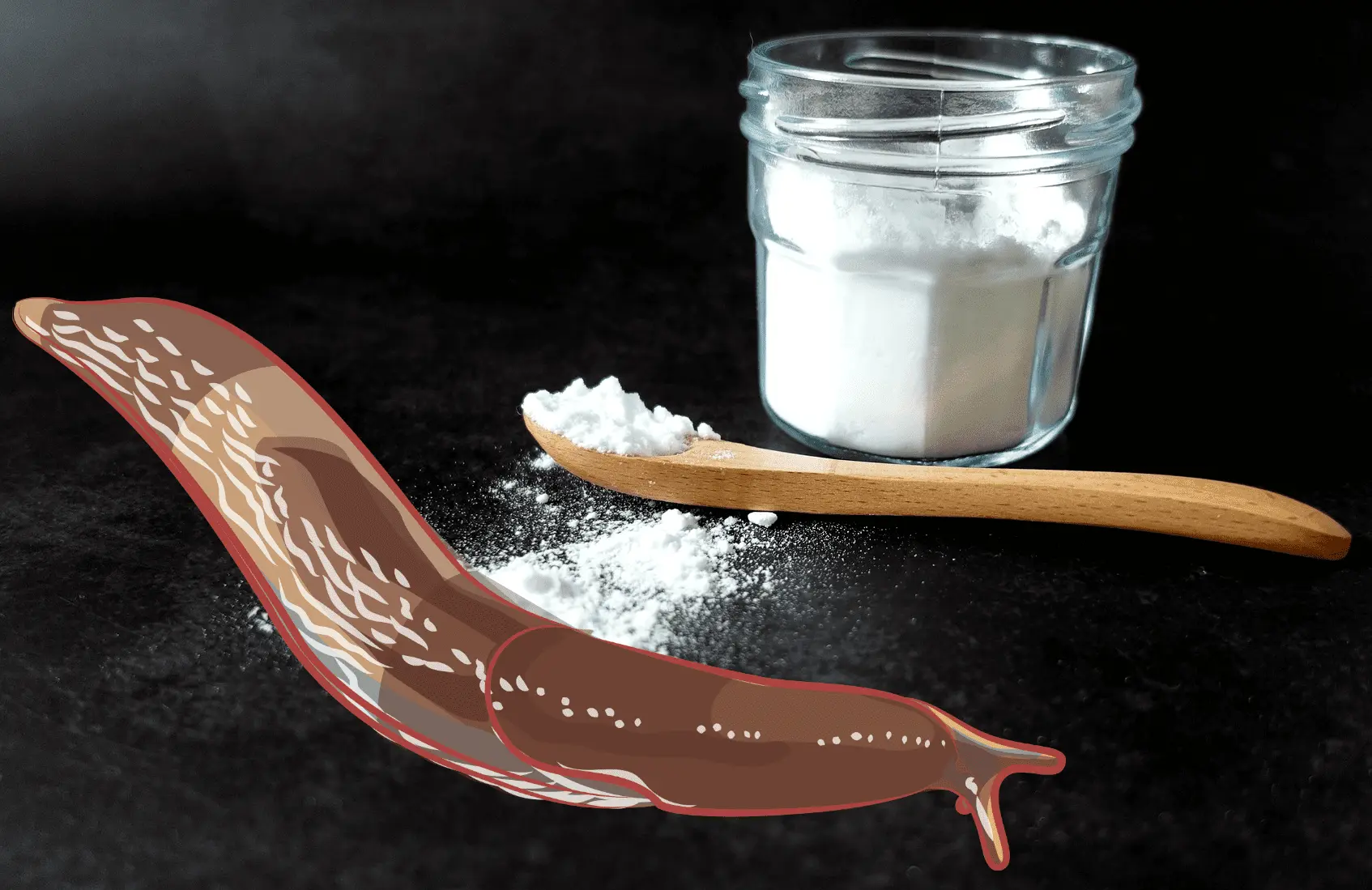
If you're discovering my blog, chances are slugs and snails are giving you grief.
You'd probably be very interested in the copper slug barrier I designed .
It changed everything for me. I can finally grow lettuce, cabbages, strawberries and squashes without tearing my hair out.
Don't hesitate — it's an investment (copper is expensive), but you'll likely save yourself a huge amount of time!
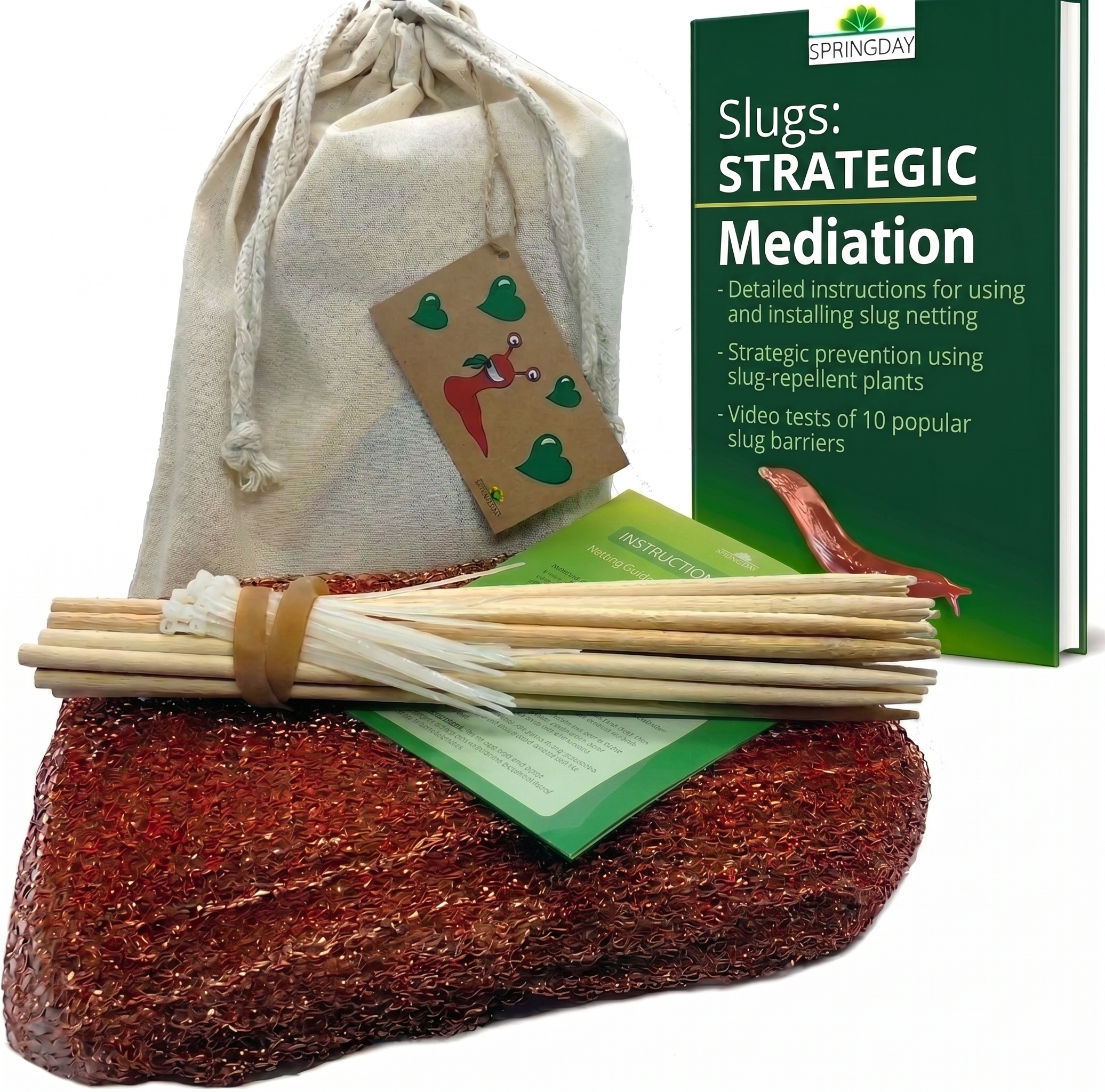
Baking soda is renowned for its many uses around the home and in the garden. But does the same hold true when it comes to keeping creeping pests at bay? Is it an effective slug repellent? And how do you use it in the vegetable garden? That’s exactly what we’ll set out, point by point, in this article.
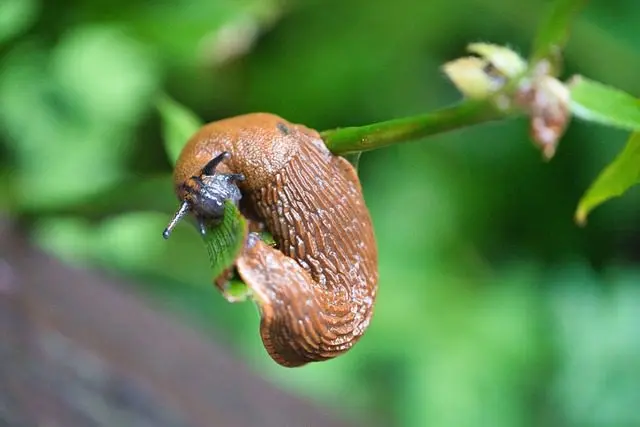
Is baking soda effective at keeping slugs away?
I’ve run plenty of tests on slug and snail barriers (a good dozen of them).
But this is one I haven’t tried.
To be honest, I already know the outcome: surround a slug with dry baking soda, and it won’t get across.
Because a material with a powdery texture stops them from passing. Just as fine sand, ash, dry coffee grounds and the like do …
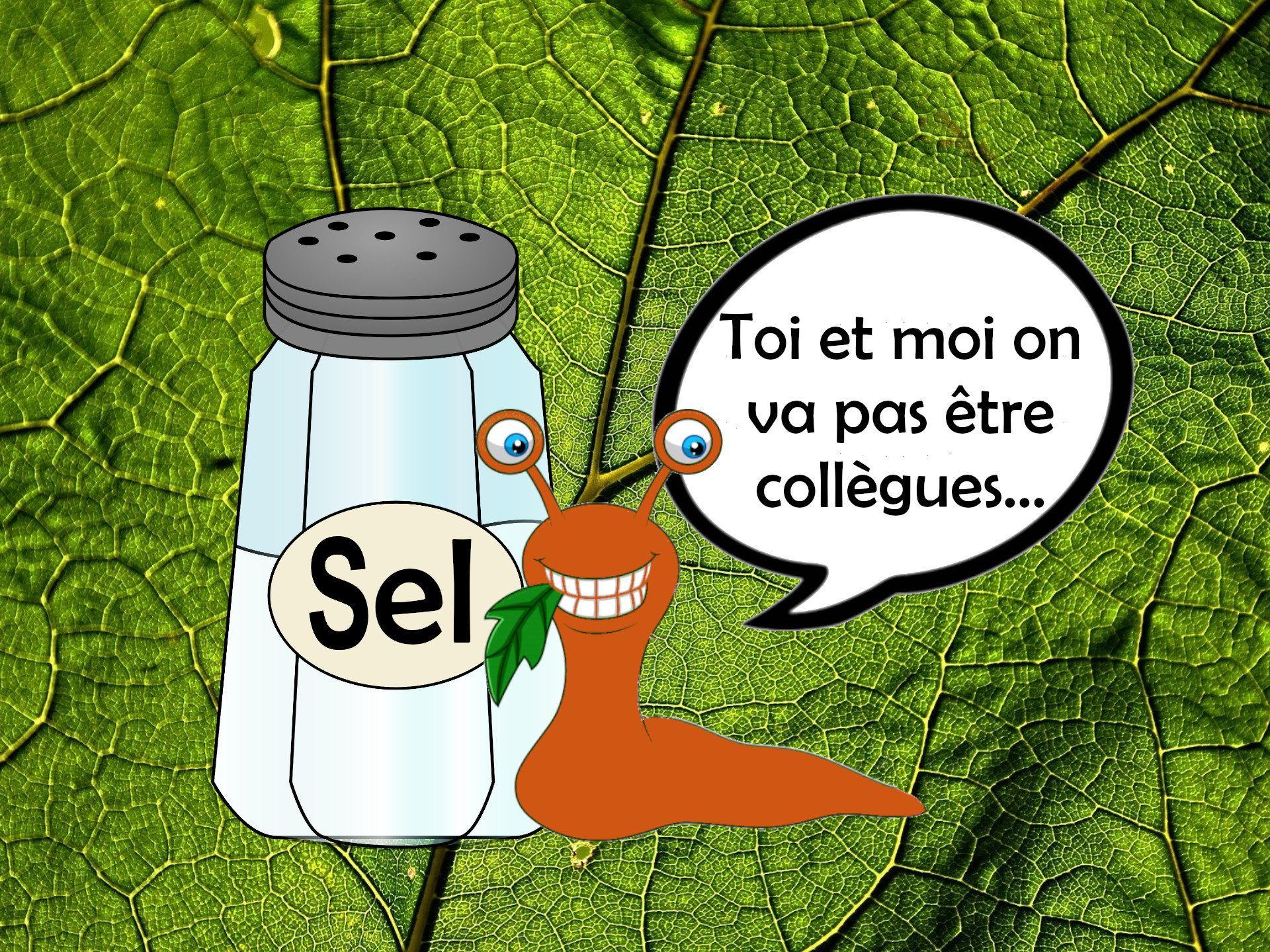
But above all, because baking soda, on contact with a slug, will most likely react like salt does (drying the slugs out through osmosis).
Sprayed in a dilute solution, it’s therefore also possible that it drives the gastropods away, much as salt water would (that would need testing).
But even if, in theory, it probably would work, it’s just as easy to guess what would happen under real conditions, out in a vegetable patch:
- The first possible use (in theory) would be to surround your plants with a small barrier of baking soda.
- The second option would be to spray diluted baking soda straight onto the foliage of vulnerable plants.
–> The problem (purely in terms of effectiveness, for now), in both cases: at the first downpour, the baking soda will be washed away and vanish into the soil. And I’d happily bet my arm that its repellent effect against slugs is then precisely nil.
In the third part of the article I’ll give you alternative solutions you can use to repel slugs intelligently.
But first, let’s take a look together at the other unwanted effects that using baking soda in the vegetable garden can have.
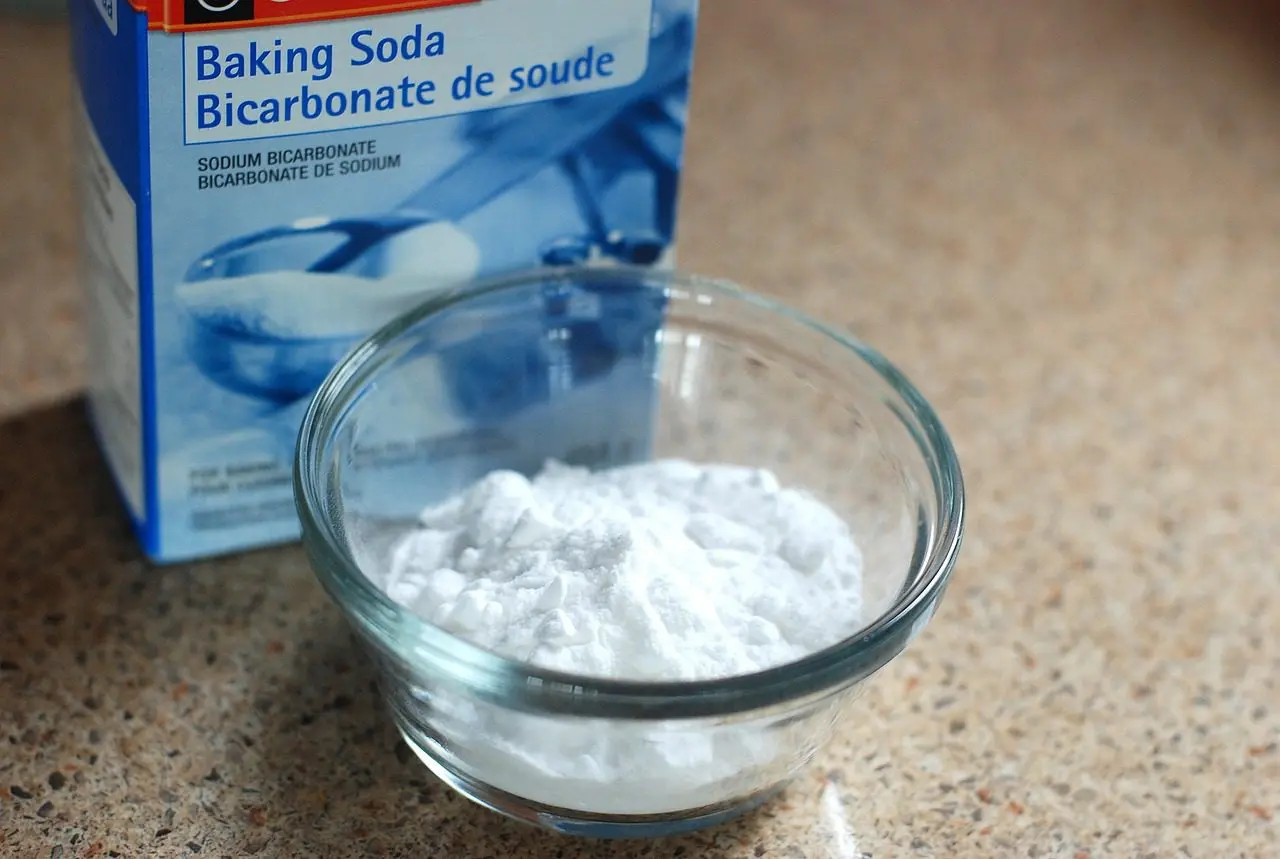
The risks of using baking soda in the vegetable garden
In the garden, baking soda is a PNPP (préparation naturelle peu préoccupante — a natural preparation deemed of little concern).
PNPPs are substances with a plant-protection benefit. But unlike PPPs (pesticides), they don’t require marketing authorisation.
These products are, as their name suggests, “of little concern” for health or the environment. In other words, you’re not risking cancer or irreversible pollution of your surroundings by using them in your garden.
There, I imagine you’d already guessed that (after all, we brush our teeth with baking soda).
But is it nonetheless ADVISABLE, in trying to repel slugs, to spread baking soda over your soil? For the soil’s health (its living web), and for your future harvests?
Here’s what the Wikipedia article on the subject — extremely well sourced — tells us: baking soda is an antibacterial, antimicrobial and antifungal agent, …
And what is it that we find at the heart of our soil, the thing that keeps it alive, lets it break down the organic matter we add to it and turn that into nutrients plants can take up? The thing that builds miles of mycorrhizae that make it easier for plants to feed on nutrients and water?
A host of bacteria and fungi.
- Now, an antibacterial, you’ll have guessed, kills bacteria.
- And an antifungal, you’ve surely worked out too, kills fungi.
In fact, in the garden, and as a PNPP product, baking soda is mainly used to combat fungal diseases, sprayed onto the leaves.
Belgium’s scientific institute of public health recommends using it against downy mildew, powdery mildew of the vine, and apple scab.
Baking soda is thought to work mainly by lowering the direct acidity of the surfaces it’s applied to. And fungi, as it happens, are particularly fond of acidic environments.
It’s essentially to be used in a preventive role.
So, to sum up this section: except in the case of a fungal disease matching one on this list, using baking soda against slugs will have negative effects on the health of your vegetable garden’s soil, because:
- It will adversely affect the bacterial life.
- It will harm the fungal life, and therefore the development of the soil’s mycorrhizal networks.
You’ve got the picture: it’ll be better to turn to other solutions to repel slugs and snails intelligently.

Using baking soda as a slug repellent harms the soil’s fungal life (artistic depiction of the soil’s fungal life).
Other slug repellents, garden-safe and effective

So, what are the alternatives to baking soda?
First of all, be aware that putting slug repellents, or even barriers, in place should — ideally — only be done alongside a genuine long-term slug-management strategy.
To keep it simple, this long-term strategy comes down mainly to three things:
- Attract slugs’ and snails’ natural predators by setting your garden up for them, and by not killing the slugs — they’re the predators’ food, and these allies won’t settle in if you make the slugs disappear.
- Increase the quantity of plants of every kind throughout your garden, and in particular plants that slugs are especially fond of: this means you won’t leave your cabbages as the only food on offer for the gastropods. And by spreading out their grazing, your plants will fare far better.
- While you wait for the balance to be restored, and if the slugs’ appetite proves too much, use Slug control section of the websiteSlug control section of the website
On that note, you should know that the wealth of natural barriers (ash, eggshells, coffee grounds, hair, …) cited in the majority of articles on the question are largely ineffective (in any lasting way) under real conditions.
I can tell you this with confidence, because I’ve personally tested them on my YouTube channel here, if you’d like to see it with your own astonished eyes.
What you’ll see on the channel is that the only two genuinely effective slug barriers are water moats (wide enough, and roughly more than 5 cm deep), and copper (used vertically, and more than about 7 cm tall).
-
Water barriers can be made on the cheap by burying salvaged guttering, which will fill itself with water every time it rains.
-
Otherwise, if the question of copper interests you, I’ve listed and analysed here every copper barrier on the market, to help you see things clearly.
The information in this article has been selected and verified according to the criteria defined in our editorial charter.
Done with slugs. For good. Starting this season.
Scientific bibliography
- To delve further into the potential use of baking soda in growing crops: Zhilong Bie, Tadashi Ito, Yutaka Shinohara,
Effects of sodium sulfate and sodium bicarbonate on the growth, gas exchange and mineral composition of lettuce, Scientia Horticulturae, Volume 99, Issues 3–4, 2004
Related articles