Salt against slugs in the veg garden: don’t do it!
In this article, I’ll try to answer several questions:
Why and how is salt used against slugs in the garden?
Why and how does it kill these poor gastropods?
Do they suffer? A mini face-off between Descartes and Ned Block
Using salt against slugs: what side effects for your garden?
Why does salt kill your plants and impoverish your soil?
What effective alternatives are there to using coarse salt against slugs in the veg garden?
So, is salt an Slug control section of the website Here, at last, is the full picture on the question.
Key points
• Don’t put salt on slugs.
Salt doesn’t make them “melt”, it dehydrates them by osmosis: their water is drawn out towards the salt. It’s brutal, slow, and needlessly violent.
• Ineffective as a “slug solution”.
A barrier of coarse salt vanishes with the first rain. Once dissolved, no protection remains, and the area can even become more attractive to certain slugs (moisture, damaged plant tissue).
• Very bad for soil and plants.
Salt builds up in the soil, blocks water uptake by the roots and puts crops under serious stress (lettuces, beans, strawberries, cucurbits…). It also kills a large part of the soil microfauna (bacteria, fungi, earthworms).
• Underestimated environmental impact.
Washed away by the rain, salt runs off into ponds, ditches and water butts and disrupts aquatic life (tadpoles, insects, micro-algae…). A few handfuls of salt can be enough to create a lasting imbalance.
• An ethical question:
Everything suggests that slugs feel at least strong stress when faced with salt, and perhaps genuine pain. When in doubt, the precautionary principle clearly points to avoiding this method.
• A boomerang effect on natural regulation.
Salt kills the most exposed slugs, but it also weakens their predators (hedgehogs, ground beetles, slow-worms, birds…). The result: in the long run, slug populations are harder to regulate.
• What to do instead?
– Quick night-time collecting by torchlight
– Boards/tiles as refuges to gather them up in the morning
– Physical barriers (copper, netting, targeted protection for young plants)
– Avoid evening watering, which attracts slugs just as they come out
In short:
Salt is one of the worst “solutions” against slugs: it destroys your soil, harms your ecosystem, makes animals suffer… when simple, lasting and ecological methods exist to protect the veg garden.
If you're discovering my blog, chances are slugs and snails are giving you grief.
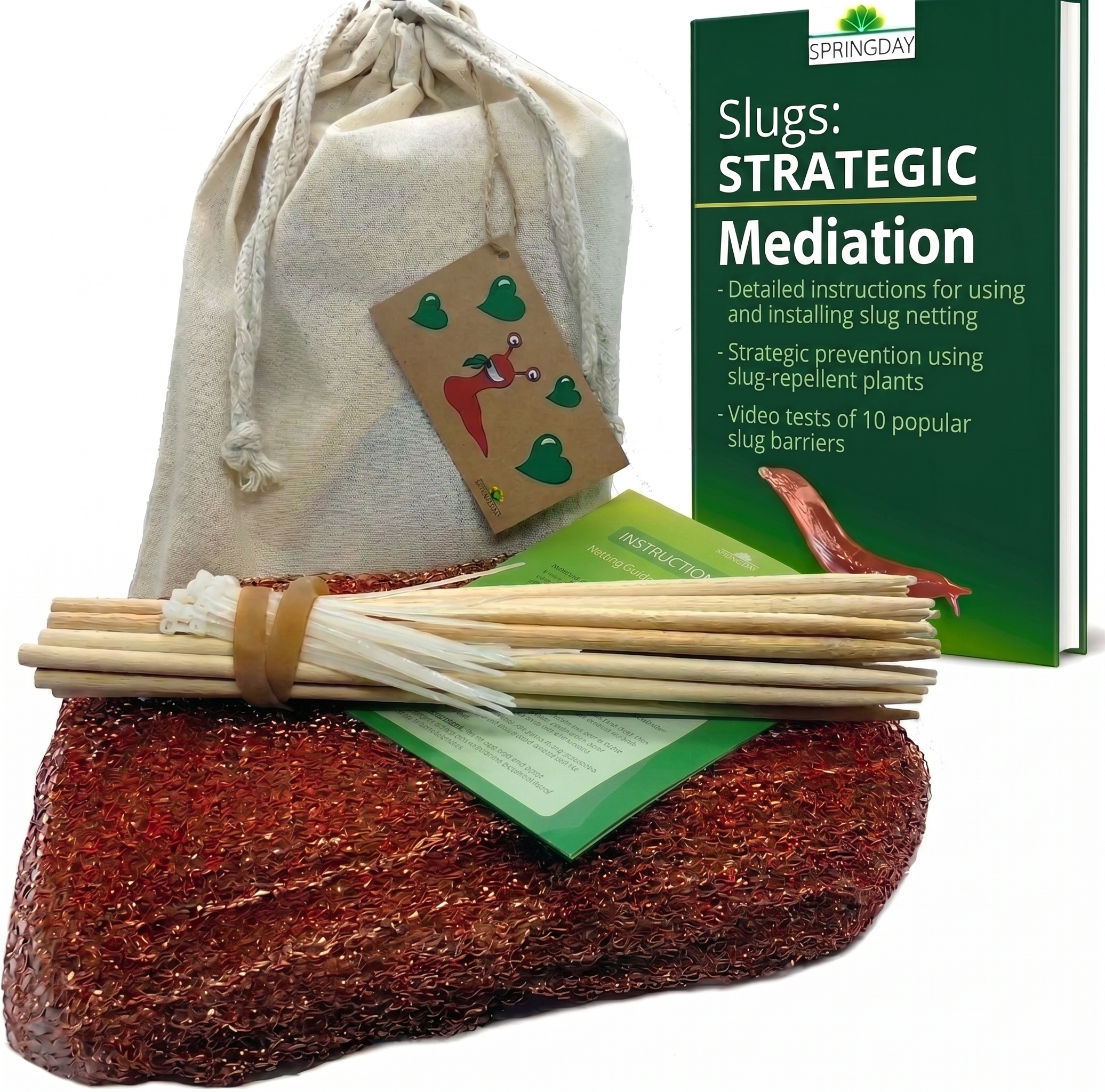
You'd probably be very interested in the copper slug barrier I designed .
It changed everything for me. I can finally grow lettuce, cabbages, strawberries and squashes without tearing my hair out.
Don't hesitate — it's an investment (copper is expensive), but you'll likely save yourself a huge amount of time!
But, before going any further, I’d advise you to read the article shown as a thumbnail below, because it gives an overall understanding of the problem common to all these “bad” solutions. Then come back to this one.
Related articles
I. Why and how is coarse salt used against slugs in the veg garden?
The other day, I was looking for a bit of inspiration for an article on one of the urban (or rural, as it happens) legends of homemade and “natural” slug control in the veg garden. That’s when I came across plenty of articles championing the use of salt.
This weapon of mass destruction against gastropods is used in two forms:
· Ground defence: a wall of coarse salt around the plants

· Aerial offensive: bombarding coarse salt straight onto the landing gastropods (civilian and military alike, without distinction)

The wall is meant to kill (on contact) the slugs that would cross it, intent on nibbling your lettuces.
The aerial bombardment is meant to take out the “enemy” directly, on the battlefield, by contact here too.
But how is it that mere contact with salt can kill slugs?
II. Why does salt kill slugs?

To answer this question, we need to think back to secondary-school chemistry lessons: ouch, that’s going back a bit, isn’t it?
No worries, it’s actually quite simple.
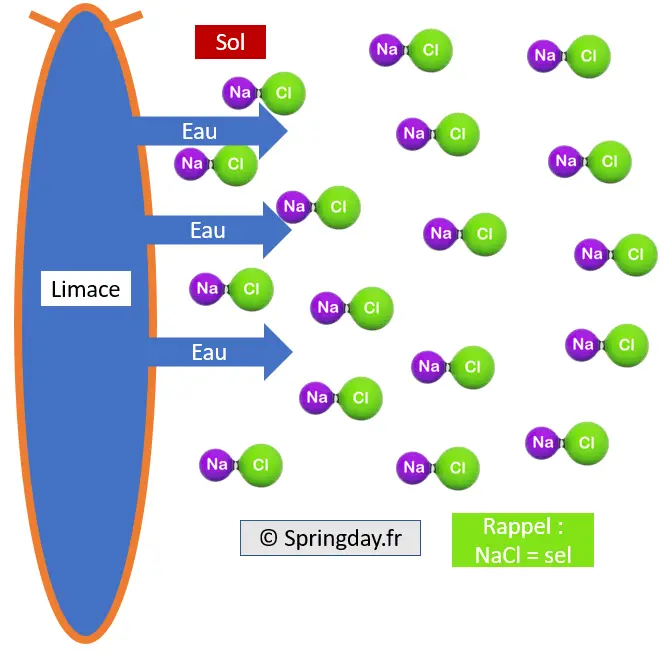
In fact, you need to know that in water (H2O) as in salt (NaCl), each molecule is charged (with what are called partial charges). Without getting into the details, it turns out that NaCl molecules (i.e. salt) are attracted to water molecules (H2O): that’s why salt dissolves in water, because the H2O and NaCl molecules attract one another and “merge”.
But, if you put salt on a membrane sitting on water (the membrane therefore separating the water from the salt), the water will be so drawn to the salt that it will pass through the membrane to merge with it: this is what’s called “osmosis”.
This is what happens when you put salt on water-laden food, like a tomato for example: the water “comes out” of the tomato to soak into the salt, where it is then trapped. The tomato then dries out, losing its water.
Well, it’s the same with the slug. It’s a membrane (its skin, which is porous to boot) filled with water. So salt on a slug will draw out all its moisture (its water), and it will dry out and die. :’(
The slug therefore doesn’t melt under the effect of salt, it dries out…
III. Why is using coarse salt against slugs in the veg garden a very bad idea?
How ineffective salt is after rain

In the case of a barrier of coarse salt, the first thing to say is that after the first rain the salt will be dissolved, and it will seep into the soil: no more barrier, then. And the hordes of gastropods will be only too happy to take their revenge on your cabbages for your evil intentions 😉
Salt can paradoxically attract more slugs after rain
When rain dissolves a salt barrier, it temporarily creates a very damp zone, sometimes enriched with damaged plant tissue. Some slug species are drawn to it, especially on warm, humid nights.
So not only does the barrier disappear, but it can indirectly increase slug activity in the same spot. It’s a counterproductive effect that’s rarely mentioned, but well observed by gardeners and confirmed by several studies in soil ecology.
Why and how salt kills plants, soil, and the living things in it
Whether salt is thrown onto slugs and snails, or used as a barrier to protect your plants, in both cases this happens in — or near — your veg garden.
But do you know that salt absorbed by the soil is very damaging to its health, as well as to that of the organisms living in it, and damaging too to the health of your plants?
The impact on plants comes from the osmosis phenomenon we’ve already seen. The far higher salt concentration outside the plant roots draws out the water contained in those roots (more precisely, the water contained in the root cells). The water in the roots is therefore drawn outside them and “trapped” by the salt. The roots will then dry out, and the plants will die. This is plasmolysis.
Leached salt pollutes water and wetlands
Part of the salt applied in the garden doesn’t stay put: it dissolves and is then carried by run-off towards low-lying areas, ditches, water butts, ponds or basins.
But salinised water is toxic to many organisms: tadpoles, aquatic insects, micro-algae, amphibians. The salinity also alters the microbiological balance of standing water.
Using salt in a veg garden sited near a pond or a rainwater-harvesting system can therefore have widely underestimated ecological impacts.
A danger even in very small quantities
The cumulative effect of salt in the soil is often underestimated. Unlike other substances, salt doesn’t break down: it builds up year after year.
Even small amounts, repeated or concentrated around the plants, are enough to lastingly raise the salinity of the soil, which reduces the roots’ ability to absorb water and nutrients.
Sensitive vegetables such as lettuces, beans, strawberries or cucurbits react strongly as soon as salinity exceeds very low thresholds. It’s an agronomically well-documented phenomenon: a few handfuls of salt scattered in a veg garden can cause lasting stress.
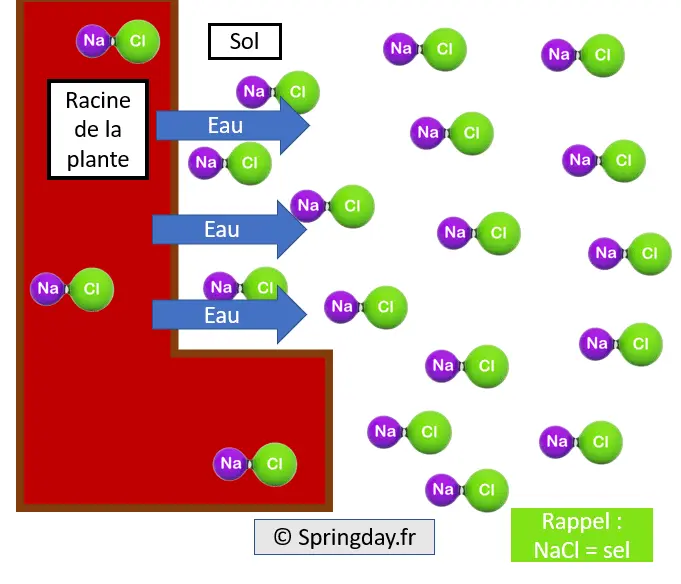
By this same phenomenon, salt kills the vast majority of the soil’s bacteria and fungi (which make a rich soil), but also earthworms, and many insects.
Using salt in the garden is therefore a disaster for the soil and the whole system, which ends up severely disrupted.
c. Salt on slugs: great suffering? Descartes and Ned Block

Dédé, the glowing-red oddball from earlier, is convinced of it: “Those creatures don’t suffer, come on… Why tie yourself in knots over it? We’d know about it if slugs could suffer…”
What Dédé says may seem a bit silly at first glance… But, digging a little deeper, you realise that the answer isn’t as simple as it looks.
Do slugs, like other molluscs, have the physiological and cognitive ability to suffer in the sense we mean?
First of all, what does it actually mean, to suffer?
Almost all living things possess what we can call (to keep it simple) a receptor system, designed to make them naturally avoid the environmental sources of danger that could jeopardise their survival.
It’s a mechanism that favours the survival of the species in question, and that is preserved down the generations by natural selection.
Broadly speaking, if an insect approaches a campfire, for example, it will, at some point, turn back (its body detecting the intense heat), rather than carry straight on into the flames and burn to death. Its “receptor system” for heat allowed it to avoid an environmental danger, and so allowed it to survive.
The same goes for a slug that meets a barrier of coarse salt: touching the substance, it will abruptly recoil, then turn back.
This kind of behaviour, so close to our own — when we clumsily place a hand on a hotplate, for example — immediately makes us think of the pain we feel in that sort of situation.
Does this necessarily imply a genuine pain felt by slugs, when coarse salt is thrown on them, for instance?
Descartes saw animals as a kind of extremely sophisticated machine: you can equip a robot with a set of sensors to detect environmental threats. You can also program it with defence or escape mechanisms against these potential dangers. A robot equipped in this way — now, or once the technology allows it — will give us the impression, under certain conditions, that it feels a certain kind of pain.

And yet, even if its “body” reacts as such, it will never feel the pain.
In fact, the ability to feel pain as we understand it requires a certain form of consciousness. It is phenomenal consciousness, as defined by the philosopher Ned Block.
Phenomenal consciousness is, as he puts it, “what it is like”, the subjective experience, the qualitative, what you cannot truly grasp without experiencing it.
This phenomenal consciousness can, according to some scientists, exist only in living beings made up of a sufficiently developed and complex brain and nervous system. It is accepted, for example, that all mammals have phenomenal consciousness (that they therefore subjectively feel pain; but also that they subjectively perceive their environment, etc…).
Now, this conclusion comes only from an extrapolation based on our own human bodies: we notice close resemblances — anatomical and cognitive — in mammals, so we consider them to be subjectively conscious, as we are.
This leads some scientists to think that molluscs would be devoid of subjective sensation, their make-up being too far from our own.
Other scientists dispute this view, asserting, by definition, that we cannot understand what another living being subjectively experiences, and that faint anatomical or cognitive resemblances prove nothing.
We can’t even really understand what another human feels when they bite into chocolate, or fall in love.
We can understand even less what it is like to be a slug. Since the animal kingdom diverged sharply over the course of evolution, the gateways of sentience (the anatomical and cognitive features responsible for subjective sensory experience) cannot be reduced to the nervous and cerebral system as it exists in us, humans.
Yuval Noah Harari already shares the idea that other living beings could very well have subjective sensory experiences far richer than our own. These experiences could be of a very different origin and nature from ours, which is why it will probably never be possible for us to know, for example, what it is like to be a slug.
But, in doubt over whether or not slugs have phenomenal consciousness, and following the precautionary principle (which we ought to apply far more, I think, to certain other spheres of our world!!), it’s better not to inflict a potentially atrocious and slow death (because yes, the process of drying out by osmosis on a living being is potentially atrocious) on these precious helpers of the garden. Well, that’s just my opinion 😉
d. Why killing slugs is not desirable for your garden
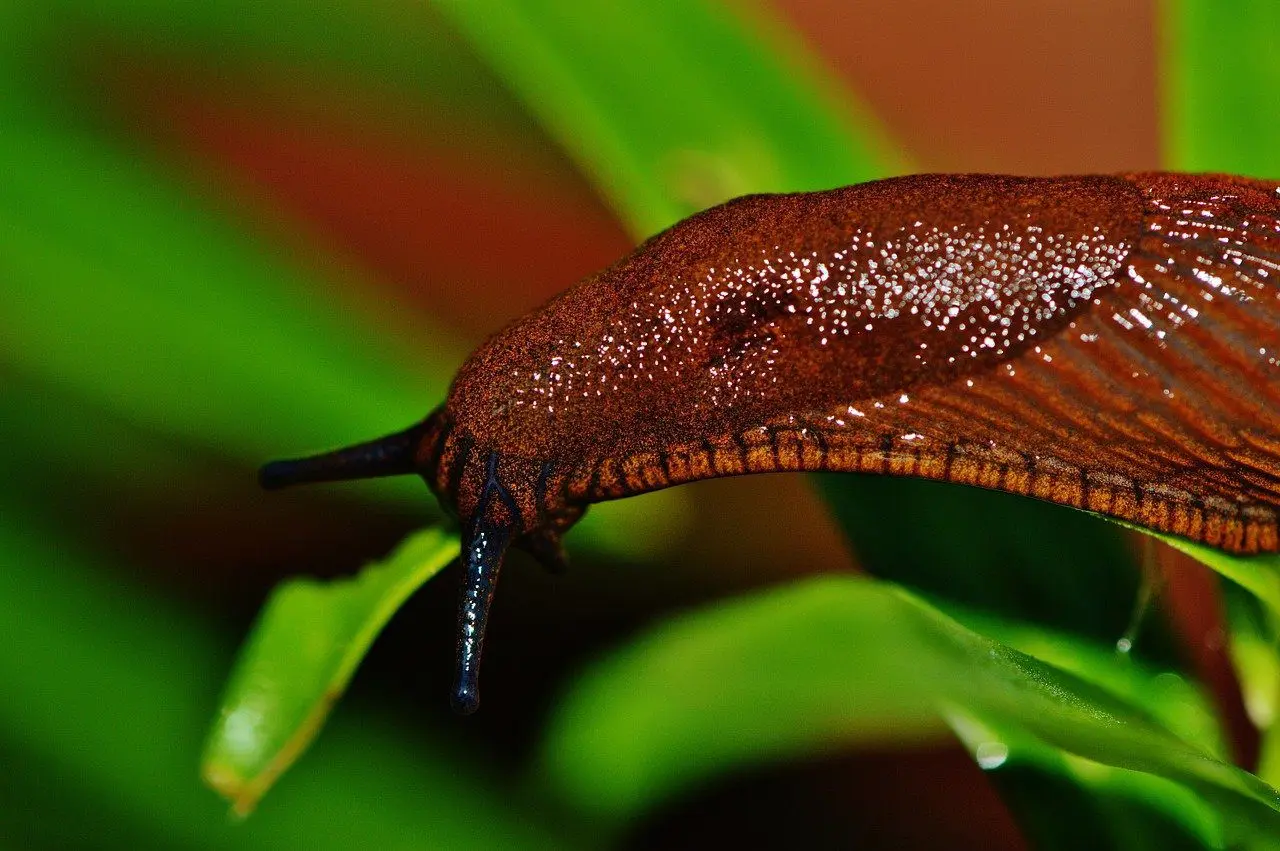
And yes, slugs really do have an essential role in the garden! For example, they prevent the spread of pathogenic fungi, and encourage the development of the soil’s mycorrhizal fungi! Among other things, because the benefits are many…
“Okay, it’s very sweet of the ladies to encourage mycorrhizae, but my cabbages are anything you like, except encouraged.”
Yes, it’s true that heavy damage to our plants is sometimes hard to stomach, which is why, in what follows, we look at effective alternatives to the use of salt!
Disruption of the natural regulation of populations
Shock treatments like salt mainly eliminate the most exposed slugs, but indirectly favour the individuals that are more resistant to drought, more nocturnal, or active only in high humidity.
This selective pressure can make populations harder to control in the long run. By abruptly reducing slug numbers, we also weaken the lasting establishment of their natural predators, accentuating the imbalance further still.
Salt also harms slug predators
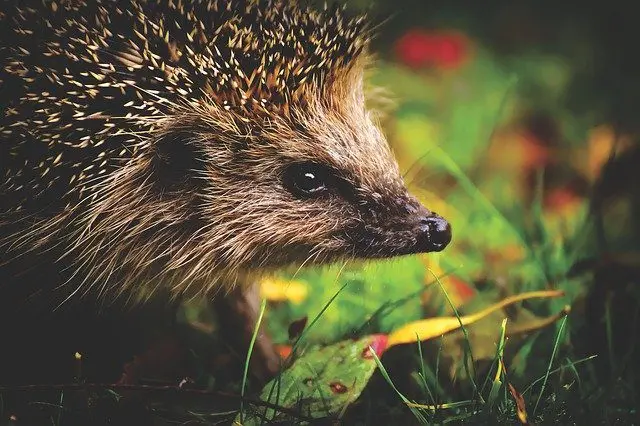
Salt barriers or salinised zones pose a direct risk to the garden’s helpful creatures: hedgehogs, slow-worms, ground beetles, rove beetles, birds, and so on.
Salt can irritate their mucous membranes, burn their feet or disturb their larvae in the soil.
By weakening this useful fauna, the use of salt delays the establishment of a natural balance in which slugs are regulated without human intervention.
What to do in an emergency in the event of a slug attack?
To limit the damage without harming the soil:
-
collect at night by torchlight, very effective in 5 minutes;
-
set out shelter-refuges (boards, tiles) to gather them up in the morning;
-
temporarily protect young plants with effective slug barriers;
-
absolutely avoid evening watering, which attracts slugs just as they come out.
These quick solutions let you keep your plants without resorting to destructive methods.
IV. What effective alternatives are there to using coarse salt against slugs in the veg garden?
In fact, there are plenty of alternatives to salt for managing slugs in the garden.
But the common thread between all the ones I’m going to present to you is that they in no way consist of the mass eradication of a slug population.
Because, what I could also have explained in the paragraph above, and that I’ve already shared in several articles, is that slugs are only the symptom of an imbalance in our garden. A young garden (which is a modification of an original ecosystem), for example, will probably be overrun by slugs for several years before a re-balancing settles in naturally (reflected in a low stabilisation of the slug population).
This re-balancing goes through many stages, one of which, for example, is the lasting establishment of slug predators. Get rid of the slugs, and the predators of the gastropods won’t settle near you, finding no prey there.
The method I champion, on this site, and for managing most of the garden’s small “pests”, relies on this long-term regulation.
So even the methods whose primary aim is short-term reduction of damage in the veg garden must embrace this long-term regulation, rather than oppose it. All the methods of mass slug eradication oppose this lasting long-term regulation.
Conversely, targeted repellent methods, distraction, or barriers (to protect the plants) limit or even prevent the damage, without compromising natural long-term regulation.
Conclusion:
Salt is one of the worst ideas you could have for managing slugs in the garden.
On top of relying on a means of action that one can, I think, call “barbaric” (but whose process you now understand!), it strongly and lastingly impoverishes our soil and all the living things in it.
Just because something is natural doesn’t mean it’s necessarily beneficial or desirable in the garden. Salt is a good example of this, but there are many others.
The information in this article has been selected and verified according to the criteria defined in our editorial charter.
Done with slugs. For good. Starting this season.
Bibliography:
-
A. Ester, K. van Rozen, L.P.G. Molendijk,
Field experiments using the rhabditid nematode Phasmarhabditis hermaphrodita or salt as control measures against slugs in green asparagus, Crop Protection, Volume 22, Issue 5, 2003 -
Nagel, T. (1974). What is it like to be a bat? Philosophical Review, 83(4), 435-450.
-
FAO – Soil salinity and its management
-
ScienceDirect – Salt stress in plants (scientific review)
https://www.sciencedirect.com/topics/agricultural-and-biological-sciences/salt-stress
FAQ – Salt and slugs: the questions you’re really asking
What happens if you put salt on a slug?
The water in its body is literally drawn out towards the salt. The slug doesn’t “melt”: it dehydrates. It’s brutal, drawn-out, and clearly not a pleasant moment for it to live through… nor a good idea for your garden.
Why do some people put salt on slugs?
Because the visual effect is spectacular: the slug recoils, produces mucus, and everyone thinks “ah well, there you go, it works!”. In reality, it solves nothing at all, and it creates far greater damage than the original problem.
Does coarse salt work better than fine salt?
No. Whether coarse, fine, or rosemary-scented, it’s exactly the same osmosis mechanism at work. The result is identical, and just as harmful.
Does salt really make slugs melt?
No, sorry to shatter the myth. What you see is mucus and water coming out of its body, not “melting”. Scientifically: it dries out. Poetically: it goes through a very rough patch.
Does salt make slugs suffer?
Very probably, yes. Osmosis is an aggressive process, and the slugs’ immediate reactions show enormous stress. So if the aim is not to inflict needless torture on a small living being… you give it a miss.
Is putting salt on slugs dangerous for my veg garden?
Yes, and not by a little. Salt runs off, builds up, salinises your soil, wrecks the roots and kills the microfauna. In short: to fix a slug problem, you create a miniature desert. Not great.
Does salt stop slugs from coming back?
No. After the first rain, there’s no barrier left. Worse: the temporarily very damp zone that follows the salt dissolving can even become… attractive to certain slugs. Ironic, but true.
Can salt be used as a weedkiller?
Technically yes, in the sense that it kills absolutely everything it touches. But that’s like using a flamethrower to pull up a weed: drastic, but frankly not sensible.
Why do we see so many “salt on a slug” videos?
Because it’s spectacular, and the internet loves the spectacular. But these videos only show 10 seconds of a much wider phenomenon, neither the consequences in the soil nor the ecological carnage behind it.
Does coarse salt around plants really protect them?
No. It doesn’t stand up to rain, it seeps into the soil, and it destroys your plantings more effectively than the slugs do. In short: a double failure.
Is salt more effective than other methods?
Not at all. Simple methods like physical barriers (copper barriers, for example), refuge-shelters for slug predators, work far better, without ruining your soil.
A little bit of salt, surely that’s fine?
Unfortunately not. Salt doesn’t disappear. It builds up year after year, even in small quantities, and can take a very long time to be flushed out. It’s a way to make your soil sterile without you even noticing.
Why do some gardeners claim that “salt works”?
Because they confuse an immediate visible effect with actual effectiveness. And because the “granny’s tip” is sometimes hard to kill off. But when you look at the whole system, you realise that salt makes the problem far worse than it solves it.
Related articles