Slugs in the house: here’s why, and here’s what to do.
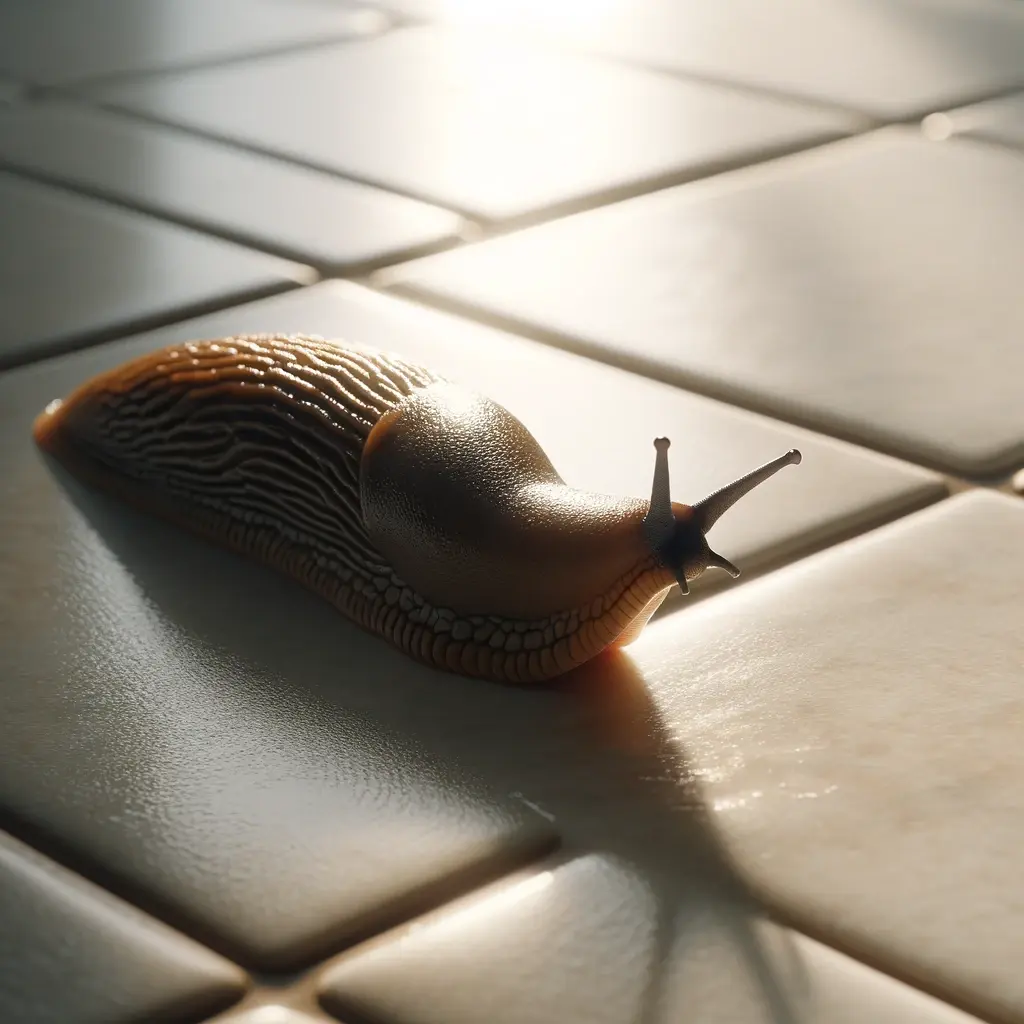
A slug inside your house is often an unpleasant surprise, and here we’ll look at how to put an end to it for good.
These usually discreet, nocturnal gastropods, which prefer damp undergrowth and shady gardens, sometimes take refuge in our homes.
And although their presence indoors is unusual, it can happen for all sorts of reasons. Changes in the weather, excessive humidity in your house, or easy access from outside, for example.
In this article, we’ll also look together at how to stop finding slugs inside your house.
We’ll see that dehumidifying your home, sealing up the entry points, and using white vinegar are the most effective methods, and how to put them into practice.
So if you think, as I do, that this article can permanently solve your problem with slugs in the house, let’s get started!
If you're discovering my blog, chances are slugs and snails are giving you grief.
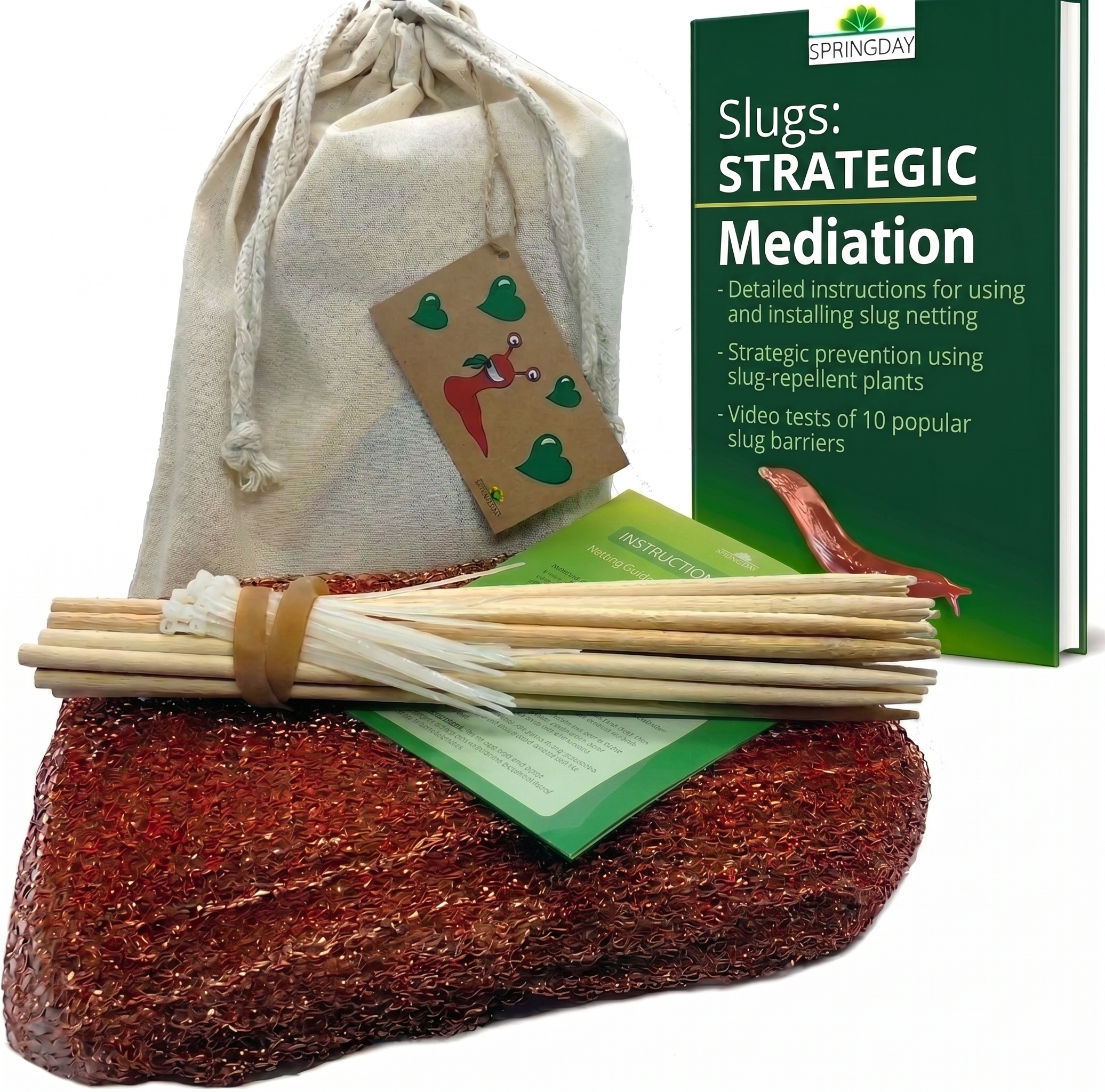
You'd probably be very interested in the copper slug barrier I designed .
It changed everything for me. I can finally grow lettuce, cabbages, strawberries and squashes without tearing my hair out.
Don't hesitate — it's an investment (copper is expensive), but you'll likely save yourself a huge amount of time!
Understanding why slugs come into the house
Their natural habitat and behaviour
The natural living conditions of slugs:
Slugs are terrestrial molluscs that thrive in damp, cool environments.
They are often found in shady spots such as undergrowth, damp gardens, and grassy areas.
They are particularly active at night or in rainy weather, as they are very sensitive to dehydration.
Temperature and humidity:
Slugs prefer moderate temperatures and high humidity levels.
A relative humidity above 70% and a temperature between 10°C and 20°C are ideal for their survival.
When it gets too hot or too dry, they become inactive to avoid drying out.
Why slugs seek shelter inside your home
Climate change and weather conditions:
Slugs can be driven to enter houses because of extreme weather conditions.
During the rainy season, for example, waterlogged soils force them to seek out dry places.
Conversely, in times of drought, they look for refuge in cooler, damper environments, often inside houses.
Seeking protection and moisture:
Houses offer living conditions that can be very appealing to slugs, particularly in terms of moisture and protection from predators.
They may enter houses in search of a stable environment where they can stay hydrated and shelter from extreme outdoor conditions.
The factors that encourage these gastropods to appear in houses
Humidity:
Slugs are drawn to damp environments, and houses with moisture problems (such as leaks, condensation or damp cellars) can become ideal habitats for them.
Moisture keeps their skin damp, which is crucial for their breathing and survival.
Easy access:
Houses with structural weaknesses, such as cracks in the walls, poorly sealed doors or draughty windows, offer slugs easy entry points.
They can squeeze through very narrow openings in search of shelter.
Food sources:
Indoors, slugs can find various food sources, such as food scraps, or even the mould they are so fond of.
These things attract them and encourage them to stay once they have found a way into the house.
Putting these factors together, it becomes clearer why slugs try to make their way into our houses, especially when conditions outside become less favourable to their survival.
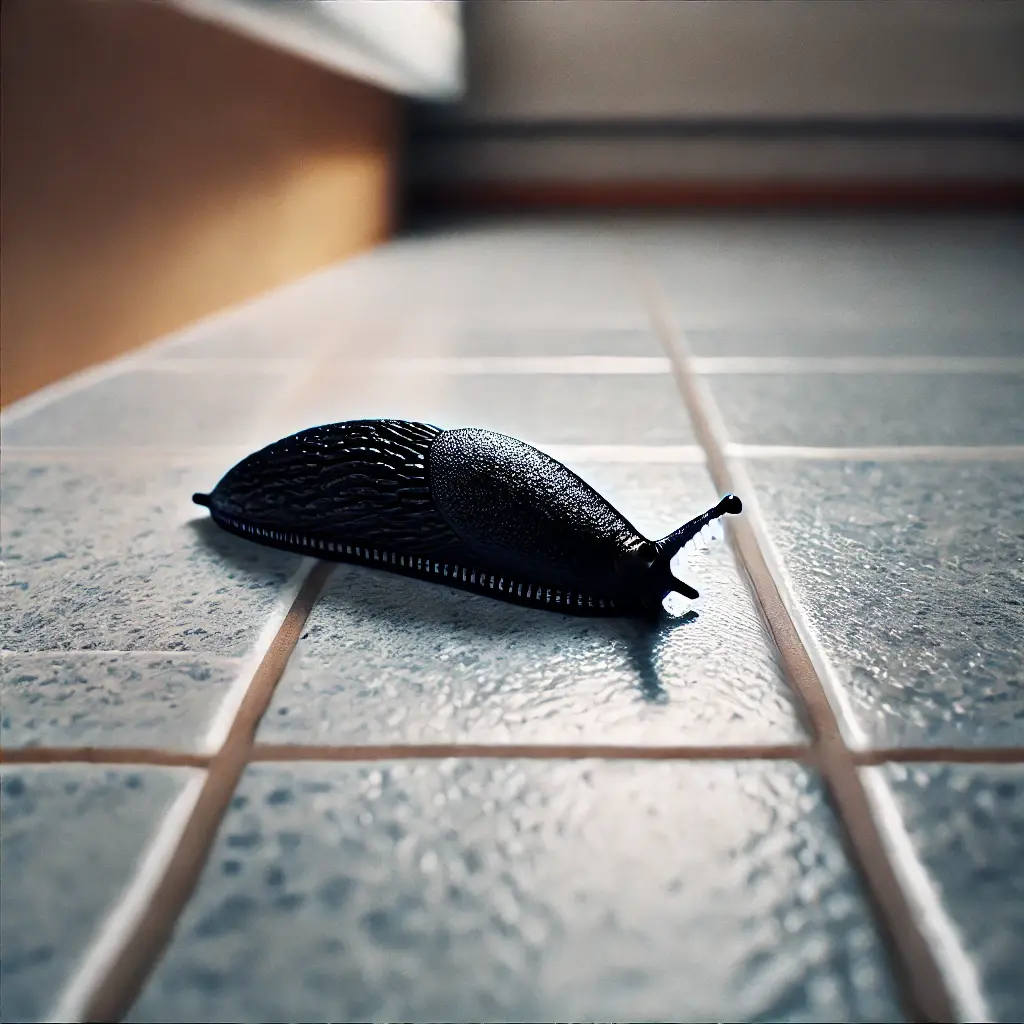
How to get rid of slugs in the house
Preventive methods
Reducing humidity
Moisture is the main factor that draws slugs into houses.
To avoid their presence, it is essential to keep humidity levels low in the house.
Here are a few practical tips:
-
Air the rooms regularly: Make sure all the rooms in the house, particularly cellars and bathrooms, are well ventilated. Use fans or dehumidifiers to reduce the ambient humidity.
-
Repair leaks: Regularly check pipes, sinks, and roofs for any leaks that could create damp areas attractive to slugs.
Sealing the entry points
Slugs can get in through very small cracks. To prevent them from entering:
-
Identify potential access points: Carefully inspect the walls, skirting boards, windows, and doors to spot cracks, holes or poorly sealed joints.
-
Use sealant or expanding foam: Seal all cracks and holes with sealant or expanding foam to stop slugs from getting into the house.
Waste management
Slugs are attracted to food sources. Good waste management is crucial:
-
Don’t leave food lying around: Avoid leaving food scraps or crumbs on worktops and floors. Clean surfaces immediately after preparing or eating meals.
-
Use closed bins: Make sure the bins inside the house are always tightly closed so as not to attract slugs.
-
Remove affected plants: If you have sensitive houseplants (basil, young lettuces, etc.), check that they are not infested with slugs and immediately remove any plant showing signs of damage.
Natural slug repellents for use inside a house
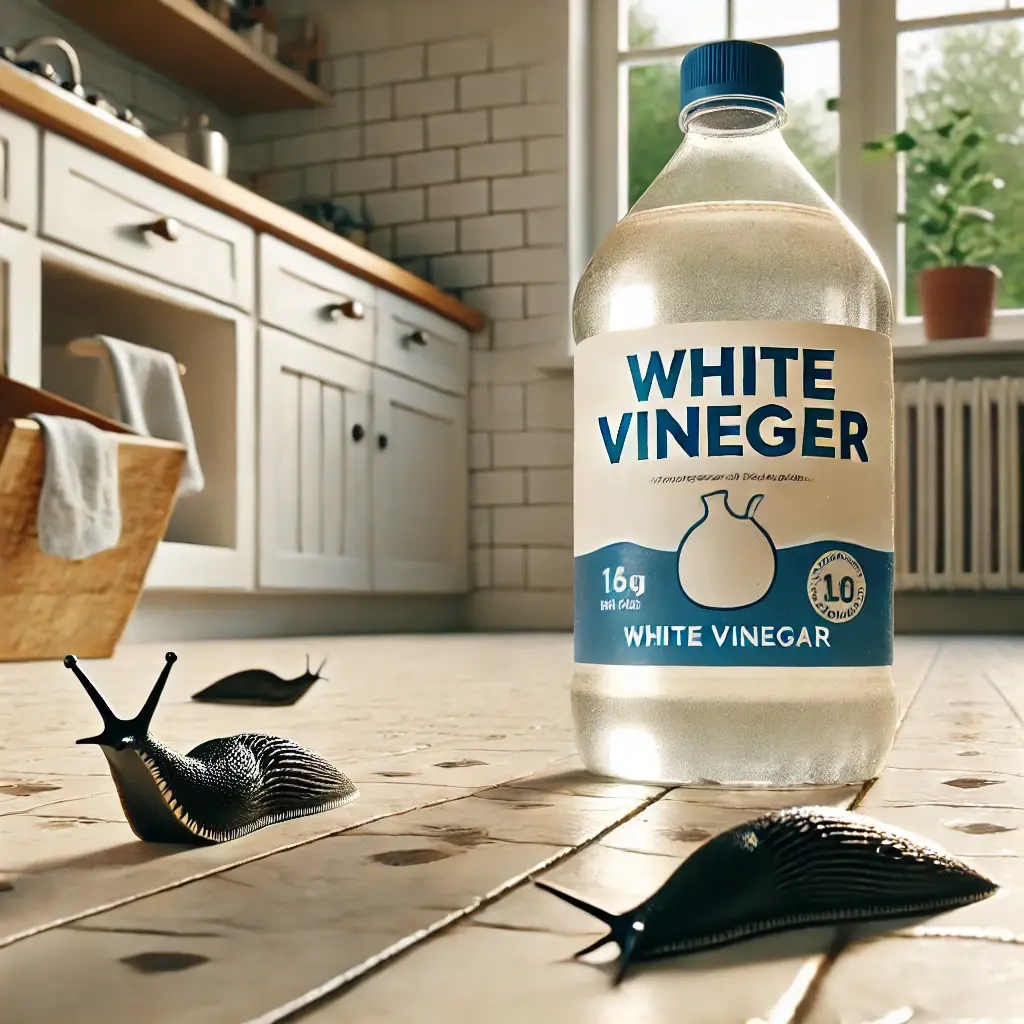
White vinegar
White vinegar is an excellent natural repellent against slugs, particularly inside a house where other slug repellents or barriers struggle to find their place. Its mode of action is its strong acidity, which slugs find very hard to bear. Here’s how to use it effectively:
-
Washing the floor: Regularly wash floors with a solution of white vinegar diluted in water to deter slugs from venturing into these areas. Nothing is worse for them than having to crawl across a floor washed with white vinegar.
-
Daubing the entry points: Apply white vinegar, pure or diluted, to the entry points you have identified, such as door thresholds and windows, to create a natural barrier.
Bicarbonate of soda
Bicarbonate of soda is another option, although less convenient to use than white vinegar:
- Creating a barrier: Sprinkle a thin layer of bicarbonate of soda around the entry points or in the areas where you have spotted slugs. When they come into contact with the bicarbonate, it acts as a powerful drying agent (much like salt) that deters them from crossing.
When applied regularly, these methods can help to considerably reduce the presence of slugs in your house while avoiding the use of harmful chemicals.
Conclusion
To conclude, although discovering slugs in your house is never pleasant, it is entirely possible to get rid of them by taking a few simple precautions.
By reducing humidity, sealing the entry points, and using natural repellents such as white vinegar or bicarbonate of soda, you can make your house far less welcoming to these gastropods!
I hope you enjoyed this article, and that it has given you new tools to garden freely and self-sufficiently, while understanding what you are doing and why you are doing it.
See you soon,
Robin.
The information in this article has been selected and verified according to the criteria defined in our editorial charter.
Done with slugs. For good. Starting this season.
Scientific references
-
In this study, we see the strong repellent effect of acetic acid, one of the main components of white vinegar. This study was carried out on snails, whose behaviour is very similar to that of slugs.
Related articles
Testing and review of 30 natural slug deterrents (do they work?)
Read
Slug-repellent plants, or prevention through planting
Read
Surface composting: protect your vegetable patch from slugs, with love
Read
Slugs: their usefulness in the garden, what they indicate, and holistic management through reshaping the habitat
Read
Slug predators: which are they? How to attract them to the garden?
Read
Slug control: the (harmful) methods to avoid – why and how?
Read