The black slug: characteristics, toxicity, and solutions for your vegetable garden and home
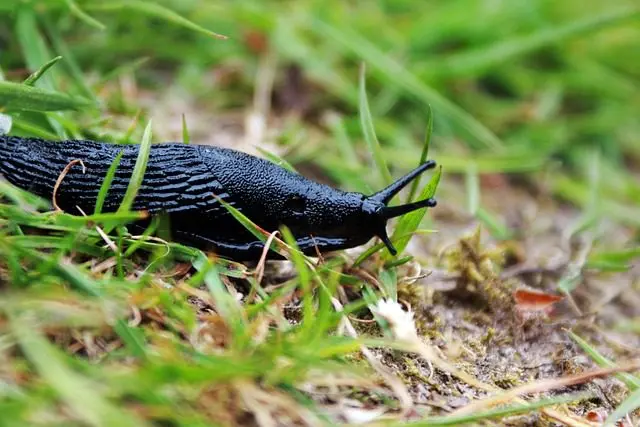
Black slugs have turned up at your place. Tiny, or enormous, they’ve left you wondering. Maybe even a little worried.
Are they toxic? (In case your dog or one of your hens swallows one, for example.)
Will they ravage your vegetable garden? How do you deal with them sensibly?
Why are they in your home? And how do you get rid of them sensibly?
We’ll cover all of these points together here, starting by describing this notorious black slug.
If you’d finally like to have a clear, definitive answer to the question, I invite you to take the time to read this article 😉
Let’s get started!
If you're discovering my blog, chances are slugs and snails are giving you grief.
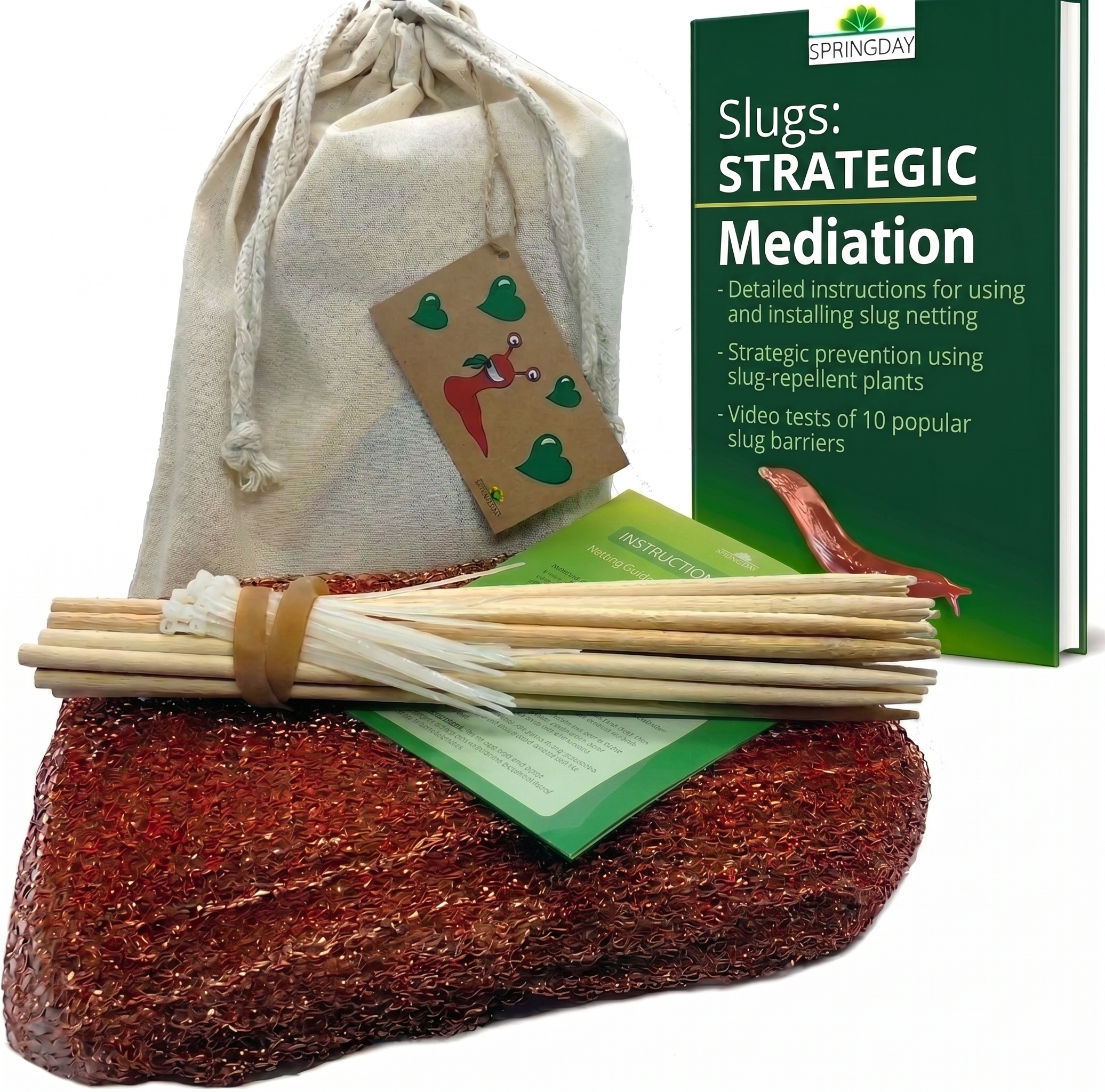
You'd probably be very interested in the copper slug barrier I designed .
It changed everything for me. I can finally grow lettuce, cabbages, strawberries and squashes without tearing my hair out.
Don't hesitate — it's an investment (copper is expensive), but you'll likely save yourself a huge amount of time!
Identification and physical characteristics
Physical description
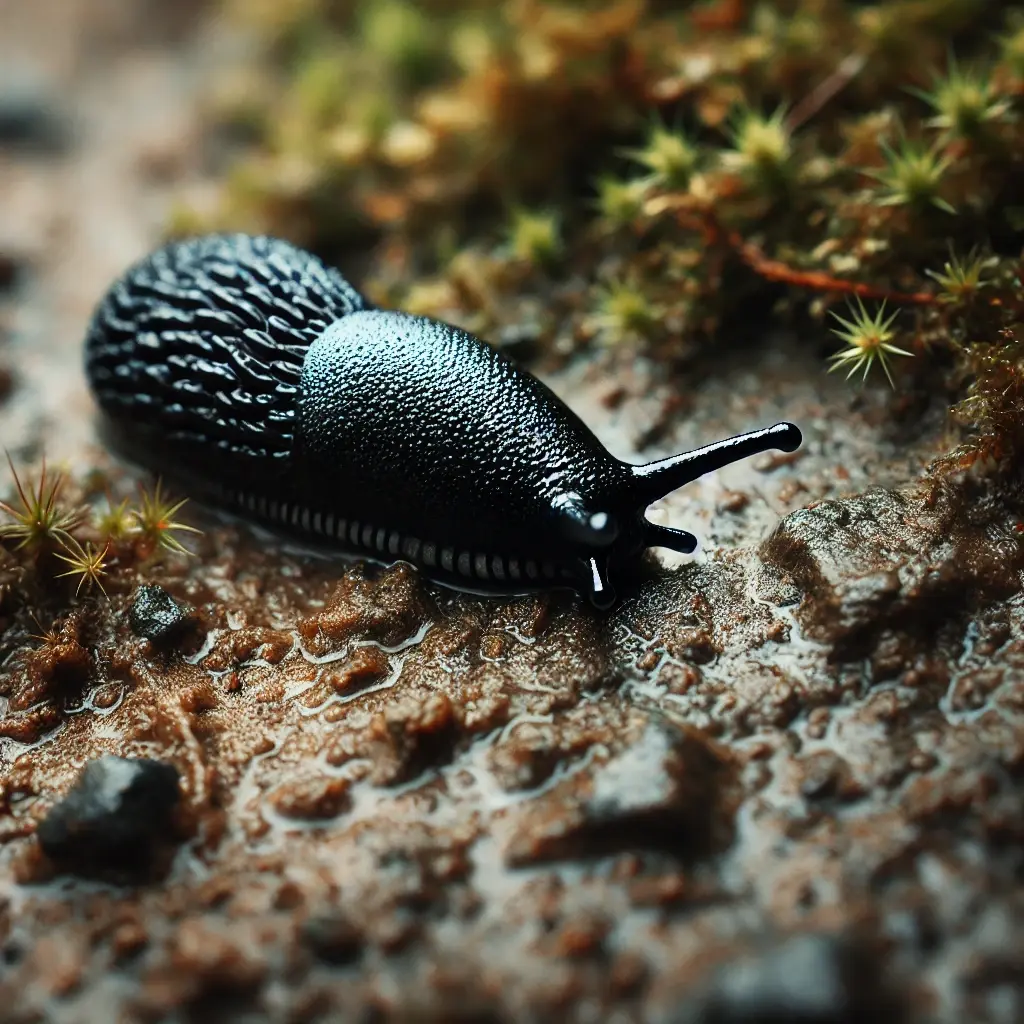
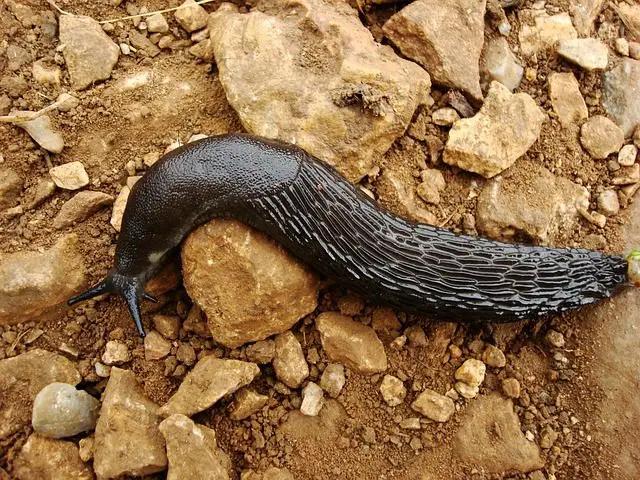
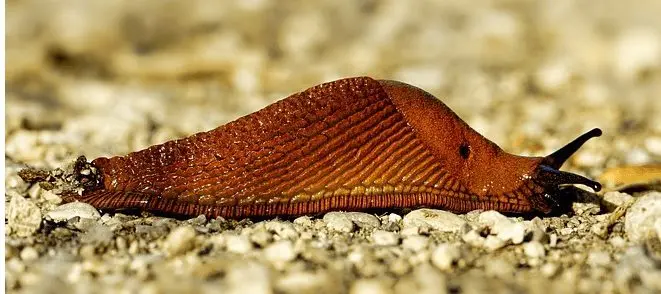
The black slug is a terrestrial mollusc that is easy to identify by its dark colouring, ranging from deep black to dark brown.
It has an elongated body, with no shell (like all slugs), covered in a glistening mucus that lets it move with ease across all sorts of surfaces.
The size of black slugs can vary considerably.
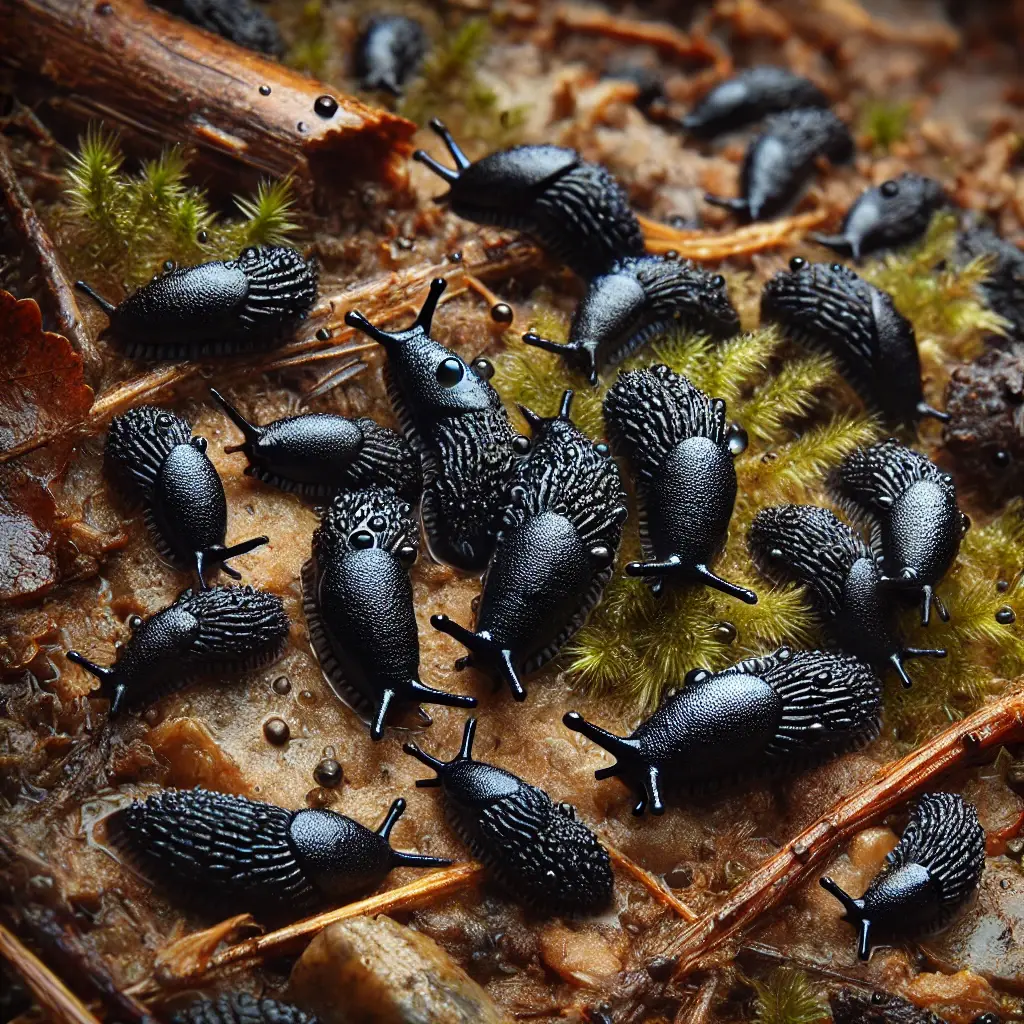
Mini black slugs generally measure between 1 and 3 centimetres long. They are often slender and inconspicuous, hiding under leaves or in the damp corners of homes.
Large black slugs, by contrast, can reach up to 15 centimetres, or even more.
The latter are sturdier, with a thick and sometimes granular body, especially on their back.
The distinction between the various sizes is made mainly by observing the length and thickness of the body, as well as the texture of the skin.
Varieties of black slug
There are several varieties of black slug, differentiated mainly by their size.
The smallest are often juveniles or naturally small species, such as Deroceras laeve, which prefers damp, shaded environments.
At the other end of the scale, large black slugs, such as Arion ater, are more common in gardens and vegetable patches.
The latter, in addition to their imposing size, stand out for their thicker skin and sometimes more destructive behaviour towards crops.
The variation in size among these slugs can also be influenced by the environment and the availability of food resources.
Is the black slug toxic?
Toxic black slug?
The question of the black slug’s toxicity comes up frequently, in particular because of its unappealing appearance and its habit of ending up in our gardens and sometimes even inside our homes.
But it’s important to make clear that the black slug is not toxic to humans. Unlike certain exotic species, it produces no venomous or toxic substance capable of harming people.
But of course, that’s assuming nobody is bothered enough to try cooking themselves a slug! Slugs aren’t to be eaten, especially not by humans. And swallowing one can cause serious problems. I’m reminded of the story of that teenager who became quadriplegic after swallowing a slug for a dare. As the saying goes, the game is clearly not worth the candle.
Toxicity for humans
Even though the black slug isn’t toxic (by contact, by spraying acid, or any other flight of our imagination), do take certain precautions when handling these molluscs.
Slugs can carry parasites, such as the parasitic worm Angiostrongylus cantonensis, also known as the rat lungworm.
Although cases of infection are rare, it’s advisable to always wash your hands after touching slugs, especially if you handle them with bare hands, to avoid any risk of accidental contamination.
Impact on pets
As for pets, mainly dogs, swallowing black slugs can also be a problem.
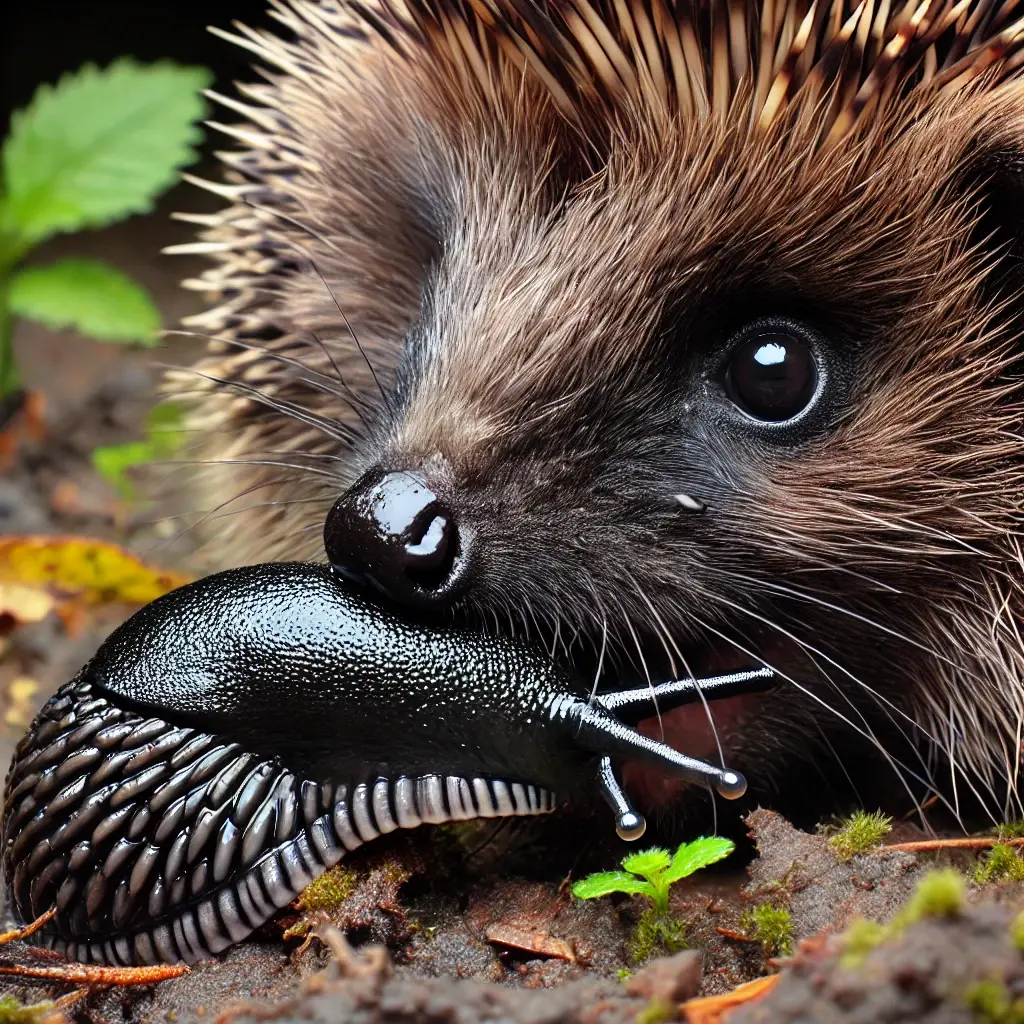
Curious dogs can sometimes swallow these creatures, and although the slug itself isn’t toxic, it can pass on dangerous parasites.
For example, the lungworm can be transmitted to dogs through the ingestion of infected slugs, leading to serious health problems if left untreated.
It’s therefore necessary to keep an eye on your pets’ interactions with slugs and to consult a vet if you suspect they’ve swallowed a slug.
In conclusion on this point, while the black slug isn’t directly toxic, it can nonetheless pose an indirect risk to the health of humans and pets because of the parasites it can carry.
Simple precautionary measures, such as washing your hands and stopping animals from swallowing slugs, minimise these risks.
Habitat and geographical distribution
Worldwide distribution
The black slug is found in many regions of the world, particularly in Europe, where it is one of the most common slug species.
It is found mainly in temperate zones, where it thrives in damp, shaded environments.
Its presence also extends to other continents, notably North America, where it was introduced and has adapted well to local conditions.
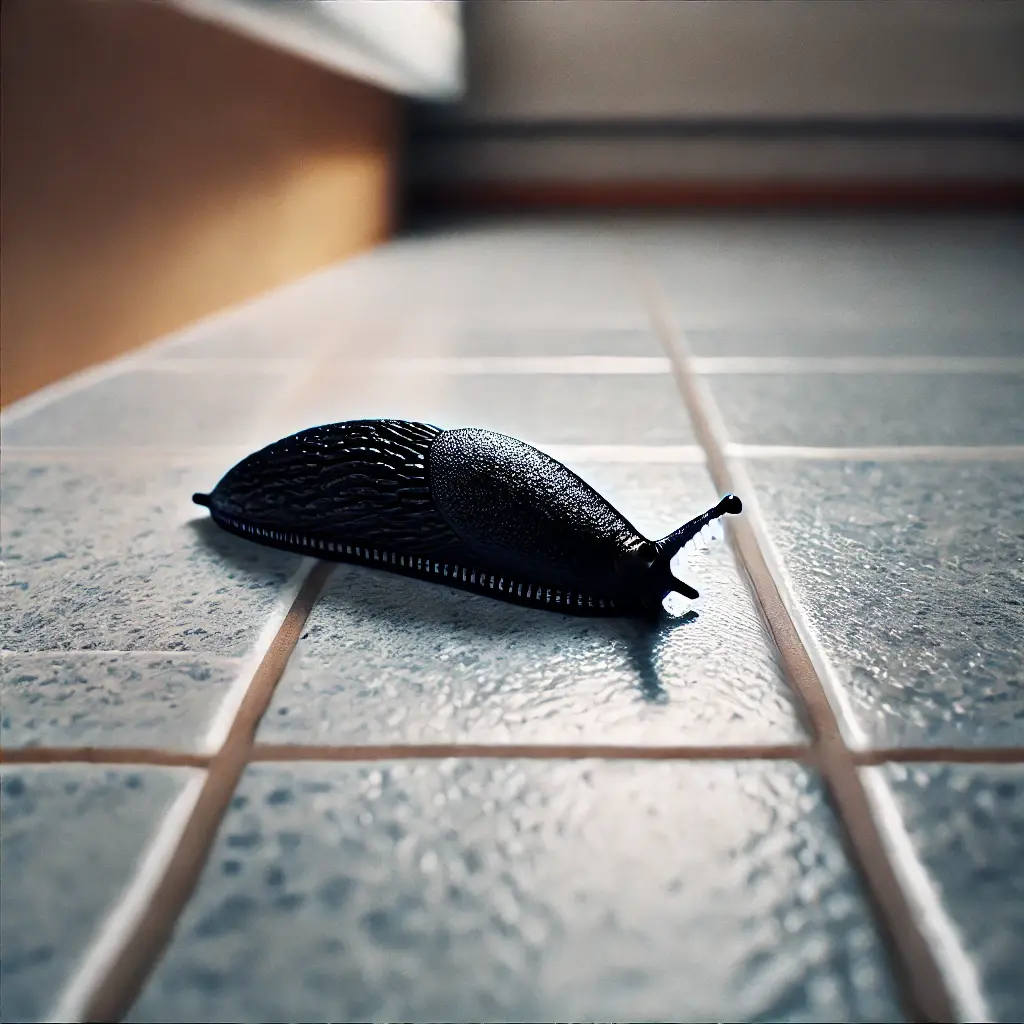
A special mention should be made of the “little black house slug”, a smaller form of this mollusc that sometimes invites itself inside our homes.
These slugs make their way into houses in search of a damp environment and a source of food.
They are often drawn to kitchens, basements, and bathrooms, where humidity is high and where food scraps or organic matter can be found.
Their small size allows them to slip easily through narrow cracks or gaps under doors.
We’ll see, later in this article, how to make sure these slugs no longer end up at your place.
Natural and domestic habitat
In the wild, the black slug prefers damp, shaded environments. It is frequently found in woodlands, damp meadows, and above all in gardens, where it plays an important role in the decomposition of organic matter.
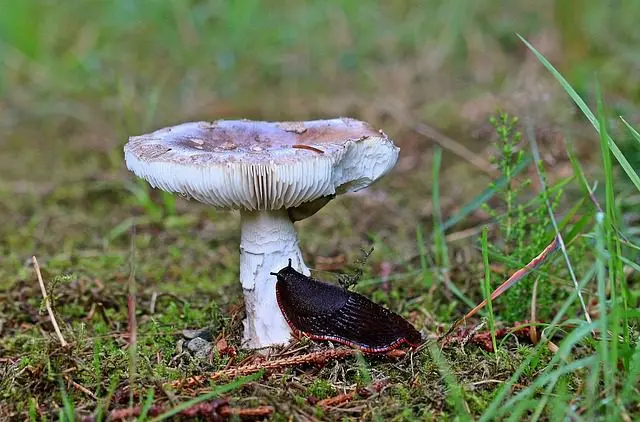
Black slugs like to hide under leaves, stones, and in loose soil, where they can feed on plant debris, mushrooms, and sometimes living plants.
In domestic environments, black slugs can become unwelcome.
They are often drawn to well-watered gardens, where they find an abundance of food in the form of young shoots and leaves.
When they enter homes, it’s usually to escape overly dry outdoor conditions or to search for food.
Domestic environments sometimes offer ideal conditions for these slugs, with dark, damp areas rich in organic matter.
Distinguishing between natural and domestic habitats is important for understanding why black slugs can become pests in certain situations.
While they are beneficial in their natural ecological role, their presence in homes or gardens may call for proactive management to avoid damage to plants and to maintain household hygiene. Which is something we’ll come to later in this article.
The black slug in the vegetable garden and the home
Small black slug in the vegetable garden
Impact on crops
Small black slugs can cause significant damage in vegetable gardens, particularly when they attack young shoots and tender leaves.
These slugs feed mainly on plant material, which leads them to nibble at the leaves, the stems, and sometimes even the roots of the plants in the vegetable garden.
Young vegetable plants, such as lettuces, strawberries, and young cucurbits, are particularly vulnerable.
Their activities can slow plant growth, reduce yields, and, in cases of heavy infestation, lead to the death (or even the complete disappearance) of young plants.
Methods of prevention
To protect your vegetable garden from small black slugs, you need to adopt methods of prevention that respect the environment while being effective. Here are a few recommended strategies:
1. Attracting natural slug predators: the indispensable cornerstone of a garden lastingly freed from its slugs. Settle the slug predators in at your place (through thoughtful layouts, and by not killing or relocating the slugs – they are their food!), and they’ll regulate the slugs continuously.
2. Using slug-repelling plants: ideal as a way of preventing risks, and to be used alongside attracting slug predators.
3. Using effective slug barriers: to protect your plants effectively while the predators settle into your garden. Forget ash, coffee grounds, eggshells, and other old wives’ remedies that don’t work in the long run (have a look at my video tests here, as proof of this). The only effective barriers are water (usable in the form of a moat, thanks to buried guttering), or copper used as a vertical barrier more than 7 cm high. I designed this last barrier, and the results at my place were so incredible that I now sell it here: the copper mesh for slugs. You can also find an interview with Laurent here, one of my gardening customers, whose vegetable garden was infested with exactly these mini black slugs. Installing the slug netting changed everything for him.
Small black slug in the home
Why do they come into homes?
Small black slugs can make their way into homes for several reasons, mainly linked to the search for moisture and food.
Homes often offer ideal conditions for these creatures, particularly in dark, damp spaces such as basements, kitchens, and bathrooms.
When it gets too dry outside or the weather turns extreme, slugs seek refuge indoors.
They are also drawn to food scraps, fallen fruit, or organic waste that can be found in kitchens or storage areas.
How do you get rid of them?
To stop slugs from getting into your home and to get rid of them if they’re already there, it’s recommended to follow these practical, non-toxic tips:
1. Seal the entry points: Identify and seal the cracks, holes, and gaps under doors or around windows through which slugs can get in. Use sealing strips or silicone to close off these openings. If the slugs still manage to slip through, use copper. The copper slug netting can be used to plug potential entry points, while stopping slugs from finding a way to squeeze through, because contact with copper is so unpleasant for them.
2. Reduce indoor humidity: Use a dehumidifier in the damp areas of your home, such as the basement or the bathroom, to make the environment less attractive to slugs.
3. Regular cleaning: Remove any potential source of food by regularly cleaning kitchen surfaces, sweeping up crumbs, and storing food in airtight containers. Cleaning with white vinegar (see further down) is a very good option for keeping slugs away.
4. Using repellents that can be used inside a home: bicarbonate of soda and white vinegar are the best options available to you for driving black slugs away inside a home. To find out more about their effectiveness and how to use them, read the linked articles by clicking the links above.
What you absolutely must not do: using a beer trap inside a home is the worst idea of all. Slugs love beer, and they can smell it from so far away that they’ll flock to your home to come and drink it. And only about a third of the slugs drawn in by a beer trap end up drowning in it. The rest will have a field day at your place.
Large black slug – specific features and impact on the vegetable garden
Distinctive features of large black slugs
Size and longevity
Large black slugs, such as Arion ater, can reach impressive sizes, often measuring up to 15 centimetres in length, or even more in optimal conditions.
The growth of these slugs is influenced by several environmental factors, in particular the availability of food, the moisture, and the temperature.
In environments rich in organic matter and well watered, black slugs find ideal conditions to develop fully.
Their longevity can also be greater in these favourable conditions, allowing them to reproduce several times over the course of their lives.
The larger size of these slugs can also be put down to their ability to survive periods of drought or cold by burrowing into the soil, where they remain dormant until conditions become favourable again.
This life cycle allows them not only to survive but also to grow over time, building up energy reserves to reach considerable sizes.
Impact on the garden
Large black slugs can cause significant damage in gardens, surpassing their smaller counterparts in terms of the amount of plant material they consume.
Their imposing size allows them to consume large quantities of leaves, young shoots, and even ripe fruit directly on the plants. Broad-leaved plants are particularly vulnerable, as large slugs can easily devour large sections of these plants in a single night.
Specific methods for controlling large black slugs
This is the same management strategy as the one explained in the previous section, for “small black slugs in the vegetable garden”!
In fact, for all slugs, it’s the same strategy!
Conclusion
The black slug, whether small or large, is an important player in our ecosystems, but it can also become a formidable pest in our vegetable gardens and homes.
Contrary to certain received ideas, the black slug is not toxic to humans, but it can transmit parasites, which is why it’s so important to take precautions when handling it.
Understanding its characteristics, its favourite habitats, and the methods of prevention and control is essential to limit the damage it can cause.
By adopting smart, environmentally friendly solutions, it is entirely possible to manage these gastropods effectively while preserving the natural balance of your garden.
I hope you’ve enjoyed this article, and that it has given you new tools for gardening in freedom and self-reliance, all while understanding what you’re doing and why you’re doing it.
See you soon,
Robin.
The information in this article has been selected and verified according to the criteria defined in our editorial charter.
Done with slugs. For good. Starting this season.
Scientific references
- Some Notes on the Mucous and Skin Glands of Arion ater
- The effects of food and density of the movement ofArion ater andAriolimax columbianus (Pulmonata: Stylommatophora) between habitats
- Analysis of the Haemolymph of Arion Ater L.
Related articles
Testing and review of 30 natural slug deterrents (do they work?)
Read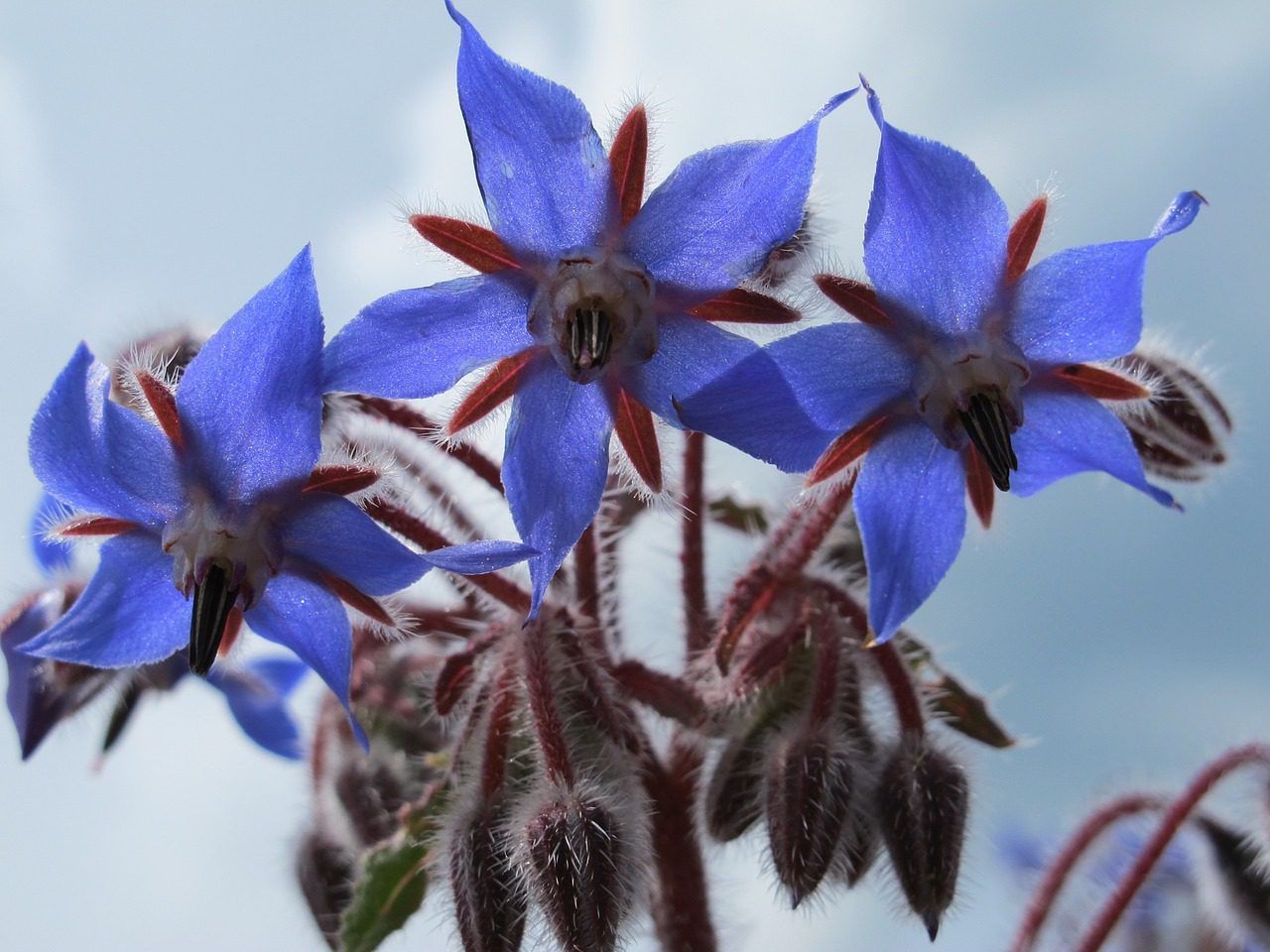
Slug-repellent plants, or prevention through planting
Read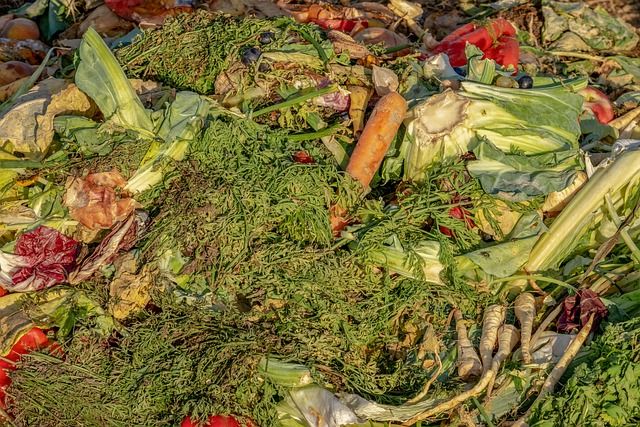
Surface composting: protect your vegetable patch from slugs, with love
Read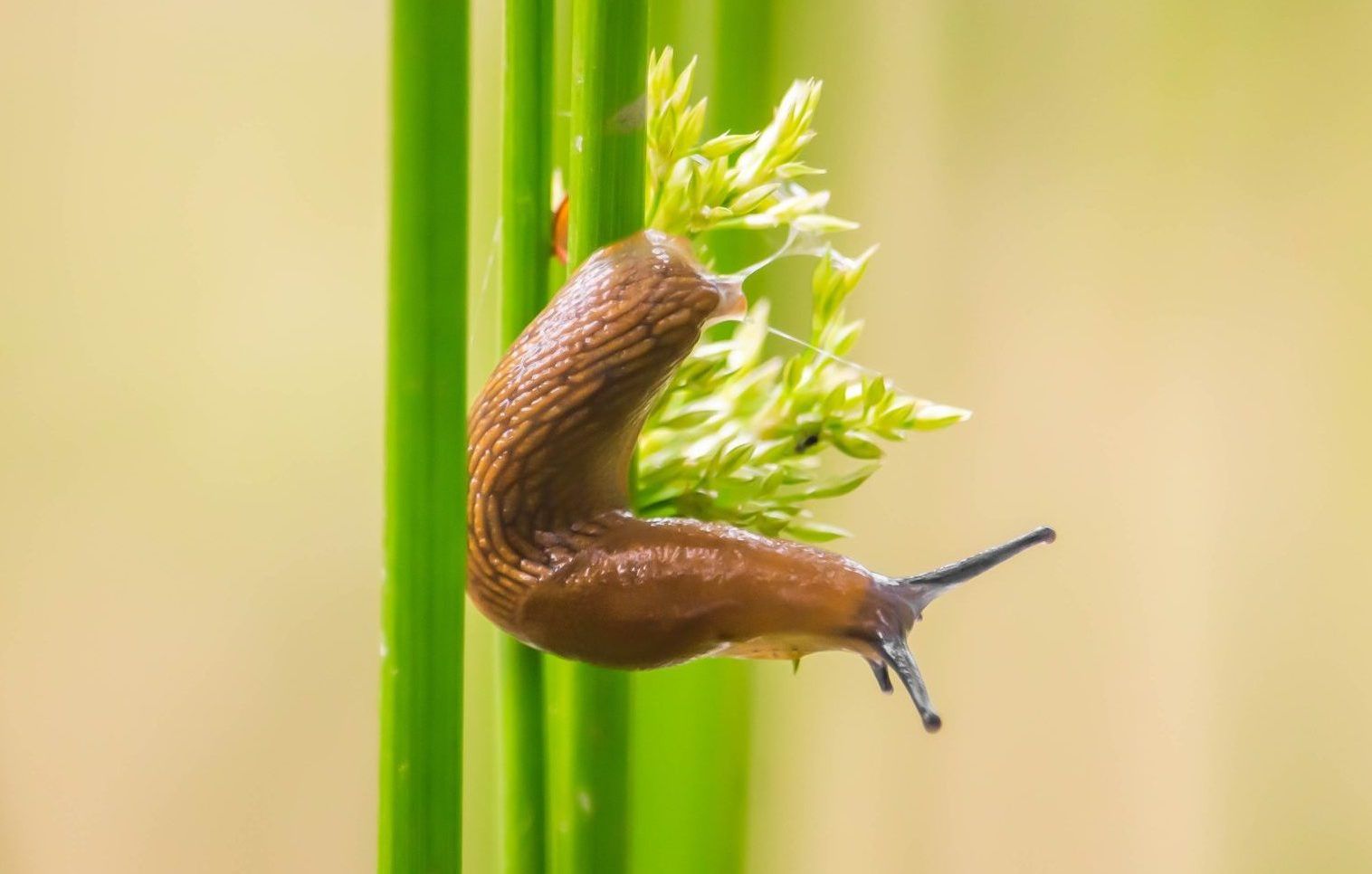
Slugs: their usefulness in the garden, what they indicate, and holistic management through reshaping the habitat
Read
Slug predators: which are they? How to attract them to the garden?
Read
Slug control: the (harmful) methods to avoid – why and how?
Read