The white slug: what is it, and how do you manage it in the garden?
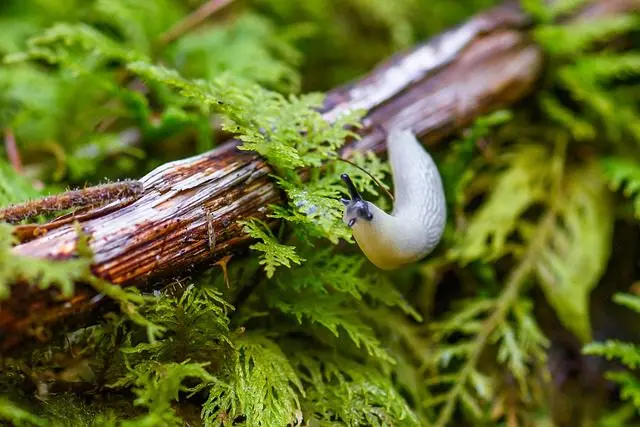
You keep finding small white slugs in your garden.
It intrigues you, or perhaps even worries you (for the sake of your plants).
What are they (a shelled slug, or a field slug?), how do they live, what is their habitat, what do they prefer, and why are they in your garden?
And how do you manage them sensibly, so that they don’t proliferate and end up decimating your flowers and your vegetable patch?
That’s exactly what we’re going to look at right now.
So if that sounds appealing, let’s get started!
If you're discovering my blog, chances are slugs and snails are giving you grief.
You'd probably be very interested in the copper slug barrier I designed .
It changed everything for me. I can finally grow lettuce, cabbages, strawberries and squashes without tearing my hair out.
Don't hesitate — it's an investment (copper is expensive), but you'll likely save yourself a huge amount of time!
White slug: what is it?
Under the name “white slug”, we are mainly referring to two distinct species: the shelled slug (Testacella haliotidea) and the field slug (Deroceras agreste).
Although their whitish colouring makes them look alike, they differ in their behaviour, their diet and the way they interact with their environment.
Main species
- Shelled slug (Testacella haliotidea) :
- Way of life : Unlike most herbivorous slugs, the shelled slug is a carnivorous predator. It feeds mainly on earthworms, which it hunts in the upper layers of the soil.
- Environmental impact : The shelled slug is little known for causing damage in gardens or crops. Nevertheless, in the vegetable patch, where earthworms are crucially important, its effect can be perceived as negative, even though it contributes to the balance of natural ecosystems (your garden is not really one, strictly speaking).
- Field slug (Deroceras agreste) :
- Way of life : Unlike the shelled slug, the field slug is a herbivorous slug, common in farming areas and gardens. It is considered a pest because of the damage it causes to crops. Its dietary preferences include young shoots and tender leaves, which makes it a problem for farmers and gardeners.
- Agricultural problems : It can cause significant economic losses by destroying vegetable plants, particularly during wet spells when it proliferates.
Physical characteristics
- Shelled slug :
- Distinctive morphology : Cream-coloured, the shelled slug stands out from other slugs thanks to the presence of a small vestigial shell at the tip of its body. This shell, although inactive, is a relic of its evolution and clearly sets it apart from other slug species.
- Size : The shelled slug can reach a length of 7 to 10 cm, making it one of the largest slugs found in its habitat.
- Field slug :
- Discreet appearance : This species has a colour ranging from whitish to pale grey, which makes it relatively easy to identify and tell apart from other slugs. Its morphology is more typical, without features as distinctive as those of the shelled slug.
- Size : Generally smaller, it measures between 3 and 5 cm.
Above, a shelled slug.
Above, a field slug (deroceras agreste).
Life cycle and preferred habitat of white slugs
Shelled slug
-
Reproduction and longevity :
The shelled slug has a relatively long life cycle for a slug, reaching up to two years. Its reproduction takes place mainly in damp, shaded spots, where it lays its eggs. These conditions favour the development of the young slugs, which hatch in environments rich in food, particularly earthworms. -
Habitat and geographical distribution :
In France, the shelled slug is found mainly in wetlands and wooded regions. It is often found in forests, hedgerows or natural meadows, especially in regions with a temperate, oceanic climate. It is frequently encountered in the western and south-western regions of France, such as Brittany, the Pays de la Loire and the Pyrenean regions, where the soil stays damp and rich in organic matter. It is also sometimes found in private gardens, but only in sufficiently shaded and damp areas.Field slug (Deroceras agreste)
- Reproduction :
The field slug has a strong reproductive capacity, laying several batches of eggs during the wet seasons. In favourable periods, it can lay up to several hundred eggs, allowing rapid proliferation, particularly in spring and autumn, after rainfall. These eggs hatch quickly, encouraging a rise in the population across farming areas and gardens. - Habitat and geographical distribution :
The field slug is widespread throughout the whole of France, and is found particularly in rural areas. It prefers gardens, agricultural fields and cultivated meadows, where it finds an abundance of food. This species is very present in the farming regions of the northern half of France, notably in Normandy, the Île-de-France and the Hauts-de-France. However, it is also present in wetter regions of the south such as Aquitaine. It thrives in areas where the soil stays damp, but can also survive in drier environments, as long as it enjoys conditions favourable to reproduction.
- Reproduction :
Preventing and managing white slugs in the garden
Prevention
Managing your mulch:
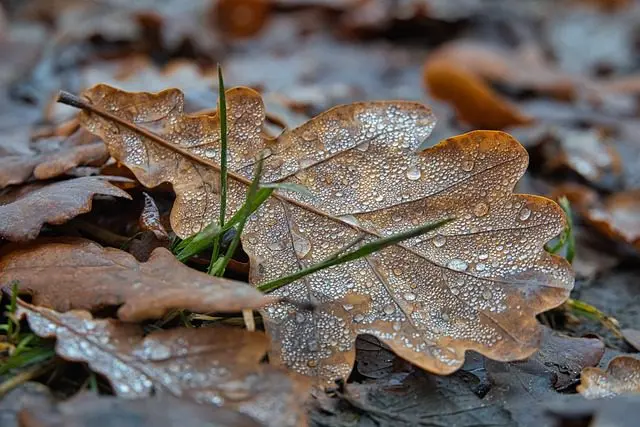
As we said, in the vegetable patch mulch often provides a damp substrate where slugs love to hide.
In early spring, I’d advise you to lift the mulch from the beds that are particularly prone to slugs.
This will also let your soil warm up more quickly, which will be very beneficial to the growth of your plants.
But do leave some hiding places and mulched areas in your garden, so as to keep offering shelter for the garden’s helpful wildlife, and in particular the predators of slugs such as certain insects.
Using slug-repellent plants:
Slug-repellent plants can be very useful for limiting the damage slugs do to your plants. Make wise use of plants that distract, repel, resist, and attract the predators of slugs.
Learn more about this by reading this article on the natural predators of slugs and how to welcome them into the garden.
Managing your watering:
During spells that favour slug development and damage, get into the habit of watering in the morning rather than the evening, so as to reduce night-time moisture, and therefore slug activity and consequently the damage they cause.
Putting an end to white slugs in the garden for good: the strategy
1. Don’t kill slugs, and don’t move them out of your garden.
This is undoubtedly the most counter-intuitive of my pieces of advice, and one of the most important. Welcoming the predators of slugs is the cornerstone of our strategy, which will let you put a lasting end to your slug problem in the garden. Without slugs, without their prey, predators will never settle in your garden. So you have to let the slugs swarm there, at first, however hard that may be.
2. Arrange your garden to make it welcoming to the predators of slugs.
At this level, the main piece of advice is not to keep a garden that is “too tidy”, but rather to leave plenty of hiding places and shelters for these predators. A hedge, strips of unmown grass, piles of wood and stones, are the basis of this arrangement.
Learn more in this article on the natural predators of slugs and the ways to welcome them into the garden.
3. Protect your plants while the predators of slugs settle into your garden
In the meantime, it’s important to protect your plants while avoiding eliminating the slugs.
To do this, use slug barriers that are genuinely effective. Forget eggshells, ash and other old wives’ remedies: they don’t work in the long run, take it from my experience. I’ve tested all of these methods in videos with real slugs (you can see my tests here).
The only barriers that really work? Water, in the form of a moat (partly bury guttering around the areas to be protected), and copper, set up as a vertical barrier at least 7 cm high.
I’ve developed a barrier based on this second point. It proved so effective in my garden that I now sell it under the name of the copper mesh for slugs. Do take a look at it, it could make your life a great deal easier.
Conclusion
Managing white slugs in the garden comes down to a thoughtful approach that respects the natural balance.
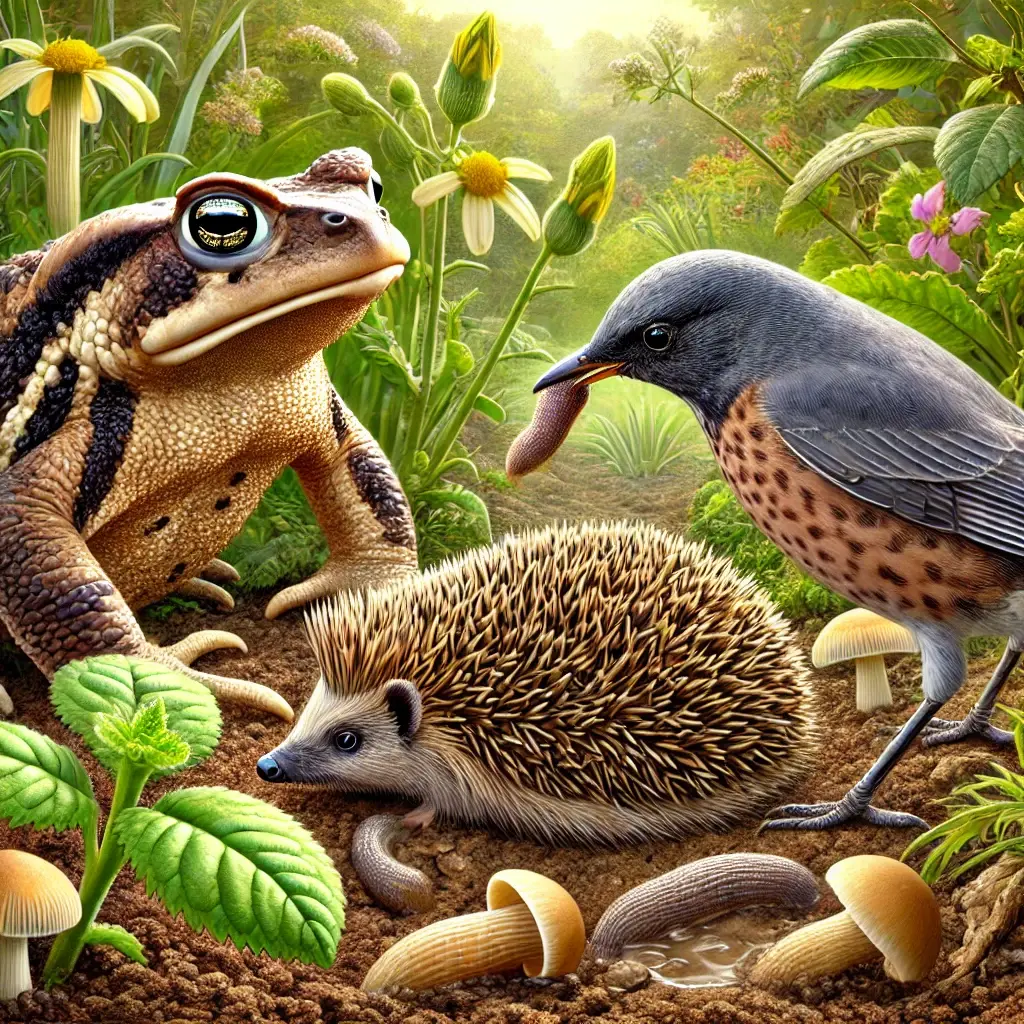
Rather than trying to eliminate them at all costs, it is more effective to encourage the presence of their natural predators by creating hiding places and maintaining a varied environment.
Protecting your plants with simple, proven solutions makes it possible to limit the damage while letting nature reclaim its rights.
With a little patience and the right practices, it is entirely possible to live alongside these slimy ladies without sacrificing your harvests.
I hope you enjoyed this article, and that it has given you new tools to garden in freedom and self-reliance, while understanding what you are doing and why you are doing it.
See you soon,
Robin.
The information in this article has been selected and verified according to the criteria defined in our editorial charter.
Done with slugs. For good. Starting this season.
Scientific references
- Notes on the Ecology of Slugs: Arion circumscriptus, Deroceras reticulatum, and D. laeve Effect of predator size and temperature on the predation of Deroceras reticulatum Modelling Deroceras reticulatum (Gastropoda) population dynamics based on daily temperature and rainfall Biological studies and phenology of the slug Deroceras reticulatum (Müller, 1774)
- Deroceras agreste op Terschelling (Gastropoda, Pulmonata, Agriolimacidae)
Related articles
Testing and review of 30 natural slug deterrents (do they work?)
Read
Slug-repellent plants, or prevention through planting
Read
Surface composting: protect your vegetable patch from slugs, with love
Read
Slugs: their usefulness in the garden, what they indicate, and holistic management through reshaping the habitat
Read
Slug predators: which are they? How to attract them to the garden?
Read
Slug control: the (harmful) methods to avoid – why and how?
Read