The leopard slug (toxic?): identification, diet, reproduction
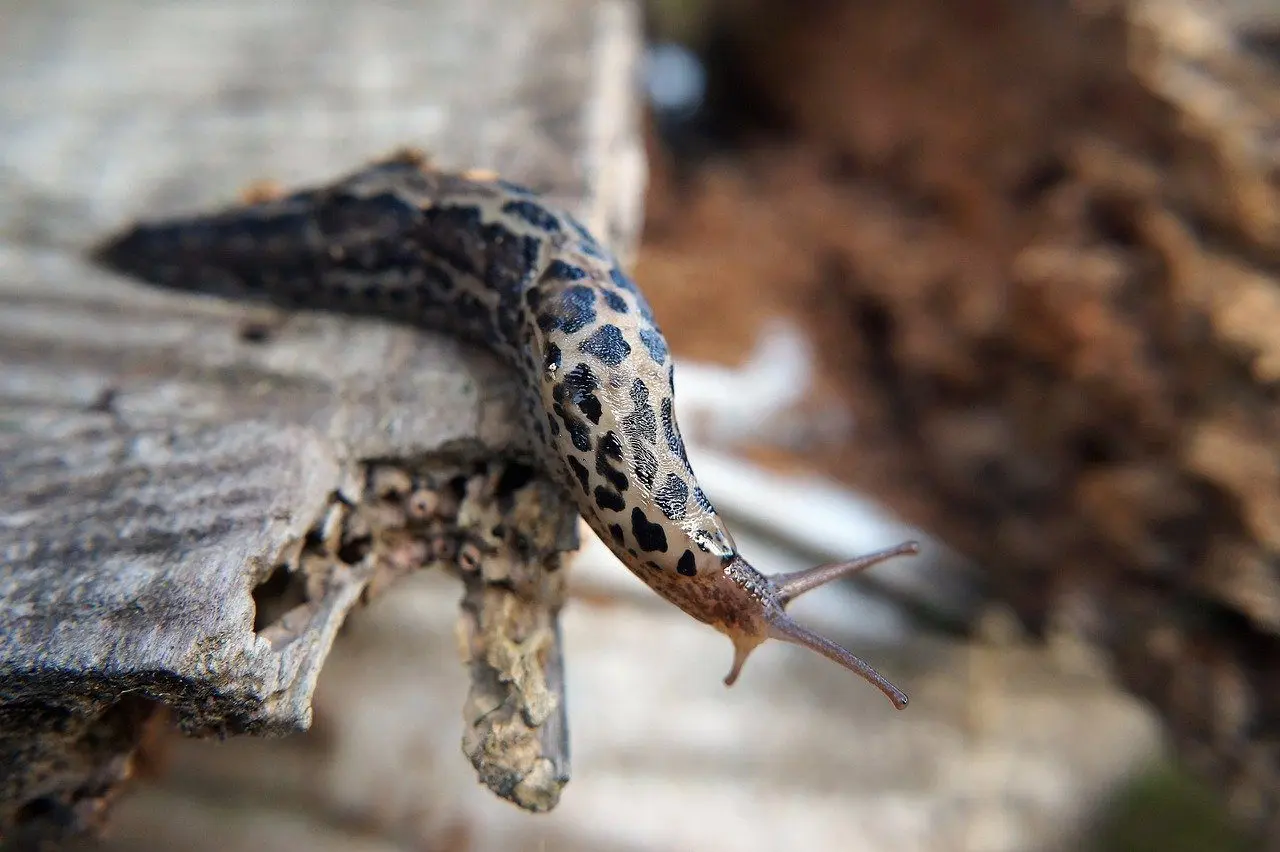
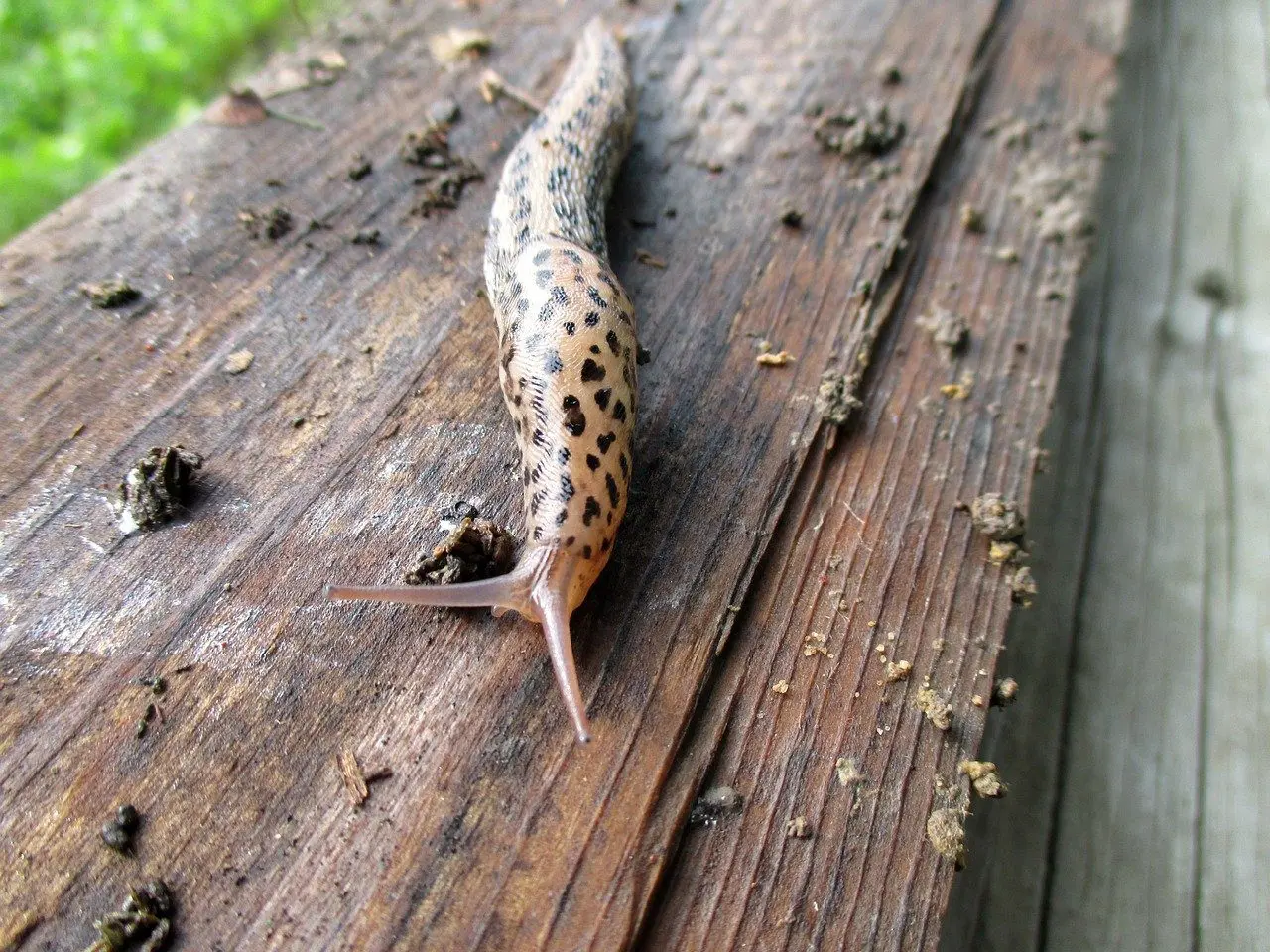
Like a great big cat, I sometimes prowl through your gardens. My spotted coat makes me one of a kind among us crawling land molluscs!
I am Limax maximus (in Latin limax: slug and maximus: large).
I bear my Latin name with good reason, because I can grow up to 20 cm long!
People sometimes call me the tiger slug, the spotted slug, but also the ash-grey slug, the great grey slug, the large ash-grey slug, or the great grey garden slug.
But even though I’m as well known as can be, people have plenty of questions about me:
- What do I eat? Do I really eat other slugs?
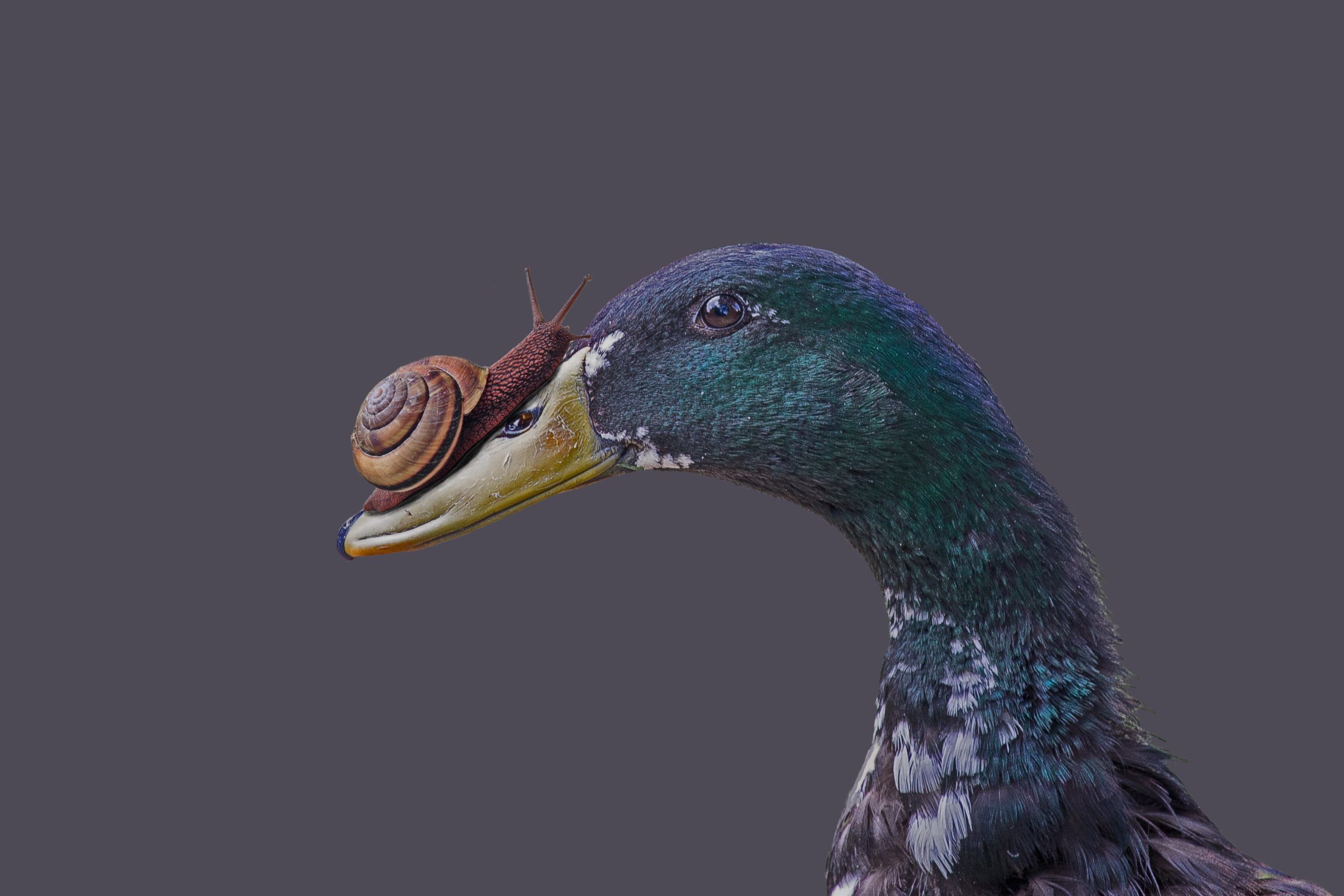
- Am I poisonous, and therefore dangerous to your hens or ducks?
And did you know that my reproduction is one of the most extraordinary phenomena in the living world?
We’ll cover all of that below! You’ll see, I’m an extraordinary slug.
Key points
• Identification: A giant slug (up to 20 cm) with a spotted or tiger-striped coat. Unlike the others, it lives 2 to 3 years and hibernates.
• A carnivorous ally: It actively hunts other harmful slugs and devours their eggs. It is a natural regulator.
• Danger to the vegetable patch: Almost none. It much prefers compost, decomposing plant matter and fungi (powdery mildew, downy mildew) to living vegetables.
• Toxicity: None. It is neither venomous nor toxic to dogs, cats, hens or ducks.
• Spectacular reproduction: It mates acrobatically, suspended in mid-air at the end of a thread of mucus.
• In practice: Whatever you do, don’t kill it!
Move it to the compost or use it as a “guardian” right in the heart of your mulched growing areas.
If you're discovering my blog, chances are slugs and snails are giving you grief.
You'd probably be very interested in the copper slug barrier I designed .
It changed everything for me. I can finally grow lettuce, cabbages, strawberries and squashes without tearing my hair out.
Don't hesitate — it's an investment (copper is expensive), but you'll likely save yourself a huge amount of time!
Before we begin, if you’re interested, here is the article on all the predators of slugs.
I. The leopard slug (or tiger slug) under the magnifying glass
a. How to recognise a leopard slug?
So, first of all, let’s start on the right foot. Why is the leopard slug (leopard implies a spotted coat, and it’s also called the spotted slug, by the way) also called the tiger slug?
We can clearly tell the difference between a tiger and a leopard, can’t we? Between striped pyjamas and spotted ones?
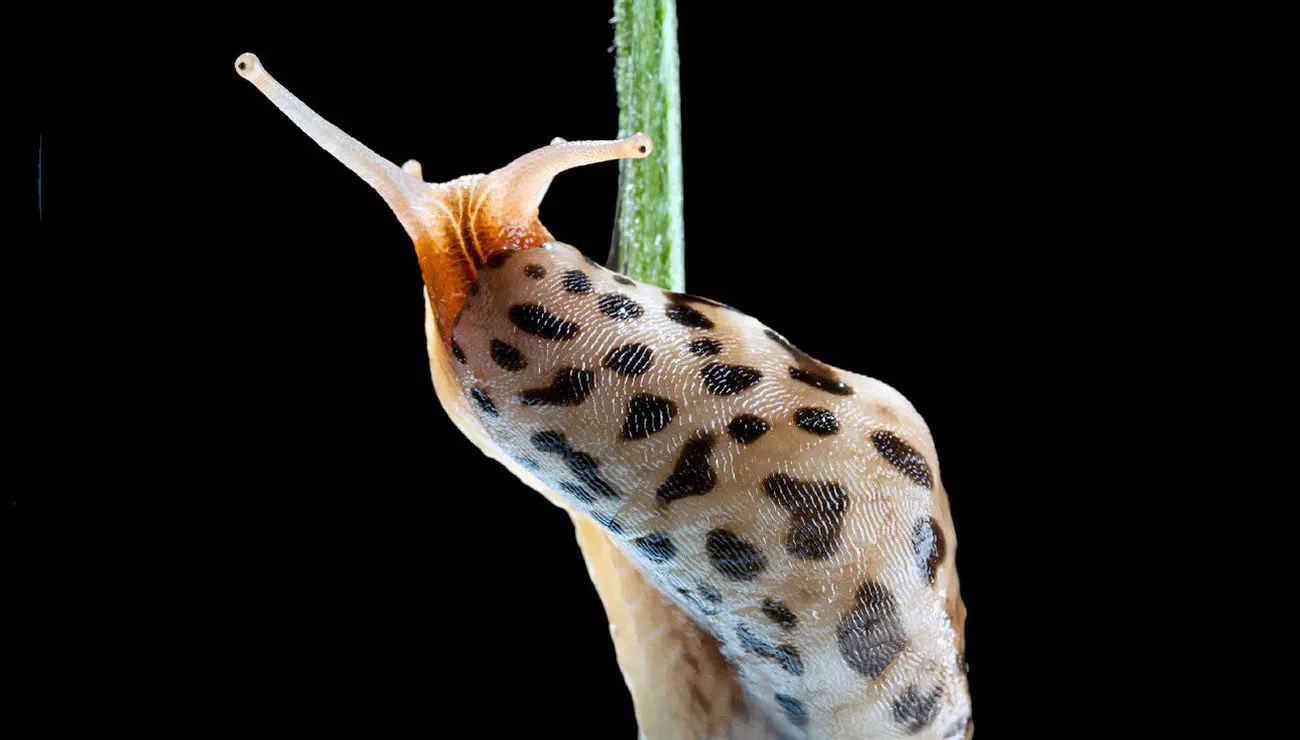
In fact, at first I thought the name “tiger slug” was a slip of the tongue. But, taking the time to observe, I realised that young leopard slugs have a kind of stripe (actually rows of aligned spots) running along their body (and not across it like the tiger). These stripes tend to fade (the spots drifting apart from one another) as the slug becomes an adult, but you can still make out dotted stripes (and always along the body) on the rear of the slug.
On the other hand, you’ll notice that clearly visible spots 3 mm across appear at the front of the leopard slug (around what is called the “shield”, near the head), and this from its earliest age.
When it’s young, you sometimes end up dealing with a slug that is both tiger-striped and spotted at the same time (a mischievous cross between the two famous animals of the bush). These markings are black on a brown-grey to brownish-pink body.
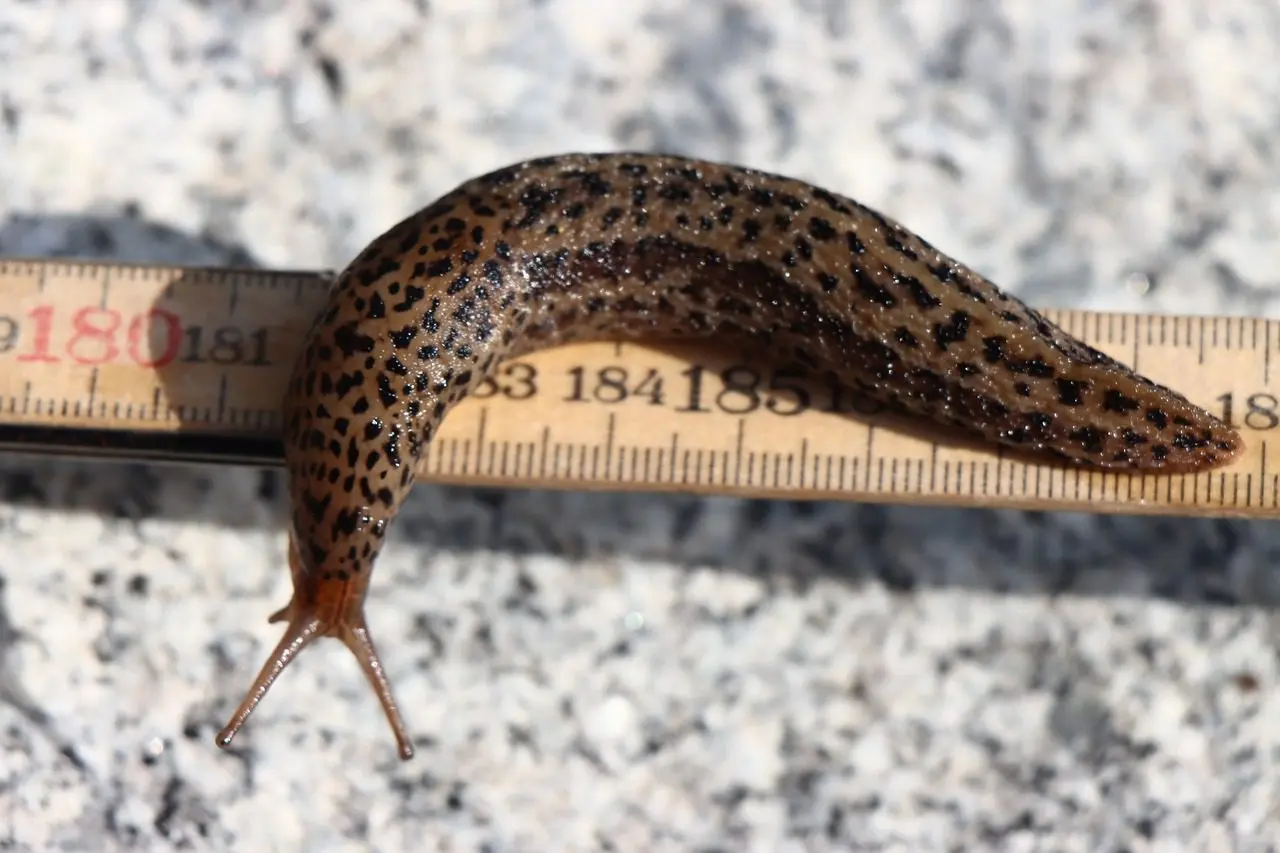
Here we have a lovely little leopard slug: spotted at the front and more tiger-striped at the back.
b. Anatomy of the leopard slug
Apart from the colour of its coat, what are the anatomical features of the leopard slug?
· The pneumostome (the slug’s breathing organ) sits at the rear of the shield.
· The keel, a small ridge on the slug’s “back”, is short and stops before the shield.
· Concentric folds are present around the slug’s shield.
A mucus like no other Another feature, invisible to the naked eye but very real to the touch: its mucus. Unlike other slugs, the leopard slug’s mucus is particularly sticky and tenacious. It is an effective defence mechanism that puts off a good many predators, because it is very hard to clean off (you’ll find that out if you try to handle one without gloves!).
It’s a shame that these anatomical features (apart from the leopard slug’s rather distinctive mucus) are common to all the subspecies of grey slugs, of which the leopard slug is one. So it won’t help you much more in telling apart the leopard slug and the grey slug, but I thought it was worth teaching you a bit more about this species all the same.
c. Behaviour and where to spot it
The tiger slug, like all slugs, sleeps during the day, when the weather is dry, hidden away in dark, damp places: in your mulch, in your compost bin, under stones or dead wood, and even buried under the soil! When rain is on the way, or at night, when the humidity sets in, they come out and you can spot them in your garden.
Leopard slugs are also present throughout the whole of southern and western Europe. They are a little less present around the Mediterranean.
How long does a leopard slug live? This is where it is most surprising. While many slugs die at the first cold snap, the leopard slug is a tough one: it can live between 2 and 3 years.
But what does it do in winter? It doesn’t die, it hibernates! As soon as temperatures drop, it burrows deep into the soil or into the heart of your compost heap (an area that stays warm thanks to fermentation) to re-emerge the following spring. That’s why you often find very large specimens (adults several years old) as early as March/April.
II. The leopard slug’s diet: does it really eat other slugs?

The answer is yes!
In fact, the leopard slug is omnivorous: its diet is made up of plants (like the other slugs), of fungi (which it’s mad about, including pathogenic fungi – powdery mildew, downy mildew – whose spread it halts by digesting the reproductive spores), but also of other slugs!
“OK, OK, it eats other slugs, but does it only eat dead slugs, or can it kill and eat living, healthy individuals? Because there are many slug species that nibble on their dead fellows.”
Yes, the leopard slug eats dead slugs, but it even goes so far as to track down (the word is perhaps a little strong, let’s rather say “hunt”) and kill other slugs! It moves faster than most other specimens (up to 15 cm/minute), and can thus make them its prey. As for the size of the leopard slug’s potential prey-slugs, that’s another question. What’s certain is that it feeds on the eggs of other slugs, as well as on smaller specimens (see the video below). Can it attack a red slug? Good question, I found absolutely nothing on the subject.
Even though the leopard slug can eat certain plants (which isn’t all that bad, because as I told you, it limits the spread of fungal diseases), it really is a friend to have in the garden!
Does the leopard slug eat your lettuces?
That’s the legitimate fear. If it has nothing else to get its teeth into, then yes, it may nibble a few leaves. BUT, its preference very clearly goes towards:
1. Decomposing plant matter (dead leaves, mulch).
2. Fungi (and mycelium).
3. Carrion and animal droppings.
4. Other slugs.
In a balanced garden with mulch, it will almost always leave your living vegetables alone in favour of decomposing organic matter. It is above all a cleaner of the ecosystem.
The “Guardian” tip (For those who have the copper mesh for slugs) Here’s a “cunning” technique I use. If you’ve installed my copper mesh for slugs around your growing beds, it’s impenetrable to slugs coming from outside. But if you find a leopard slug elsewhere in the garden… catch it and place it DELIBERATELY inside the area protected by the mesh! Why? Because it won’t attack your crops if the soil is mulched, but it will patrol the area to devour any eggs and small grey slugs that might have hatched inside the enclosure. It’s a formidable guardian for keeping your growing beds secure.
It’s not easy to see, but this leopard slug is indeed in the middle of eating a small grey slug.
III. Is the leopard slug venomous, and therefore dangerous to your animals?
This is a question many people ask, and that some have asked me: is the leopard slug toxic to the animals that might eat it?
In fact, several people seem to have noticed that a hen or a duck that comes across a leopard slug doesn’t eat it, or even won’t go near it. This kind of predator behaviour is often a sign of toxicity in the “prey” in question. That said, is the spotted slug really “venomous” (that’s the term that keeps coming up)? We’d already be more inclined to speak of “poisonous” than “venomous” here, the adjective “venomous” corresponding in fact to the ability to actively inject venom into another animal.
It’s hard to say whether leopard slugs are poisonous, because this kind of predator behaviour may also simply be triggered by this slug’s distinctive coat, which conveys an impression of toxicity greater than it really is. I’ve done a great deal of research on the subject, and I found not a single line about any possible toxicity of the leopard slug.
So is it possibly dangerous to have leopard slugs wandering around the garden with your hens and ducks?
No, not at all, because:
· The risk of the leopard slug being toxic is low, given that absolutely nothing in the literature exists on the subject.
· Predators most often know when a potential prey is toxic, and they won’t take the risk of biting into it.
Don’t worry, the crawlers in pyjamas are perfectly safe!
IV. Reproduction of the leopard slug in the garden
If you get to witness the mating of two leopard slugs, you’re very lucky indeed!
It’s a true wedding ballet (see video below): first, the slugs court one another, circling on the ground. Once the partners have been won over, the two of them start to climb a shrub, a large plant, or a small tree. Then the partners coil around each other, and throw themselves into the void, suspended from a very thick thread of mucus.
But why do leopard slugs throw themselves into the void?
In fact, it’s a way for them to turn gravity to their advantage, to coil more easily around one another, and to make better use of their enormous penis – “What?! No, that’s disgusting!”.
“I know, it may be ‘disgusting’ to you, you miserable humans with your puny bits, but it’s nature. So no, it’s not disgusting. We leopard slugs rule the game of the sex-parade. And no need to feel any hang-ups about it.”
Because yes, their male sex organ measures roughly the size of their body (!).
And do you know where this vine comes out from? From the right of their head (from what is called a gonopore)! (Just goes to show, no need to be jealous.) And if you watch several slug matings, you’ll see that they only ever coil in one single direction, every time: anti-clockwise, because their male sex organ is located on the right of their head!
This coiling of sex organs allows them to exchange their sperm, which will serve to fertilise the egg of each of the two slugs: because yes, you’ve probably worked it out, slugs, like snails, are hermaphrodites.
Later, when laying, 300 eggs will be buried.
The leopard slug only lays twice in its lifetime: the first time in July-August of its first year, and the second time in June-July of its second year.
After 20 to 45 days (depending on the temperature), the little leopard slugs emerge from their eggs, and begin their life within your vegetable patch.
Below, a video of this mating! Then, just afterwards, a video of the eggs hatching! 🙂
The mating
The eggs hatching
V. Other predators of slugs in the vegetable patch?
But, if your garden is overrun with slugs, by the time you’re reading this article, I understand that you may not have the patience to wait for an exceptional leopard slug laying in order to protect your garden against the endless waves of gastropods.
You’ve tried, without success, to put in place most of the rural legends (eggshells, ash, and other natural “slug deterrents”…) to keep slugs away?
You find that you can hear all sorts of nonsense on the subject?
Done with slugs. For good. Starting this season.
But, you should already know that one good idea – because it notably speeds up the process of the garden returning to its natural balance – is to attract the other natural predators of slugs to the vegetable patch (or to its immediate vicinity, depending on the predator).
If the subject interests you, I recommend:
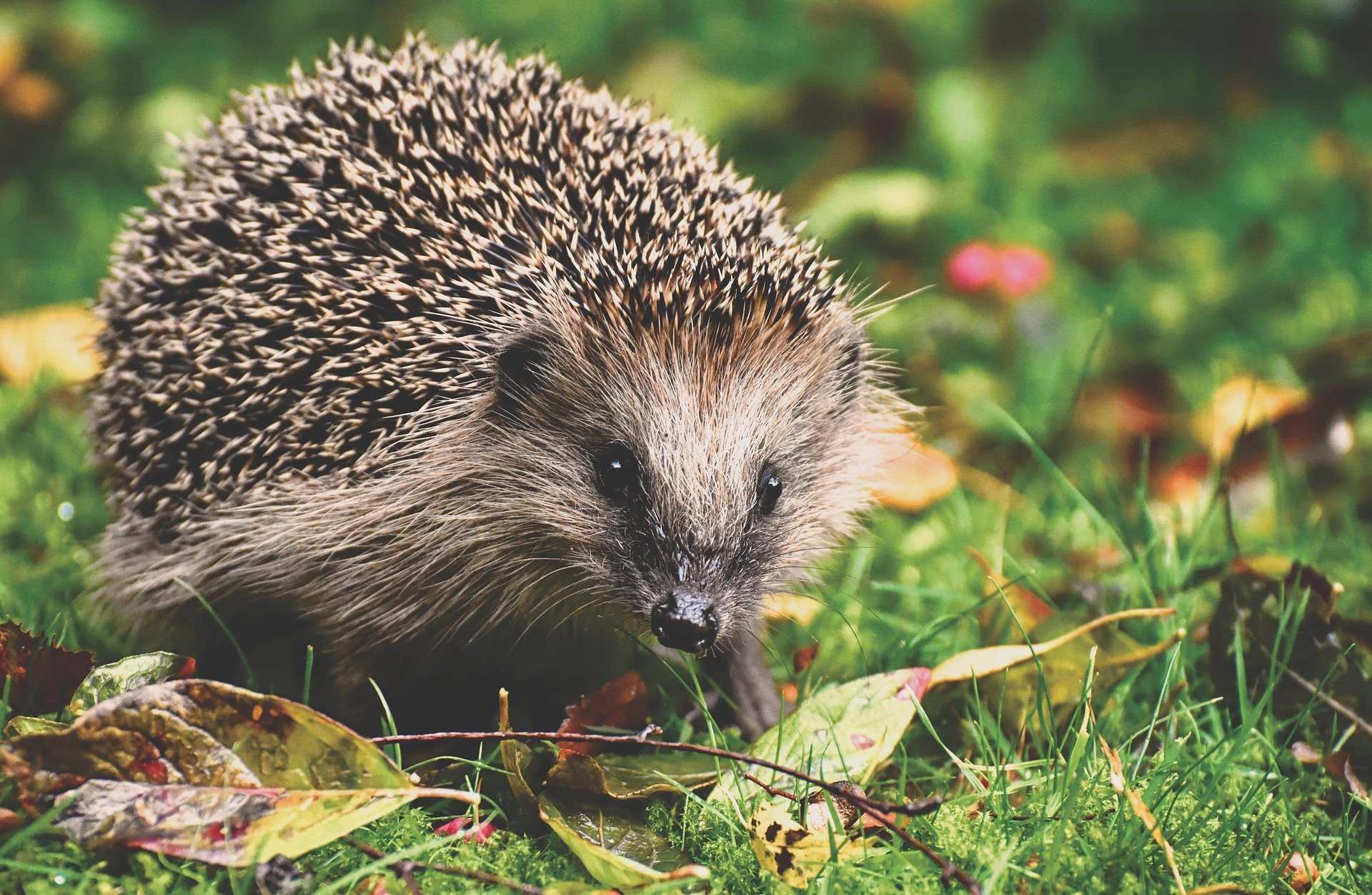
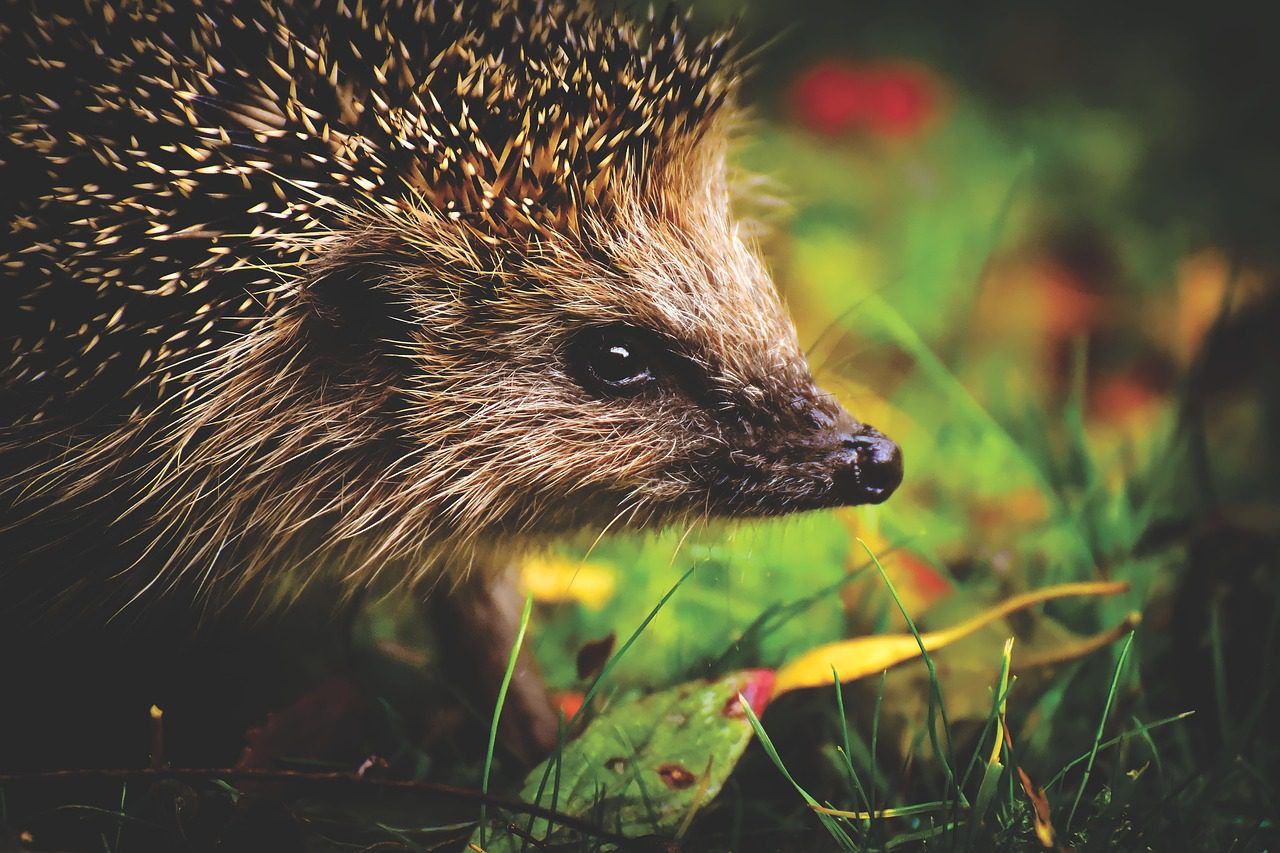
· The hedgehog: how to attract it to the garden, take care of it, and avoid ticks.
· Or, more broadly, this portal page on the different predators of slugs in the garden, and above all, the very important distinction to make between natural predator and adopted predator (Indian Runner ducks, nematodes, …), which, precisely, hold back the natural regulation of slug populations in the garden, even if significant one-off results are often visible (you’ll have a clearer picture of this after reading my main articles, or watching the 3 videos of my free training course).
Conclusion:
Leopard slugs are fascinating gastropods.
Easily recognisable by their spotted, or spotted-and-striped coat, they really are predators of slugs, and even go so far as to chase them down to feed on them.
What’s more, they pose no danger to our pets, contrary to what some may think.
The presence of this precious garden ally, combined with that (indispensable) of the other predators of slugs, is one of the best ways to regulate a slug population in the vegetable patch over the long term.
If you’re lucky, you might even get to witness a mating of leopard slugs, if you have some in the garden.
The information in this article has been selected and verified according to the criteria defined in our editorial charter.
VI. Frequently Asked Questions (FAQ) about the Leopard Slug
Why is there a leopard slug in my house (or my kitchen)?
This is a question that comes up very often! Unlike other slugs that stay in the vegetable patch, Limax maximus is a great explorer with a very keen sense of smell. It is often drawn indoors by moisture (cellar, pantry) and… your pets’ food! It’s not unusual to find it at night in the cat’s or dog’s bowl (it loves kibble). Don’t panic, catch it and put it back outside. For more details on this question, here is an article on the case of slugs found in the house.
How to get rid of a leopard slug?
If you’ve read this article, you now know that you should absolutely not kill it! It’s a precious ally that regulates the other slug populations. If its presence really bothers you (on a terrace or in the house), just move it by hand to the bottom of the garden or onto your compost heap. It will be very happy and useful there. As for the other slugs, here is an article that teaches you how to get rid of them intelligently.
Is the leopard slug a rare species?
People often ask me whether it’s rare because you come across it less often than the red slug or the little grey one. In reality, it’s neither “rare” nor threatened, but it is very discreet, strictly nocturnal and solitary. If you see one, it’s a good sign for the biodiversity of your garden.
What do leopard slug eggs look like (so as not to destroy them)?
This is crucial in order not to wipe out the future “police force” of your vegetable patch by mistake. Its eggs are laid in clusters (bunches). They are large (around 4 to 5 mm), translucent and gelatinous. They are often found under dead wood or in the compost. If you come across them: don’t touch a thing! If needed, I’ve also written an article on slug eggs.
Related articles
Scientific bibliography
Related articles