Here’s Why Slugs Are Invading Your Garden
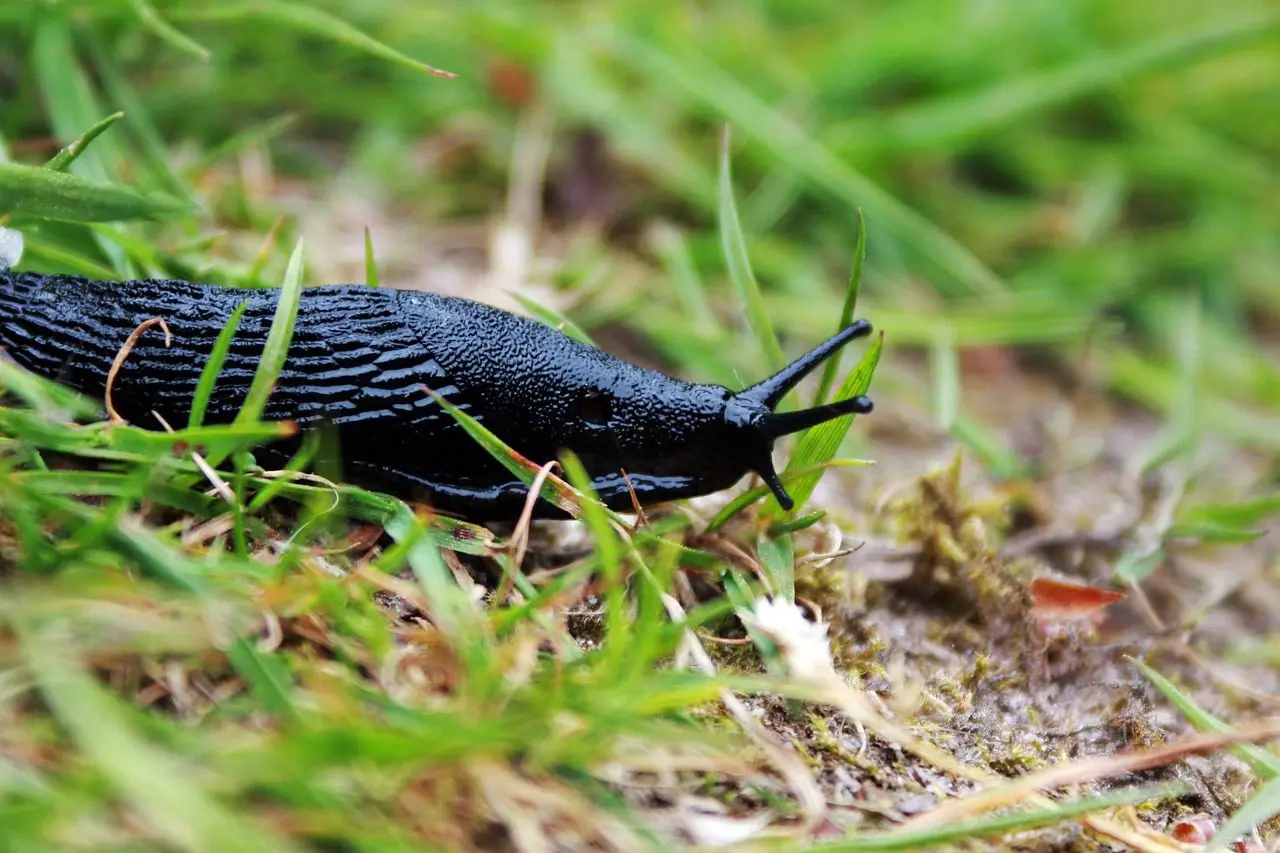
A slug invasion in a garden is caused by a garden that’s out of balance: too few natural predators to keep the slugs in check, and too little alternative plant food besides your vegetable patch to draw them away from it. Or climate conditions that favour slugs, prompting their mass arrival. Or other factors that attract them, which we discuss further down
Key takeaways
• A slug “invasion” = a garden out of balance.
Too few natural predators (hedgehogs, ground beetles, rove beetles, slow worms…), too little plant biodiversity and very favourable conditions (damp and mild) create the impression of a mass arrival of slugs.
• Climate and weather play a huge role.
Mild winters + wet springs = population explosions. Harsh winters or dry spells = far less damage. It’s perfectly normal for the same garden to seem overrun one year… and almost quiet the next.
• Slugs mostly come from your own garden, not from “outside”.
They emerge from their damp hiding places (boards, tarpaulins, stones, hedges, compost, low-lying spots) when conditions are ideal: night, humidity, mild temperatures. With one exception: beer traps
• Some areas are genuine “five-star slug hotels”.
– heavy, clay soils that drain poorly
– heavily shaded, poorly ventilated spots
– damp piles of plant debris, badly aerated compost
– hollows where water pools Identifying them means understanding “where they come from” and where to act first.
• Slugs aren’t active all the time.
They come out mainly at night, after rain or an evening watering, in mild, damp weather. They become almost inactive in cold, dry or full-sun conditions. Knowing these rhythms helps you pick the right moments to act.
• What attracts them… and what can help you.
– Over long distances: beer, certain slug pellets ⇒ to be avoided.
– Within the garden: compost heaps, sacrificial beds, surface composting, peelings under boards… Used well, these can dilute the pressure on the vegetable patch and concentrate the slugs where you can manage them.
• Some plants are “easy targets”.
Slugs go primarily for: young tender seedlings, stressed or wounded plants, and those rich in nitrogen. A robust, well-established plant holds up far better than a weakened one.
• Soil and moisture make the difference.
Compacted, waterlogged soil, evening watering and mulching too early = slug motorway. Living, aerated, free-draining soil and watering in the morning instead = conditions less favourable to their surface activity.
• Natural balance doesn’t return in a fortnight.
Reckon on an average of 1 to 3 years for the predatory microfauna (ground beetles, micro-arthropods, etc.) to really settle in and regulate the slugs. The more natural refuge areas (fallen leaves, dead wood, natural piles) you leave, the faster this balance returns.
• “Bad ideas” make invasions worse.
Mowing right down to the ground, bare soil everywhere, evening watering, removing every dark corner, beer traps… All of this weakens the predators as much as it disrupts the slugs’ behaviour.
• The right approach: a global strategy, not a “miracle solution”.
Welcome the predators, diversify the vegetation, use distraction methods (sacrificial beds, surface composting), protect sensitive plants with genuinely effective barriers, and adjust your practices (soil, watering, refuges). It’s this patient, consistent combination that lets you stop suffering at the hands of slugs in the long term.
If you're discovering my blog, chances are slugs and snails are giving you grief.
You'd probably be very interested in the copper slug barrier I designed .
It changed everything for me. I can finally grow lettuce, cabbages, strawberries and squashes without tearing my hair out.
Don't hesitate — it's an investment (copper is expensive), but you'll likely save yourself a huge amount of time!
A garden out of balance: the cause of a slug proliferation
As briefly explained above, the frequent cause of a slug invasion in a garden is that garden being out of balance.
An imbalance in the system that regulates the various elements (animals, insects, plants) that make it up.
The first problem often stems from a lack of natural predators established within the garden. Hedgehogs, ground beetles, rove beetles, glow-worms, slow worms…
Slug predators, settled into the garden, regulate the numbers of these gastropods during their population peaks. They are an absolutely essential part of a garden that’s resilient against the slimy ones!
The second problem is often a lack of plant biodiversity within the garden: the slugs, finding there only an unappetising lawn and very appetising salad greens, concentrate and pounce on the latter. This sometimes gives the impression of an “invasion” that might not have occurred had the slug population been “diluted” within a large, well-liked mass of vegetation across the whole garden.
In short: sustained, continuous regulation of slug populations (predators) and dilution of the remaining population (plant biodiversity beyond the vegetable patch) are crucial factors for a garden that can “absorb” the spring slug onslaught.
But, despite a balanced garden, it sometimes happens that the gastropod assaults persist.
In that case, there are questions it’s natural to ask, and we’ll try to answer them.
Why are there far more slugs in some years than in others?
Slug populations follow cycles closely tied to the climate. A damp, mild spring can trigger population explosions, while a run of cold nights or dry spells sharply limits the damage.
A mild winter lets far more eggs and adults survive: the slugs then start the year with a “numerical advantage”. Conversely, a harsh winter or a dry spring often gives the impression that “this year there are hardly any slugs”.
This cyclical effect is normal and explains why the same garden can seem overrun one year… then perfectly quiet the next.
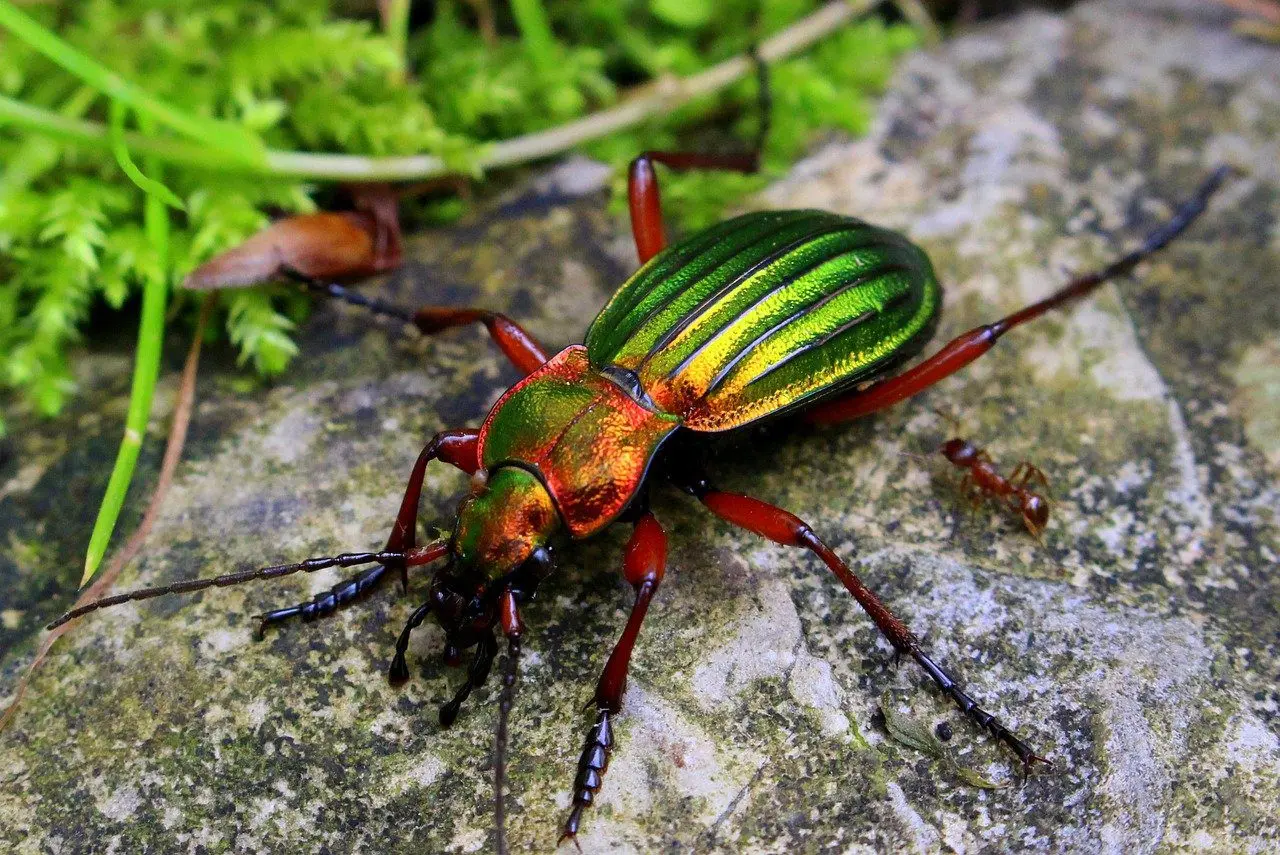
The ground beetle is a great slug predator. We have every interest in welcoming it into the garden for the long term.
How do slugs arrive in your garden?
Where do they come from? So numerous, so hungry, and so suddenly.
Could there be natural slug “wells”, from which they pour out endlessly, ever more numerous, like the orcs of Mordor surging up from the bowels of the Earth?
Not really. Apart from the use of certain highly attractive techniques (beer traps, which are counterproductive), they come no more from outside your garden than from within it.
They simply leave their hiding places, a large part of them at the same time, because favourable humidity and warmth conditions have set in.
The eggs that overwintered have hatched, the slugs have grown in a dark, damp hiding place, and they come out to feed once these favourable conditions are met.
It’s worth noting, by the way: heavy slug invasions in spring can be down to a mild winter: far more slugs and their eggs will have been spared by the frost, and they’ll therefore be much quicker to swarm.
On the other hand, and as I mention above: the use of beer traps has the power to attract slugs from more than 100 metres around, their highly developed sense of smell being able to detect, from a great distance, this scent they particularly enjoy.
In that case, the slugs therefore arrive from your neighbours’ gardens, from the fields, and from the surrounding woods.
The garden areas that naturally favour slugs
Certain garden areas play the role of a “five-star refuge” for slugs, simply because they offer what slugs seek most: coolness, moisture, accessible food and places to hide.
So it isn’t necessarily your vegetable patch that “attracts” the slugs: it’s often your garden itself that offers them perfect conditions.
Here are the areas that favour their presence:
– Heavy, clay soils, which hold water long after rain.
– Heavily shaded areas, where evaporation is low, even in summer.
– The edges of dense hedges, damp and poorly ventilated.
– Poorly drained piles of plant debris, badly aerated compost.
– Compacted or hollow spots, where water pools.
Identifying these areas lets you not only understand “where they come from”, but also know where to focus your observation… and where to act to reduce their presence for good.
When do slugs come out? Their hours and periods of activity
Contrary to what one might imagine, slugs don’t “suddenly appear”. They simply come out at the moment most comfortable for them.
They are mainly active:
– at night, between 8 pm and 4 am;
– after rain or an evening watering;
– when the temperature stays mild (10–18 °C);
– when the air is saturated with moisture.
They become almost inactive:
– below 5–6 °C,
– on hot and dry days,
– in full exposure to the sun.
There are two big annual peaks:
spring (the emergence of young slugs) and autumn (the last big period of activity before winter).
Understanding these rhythms means understanding when to act and why the damage is never uniform from one month to the next.
What attracts slugs?
Let’s break this question down into two sub-questions:
What attracts slugs enough to travel from outside your garden all the way to you?
– The smell of beer, mainly.
– The smell of slug pellets, too (though these attract slugs from less far away).
– Possibly the smell of a large heap of plant compost.
What attracts slugs and can be used to distract them from your vegetable plants?
Here, the attraction isn’t strong enough to draw slugs from outside your garden into it.
On the contrary, it can serve to dilute slug grazing within that garden, as I explain in the first part of this article.
So, here’s what attracts slugs and can be used to distract them from your plantings:
– A compost heap, at the bottom of the garden, as far as possible from the sensitive plants of your vegetable patch: yes, I put this in this category too, it can be genuinely useful, by concentrating the bulk of your garden’s slugs away from your vegetable patch. It isn’t attractive enough to draw them in from far outside your garden.
– A sacrificial bed: a bed of plants and flowers that slugs love, placed far from the vegetable patch, which will play the same role as the compost heap. There you’ll plant the range of plants gastropods love most.
– Planting these slug-favourite plants, but right next to the vegetable patch, or even inside it: so that the slugs that venture there can also find other plants to eat on the spot.
– Surface composting (kitchen peelings): in the vegetable patch, or around it, with the same goal as the slug-favourite plants. More details on this strategy in my article on surface composting and slugs.
– Peelings placed in dark, damp corners: potato peelings put under wooden boards, for example. A good way to concentrate the slugs where they can easily be collected by hand.
Why are some plants attacked first?
Not all plants are equal when faced with slugs. They target as a priority:
– young seedlings freshly transplanted;
– very tender plants, rich in nitrogen;
– stressed plants (lack of light, difficult transplanting, deficiencies, excess moisture);
– wounded plants, whose tissues release attractive compounds.
So it isn’t only a question of a “species the slugs like”, but also of physiological state.
A weakened plant is always an easier buffet than a robust one.
The role of soil and moisture in “invasions”
We often imagine that slugs “arrive” because they’re crazy about our salad greens.
The reality is more down-to-earth: they go where the conditions are most comfortable.
A soil can become a slug motorway if it combines:
– strong water retention (heavy, compacted, poorly draining soil);
– permanent excess moisture caused by mulching too early or too thickly;
– evening watering, which makes the surface damp at precisely the moment they come out;
– a lack of aeration (compacted, trampled, never loosened soil).
Conversely, a living, aerated, well-structured soil that lets water infiltrate and drain quickly mechanically reduces the presence of surface slugs.
It’s not a miracle solution… but it’s one of the pillars of a lastingly resilient garden.
Favourable and unfavourable conditions for slugs (practical summary)
Here’s a little summary table that lets you understand, at a glance, when the slugs will turn up… or not:
Conditions favourable to slugs
Unfavourable conditions
Damp, compacted soil
Free-draining, aerated soil
Mild and damp nights
Cold and dry nights
Evening watering
Watering early in the morning
Dark and dense corners
Sunny, ventilated areas
Young tender seedlings
Robust, well-established plants
Understanding these conditions lets you adapt your practices and cut 40 to 70 % of the damage… without any chemical product.
But you’re probably wondering: what if I genuinely have a slug nest in my garden, from which they keep emerging in numbers?
A corner they’d particularly favour, where their eggs would be concentrated?
So, let’s move on to the next part:
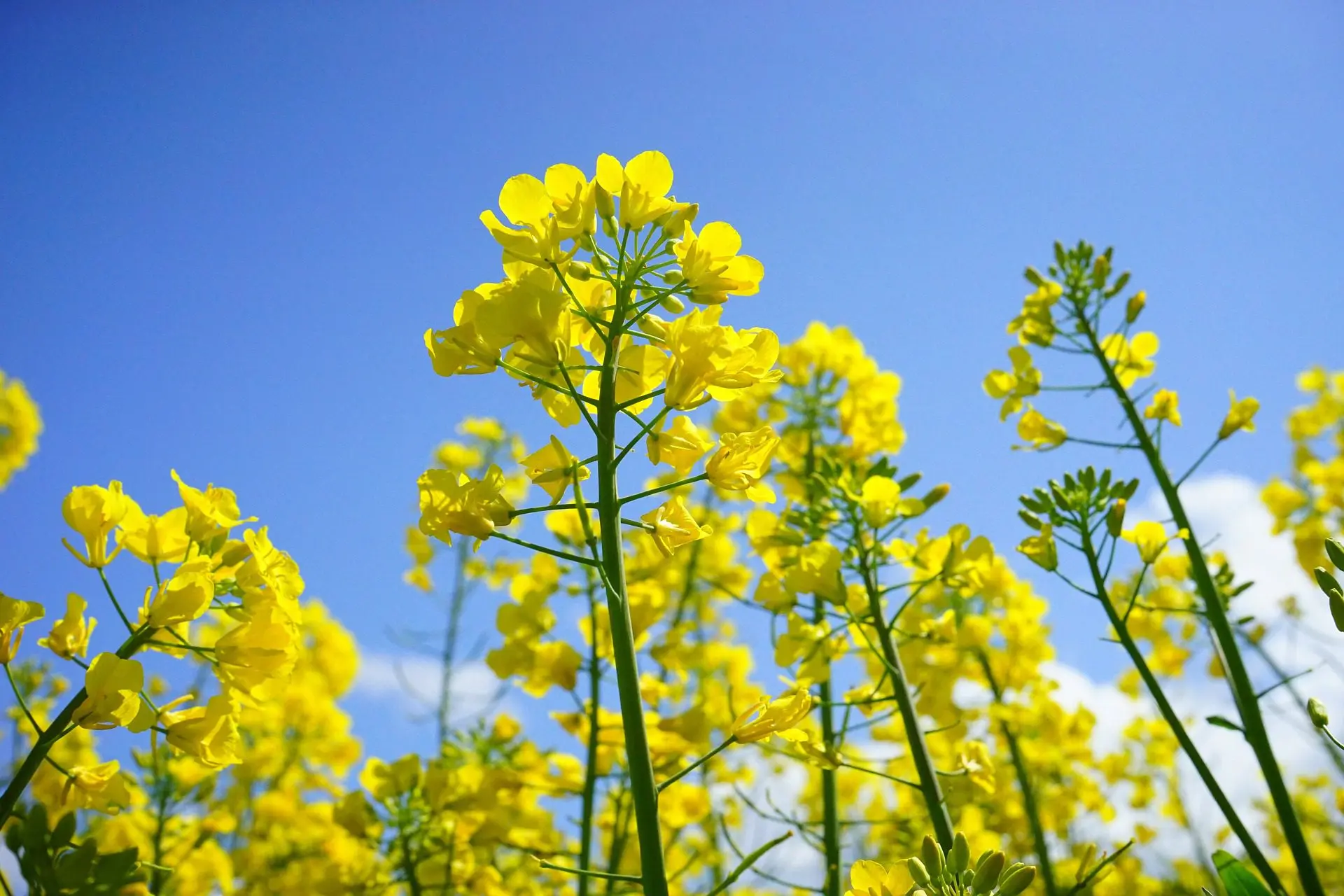
Mustard is a plant slugs love. It can be used within a sacrificial bed, or inside or along the edge of a vegetable patch.
How do you find a slug nest?
A slug “nest”, if we can call it that, would be, as I say just above, a dark, damp corner where slugs would like to lay their eggs.
So, how do you track down these potential nests and thereby cut off a source of slug entry into the garden, a source of a possible invasion?
I’ll tell you straight away, it won’t be easy. But you’ve understood it: you’ll need to target the dark, damp corners: boards laid on the ground, tarpaulin against bare earth, flat stones placed on the soil, etc…
There’s no other method: identify all these potential nest sites, and check whether you find small white eggs there.
If you find these eggs in such spots, there’s a strong chance they’re gastropod eggs. You can then either destroy them yourself, or place them somewhere they can easily be found by natural predators of gastropod eggs (I prefer this solution).
For example, you can simply set them down in an exposed dish, where birds, ground beetles and other predators will easily find them.
How long does it take for the garden to regain a natural balance?
When a garden finally welcomes the natural predators of slugs, balance returns… but not in two weeks.
It’s a normal process, one that takes time, because each predator has its own life cycle.
Here’s a rough idea:
– a few months for ground beetles, rove beetles, woodlice and millipedes to really settle in;
– 1 to 2 years to stabilise a sufficient population of micro-predators;
– 2 to 3 years for a durable overall balance (where slugs still cause occasional problems, but never on a massive scale).
The more habitats the garden offers (unmown areas, fallen leaves, piles of natural materials), the faster this balance returns.
It’s not magic: it’s ecology.

How do you deal with the invasion and stop having slugs?
The false ideas that make slug invasions worse
Some well-meaning practices can, without your realising it, amplify the damage:
– Mowing the lawn too short: no refuge left for the predators… and direct access to the vegetable patch for the slugs.
– Removing all plant debris: the beneficial creatures shelter there, not just the slugs.
– Systematically watering in the evening: it’s literally an invitation to dinner.
– Leaving the soil completely bare: night-time moisture condenses on the surface → perfect for the slugs.
– Removing every dark corner: you’re also removing the shelters of the ground beetles and rove beetles.
Correcting these few points is often enough to reduce the pressure naturally.
The solutions to protect your garden or vegetable patch from a slug invasion
Sorry to disappoint you, but there’s no miracle solution.
Continuously killing every slug in your garden isn’t a good idea: the natural predators will no longer find their food, and they’ll leave: you thereby create a yo-yo effect. (On top of the fact that slugs are useful in the garden.)
And if you break your back gathering up all the gastropods to release them far away: same problem, the predators will no longer find their food.
The only real solution is to have the patience to wait for these predators, while putting in place ways to limit the damage during that wait (which notably involves the “distraction” methods mentioned above).
Another way to limit the damage is to use effective slug barriers.
Unfortunately, on this front, most of them are myths unfairly spread by incompetent media, aggregators of unverified information.
Eggshells, ash, fine sand… turn out to be utterly ineffective in practice. I can say so without fear, because unlike these media outlets, I’ve tested them.
The little-known predatory microfauna
People often talk about the hedgehog or the slow worm, but many invisible little workers quietly regulate slugs day after day:
– woodlice,
– millipedes and centipedes,
– beetle larvae,
– pseudoscorpions,
– ground spiders,
– certain predatory fungi.
These beneficial creatures do remarkable work… provided we leave them shelters (fallen leaves, dead wood, stones, natural piles).
Encouraging these micro-predators is one of the most powerful – and least known – ways to reduce slug populations for good.
The information in this article has been selected and verified according to the criteria defined in our editorial charter.
Done with slugs. For good. Starting this season.
Scientific bibliography
-
Individual based model of slug population and spatial dynamics
-
Decision making in slug pest control: slug population dynamics in space and time.

FAQ – Slug invasion
Why am I overrun with slugs?
A slug invasion usually arises when several conditions come together: moisture, mild temperatures and a lack of natural predators. In most cases they don’t come from outside but emerge all at the same time from their shelters when the weather turns favourable.
What attracts slugs to a garden?
Slugs are mainly attracted by persistent moisture, young tender seedlings, dense shade and decomposing organic matter. Certain smells, such as beer, can also draw them in from several dozen metres away.
Why are there so many slugs right now?
The strong presence of slugs is often linked to the weather: several damp days followed by mild nights trigger a burst of activity. Mild winters also allow more eggs to survive, which increases populations in spring.
What causes slugs in my house?
Slugs get into houses when the outdoors becomes too dry, too hot or too exposed. They slip in through the gaps under doors, cracks, pipe runs or around plant pots set too close to the walls. For more detail on the subject, read this article on slug invasions in a house.
Where do slugs hide during the day?
Slugs take refuge in dark, damp areas to avoid drying out: under boards, tarpaulins, flat stones, upturned pots, leaf litter or mulch that’s too thick.
How do you find a slug nest?
To spot a nest, you need to check the dark, damp corners: under a tarpaulin, a board, a large stone or a border edge. There you’ll often find small white eggs, translucent and clustered together in clumps.
How do you get rid of a slug nest?
To eliminate a nest, you can destroy the eggs or set them down in an open spot where the natural predators (birds, ground beetles, rove beetles) will eat them. It’s then essential to clean up the area that served as a refuge.
What’s the best natural slug deterrent?
The most effective methods are:
– reliable physical barriers (such as well-designed copper barriers),
– the individual protection of young seedlings,
– the biodiversity that favours natural predators.
Popular methods such as ash, eggshells or sand are Slug control section of the website.
How do you fight a slug invasion?
To manage an invasion, you need to reduce surface moisture, protect young sensitive seedlings, diversify the vegetation and avoid powerful attractants like beer. Encouraging natural predators and only limiting the favourable shelters also helps to stabilise the situation.
Why shouldn’t you kill all the slugs?
Eliminating all the slugs disrupts the garden’s balance: the natural predators disappear for lack of food, then encouraging a mass return of the slugs. They also play an important role in the decomposition of organic matter.
How do you stop slugs from getting into the house?
To prevent slugs from getting into the house, you need to seal the gaps under doors, limit the moisture around thresholds, keep plant pots away from the walls and reduce damp shelters near the house.
What can trigger a sudden slug infestation?
A sudden infestation often results from a combination of factors: recent rain, mild nights, freshly transplanted young seedlings, high soil moisture or very favourable garden areas (dense hedges, damp compost, shady corners).
Related articles
Indian Runner ducks against slugs and snails: good idea or bad idea?
Read
How to (cleverly) get rid of slugs and snails in the garden
Read
A homemade slug repellent with white vinegar: recipe, effectiveness, and how to use it
Read
Testing and review of 30 natural slug deterrents (do they work?)
Read